Boiling pasta in chicken broth is one of those swaps that sounds like a free upgrade, and most of the time it is, but only if you know which of two completely different things you are trying to do. Cooked both ways, the same half pound of ditalini shows that the truth is less magical than the headlines promise and more useful than the skeptics admit. Broth does season the noodle from the inside. It also fights you on salt, foams over faster than water, and clouds up in a way that ruins some dishes and makes others. So before you pour a quart of stock into a pot, here is what the liquid is actually doing, the real ratios, and the spots where plain salted water still wins.
A kitchen scale and a probe are the right tools here, because “use broth instead of water” is not a recipe, it is a starting point. The questions that matter are how much broth, how salty that broth already is, whether you drain it or eat it, and what shape you are cooking. Those four answers change everything.
The Two Methods People Confuse (and Why It Matters)
Almost every argument online about cooking pasta in broth happens because two camps are talking about two different techniques and using the same words. Sort that out first and the rest gets easy.
Method 1: Pasta en brodo (you eat the liquid)
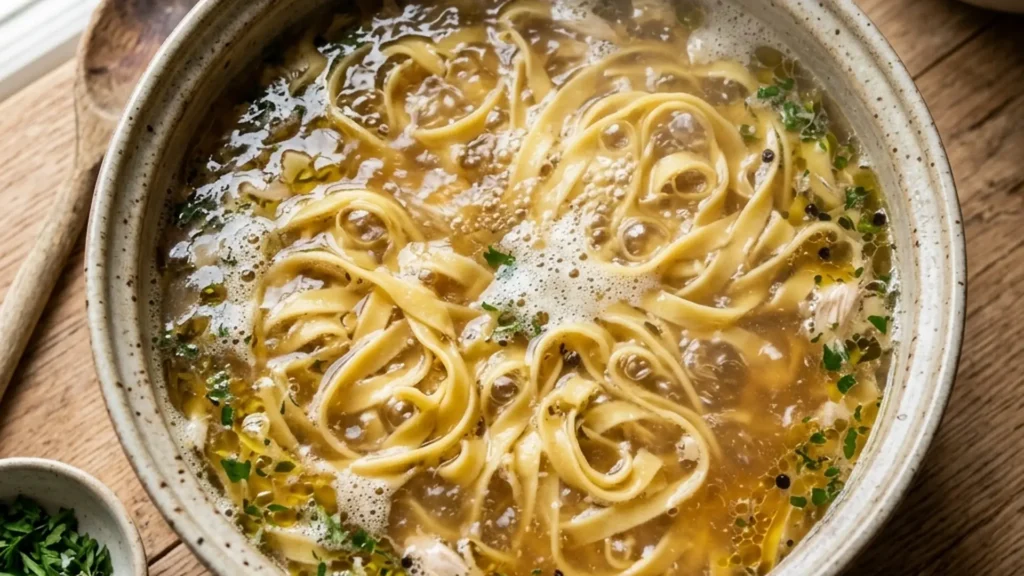
This is the classic soup approach. Small pasta, lots of broth, no draining. The pasta cooks in a bowl-sized amount of seasoned liquid and you serve the whole thing, noodles swimming, finished with grated Parmigiano and a thread of olive oil. Here the broth flavor never leaves, because you literally drink it. This is where chicken broth shines hardest and where it is, honestly, the right call almost every time.
My working ratio: about 3 cups of broth per person if it is the main event, plus an extra cup or two for the pot so it does not cook dry. Dry pasta runs roughly 2 ounces (about 1/2 cup of a small shape like ditalini or stelline) per person for a light course, 3 ounces if it is dinner. Small cuts only. A long noodle in brodo is a fork-fighting mess.
Method 2: Broth as a swap for salted water (you drain it)
This is the controversial one. You boil the pasta in broth exactly as you would in water, then you pour most of that broth down the drain and sauce the noodles like normal. The promise is interior seasoning. The catch is that you are throwing away the most flavorful part, and the noodle only absorbs a fraction of what is in the pot. The payoff is real but modest, and the cost (and salt) climbs fast. This only makes sense when the leftover liquid is going to be used for something, covered below.
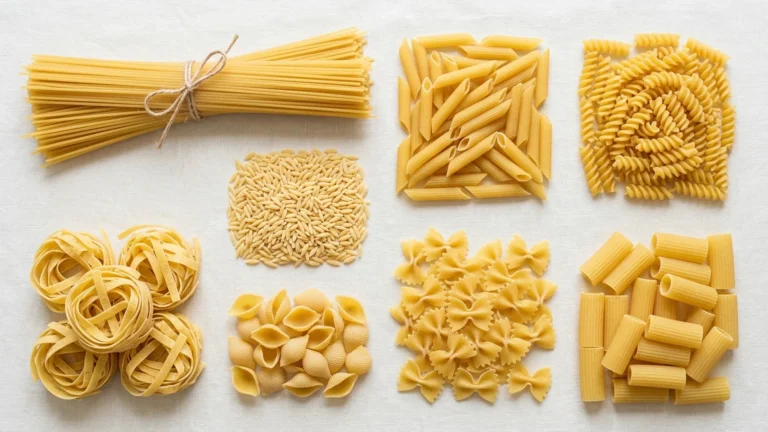
The shape rules flip slightly here. Tubes and ridged shapes such as penne, rigatoni, or shells carry trapped pockets of broth into the final dish even after draining, so they show the benefit more than smooth spaghetti does. If you want a deeper breakdown of which shape grips what, see the six pasta families and the sauces they suit, which maps cleanly onto this question.
What the Broth Is Actually Doing to the Noodle
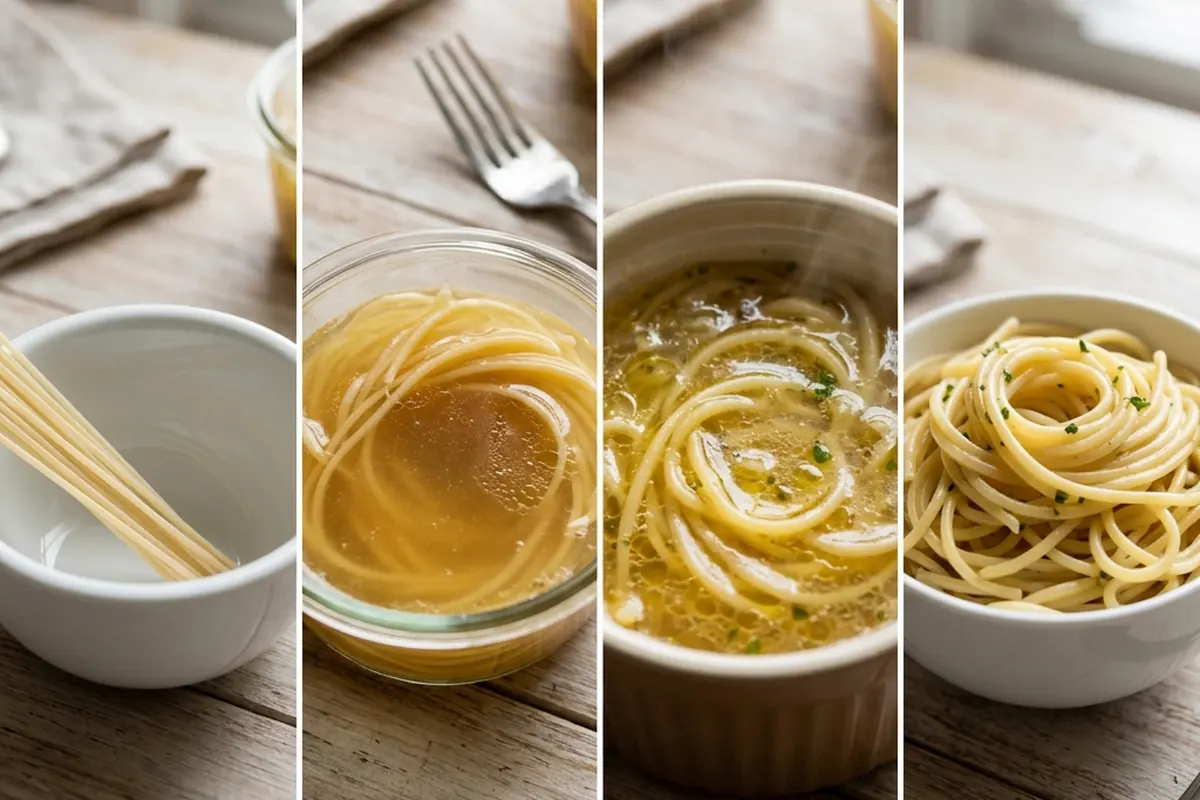
Pasta cooking is mostly water moving into starch. Dry pasta is around 12 percent moisture and finishes around 65 to 70 percent, which means it pulls in a large amount of liquid as it cooks. That liquid is the cooking medium, so yes, when the medium is chicken broth, some of those dissolved solids (salt, glutamates, gelatin, a little fat) ride in with the water.
But “some” is the key word. Most of the flavor compounds in broth are far more concentrated in the liquid than they end up inside the noodle. The pasta tastes seasoned, not like a chicken soup that grew noodles. That is exactly why Method 1 wins: when you keep and eat the broth, you get the full hit. When you drain (Method 2), you keep only the slice that migrated inward. A useful mental model: boiling pasta in broth and draining gives you maybe a third of the flavor upgrade that keeping the broth would, at full price.
There is a second thing happening that nobody warns you about. Pasta sheds starch as it cooks, and broth already contains proteins and gelatin. Together they make the liquid thicken and turn cloudy and a little gummy, much faster than starchy water alone. In a soup that is great, it gives the broth body. If you were planning to reuse that liquid as a clear stock, it is gone. Plan around the cloudiness instead of being surprised by it.
The Salt Problem, With Real Numbers
Here is the part the flavor-boost articles skip, and it is the one that actually ruins dinners. You normally salt pasta water hard, something like 1 to 1.5 tablespoons of table salt per gallon (roughly 1 to 2 percent salinity of the water by taste, “salty like a mild broth”). Now look at what is already in store-bought stock.
| Liquid | Sodium per cup | Do you add salt? |
|---|---|---|
| Regular store chicken broth | about 800 to 950 mg | No, often already too salty |
| Low-sodium chicken broth | about 100 to 140 mg | Yes, salt to taste like water |
| Bouillon cube/paste, made up | about 500 to 1100 mg | No, taste before adding anything |
| Plain salted pasta water | your call, target a mild-broth taste | Yes, that is the whole point |
A quart of regular broth can carry 3,200 to 3,800 mg of sodium before you touch the salt jar. Salt your pasta water on top of that out of habit and you have built a salt lick. My rule: if you are draining (Method 2), use low-sodium broth and salt it to taste exactly as you would water, because draining carries off most of the sodium anyway. If you are keeping the liquid (Method 1), use low-sodium broth and add salt slowly at the end, tasting, because every bit of that salt is staying in the bowl. Regular full-salt broth only makes sense if you are diluting it with a lot of unsalted water and skipping added salt entirely.
Step by Step: Pasta en Brodo That Does Not Go Wrong
This is the default and the recommended version. It is forgiving and it is the one that earns its keep.
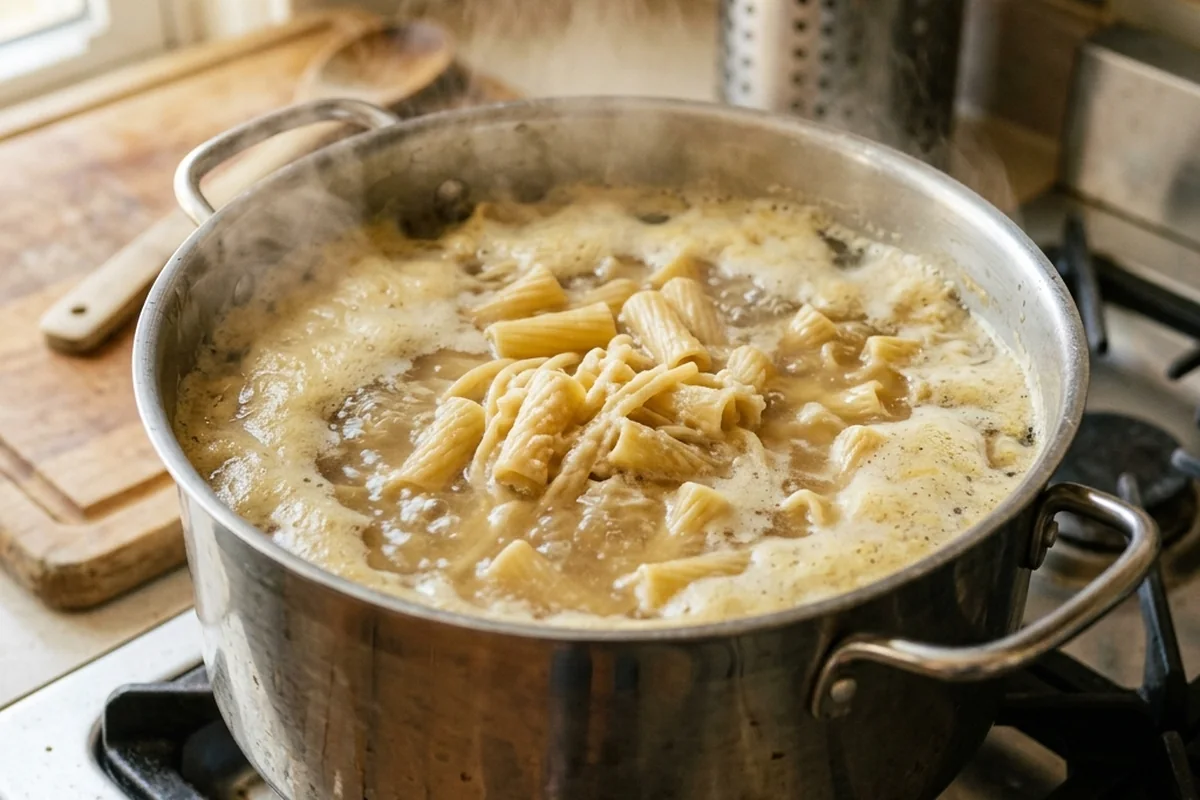
Bring your broth (low-sodium, plus a Parmigiano rind if you have one) to a gentle boil in a pot wider than tall, which helps it not foam over. Taste it. It should taste like a soup you would happily eat, slightly under-seasoned, because the pasta will absorb some salt and the cheese at the end brings more. Drop in your small pasta, stir for the first 30 seconds so nothing welds to the bottom, and keep it at an active simmer rather than a hard rolling boil. Broth foams up the sides faster than water, and a rolling boil plus gelatin equals a stovetop you will be scrubbing.
Cook to just under the box time, because the pasta keeps softening in the hot liquid in the bowl. Pull the rind. Ladle pasta and broth together into warmed bowls, finish with grated Parmigiano, cracked black pepper, a little extra-virgin olive oil, and chopped parsley if you have it. That is dinner in under fifteen minutes. If you want the soup heartier, this slots neatly next to brothy chicken bowls for cold months, and a sturdier short cut from a quick-cooking frozen egg noodle works in a pinch when you want it on the table in five.
Step by Step: Broth as a Water Swap (Drain Method)
Use a normal large pot of broth, low-sodium, salted to a mild-broth taste. Boil the pasta as usual to al dente, reserve a cup of the now-cloudy broth, and drain the rest into a container if you plan to reuse it (you should, otherwise this method is just expensive). Sauce the pasta as you normally would, loosening with the reserved broth instead of plain pasta water. The reserved liquid is doing double duty here: it is your starchy emulsifier and it carries chicken flavor into the sauce, which is genuinely better than plain pasta water for a brothy or creamy sauce.
Where this method falls apart: bright, acidic, or delicate sauces. A simple garlic-and-oil aglio e olio or a fresh tomato basil does not want a layer of chicken under it, and the broth muddies the clean flavors. Save the swap for cream sauces, soups, brothy chicken pastas, and anything where chicken already belongs.
Troubleshooting: Foam, Gum, and Flat Flavor
It foamed over
Broth foams more than water because of its proteins. Use a wider pot, drop to a simmer once the pasta is in, and leave the lid off. A wooden spoon laid across the rim helps but the real fix is lower heat and more surface area.
The liquid turned thick and gluey
Normal, and fine in a soup. If it is too thick, you used too little broth for the amount of pasta. Bump the ratio toward 3 to 4 cups of liquid per 2 ounces of dry pasta for a true brodo. If you are draining, this gluey starch is exactly what you reserve for the sauce, so do not pour all of it away.
I drained it and the pasta barely tastes different
That is the honest result of Method 2, and the reason keeping the liquid is the better route. Interior absorption is limited. If you drained and feel cheated, you wanted Method 1.
Too salty no matter what
You used regular broth and then salted it. Switch to low-sodium and salt yourself, or dilute regular broth roughly half and half with water and add no salt at all.
Does It Cost More? A Quick Reality Check
Yes, and it is worth naming. A gallon of water is effectively free. A pot of pasta needs roughly 4 quarts of liquid by the usual rule, and 4 quarts of even cheap store broth runs a few dollars, more for good stuff. That math is fine for a soup you are eating, where the broth is the dish. It is harder to justify for the drain method, where you are about to pour most of it out. My compromise, and the trick none of the big food sites mention: cook in half broth, half water. You use about half the stock, salt the water side normally, and you still get most of the interior seasoning at half the cost. For weeknight drain-method pasta, half-and-half is the practical default. Homemade or saved scrap stock makes the whole question moot, since it costs almost nothing.
Chicken Broth vs the Other Liquids People Try
Chicken broth is the default for a reason, but it is not the only swap, and matching the liquid to the dish matters more than people think. Here is how the lineup breaks down.
Chicken broth is the all-rounder. It is savory without being heavy, it suits most sauces from cream to light tomato, and store low-sodium versions are easy to find. If you are unsure, this is the one.
Vegetable broth is the safe choice when you do not know who is eating, since it works for vegetarians and keeps a lighter, cleaner profile. It gives less of that round, gelatin-backed body than chicken, so the upgrade is subtler. Good for delicate spring sauces, peas, asparagus, lemon.
Beef or mushroom broth is for heavy company only. The flavor is assertive enough to fight a bright sauce, so reserve it for rich, dark dishes: a beefy ragu, a mushroom cream, anything you want to taste deep and savory. In a soup it is fantastic; under a light sauce it overwhelms.
Parmesan-rind water is the cheapskate secret. Simmer plain salted water with a couple of saved Parmigiano rinds for twenty minutes before you add pasta and you get a savory, glutamate-rich liquid for almost nothing. It is the best middle ground when you want the en-brodo effect without buying stock.
Wine or acid does not belong in the boiling water, despite the occasional suggestion. Acid firms pasta and slows hydration, so a splash of wine in the pot just makes the noodle cook unevenly and taste sour. Add wine to the sauce, not the boil.
The through-line: the liquid should agree with the sauce that lands on top. A clash between the cooking medium and the finishing sauce is the single most common way the broth trick backfires.
When Plain Salted Water Still Wins
There is no need to be a broth purist. Plenty of pasta is better in water. Anytime the sauce is the star and it is bright or delicate, water keeps the flavors clean. Anytime you are draining and not reusing the liquid, water plus good salting gets you 90 percent of the way for free. And anytime your only broth is the regular full-salt kind and you have no plan to manage the sodium, water is the safer bet. Broth is a tool for adding savory depth, especially to soups and rich sauces, not a blanket upgrade you owe every pot.
For the underlying mechanics in more depth, the recipe testers at America’s Test Kitchen have run controlled trials on how pasta absorbs its cooking liquid and how starch behaves, and the editors at Bon Appetit have written extensively on building pasta-water emulsions, which is exactly the principle you are leaning on when you reserve cloudy broth to finish a sauce. Both back up the core point here: the cooking medium matters, but most of its flavor lives in the liquid you keep, not the noodle you drain.
Frequently Asked Questions
Can you boil any pasta in chicken broth?
Yes, any shape will cook in broth. The choice is about the method, not whether it works. Small shapes (ditalini, orzo, stelline, small shells) suit the soup approach where you keep the liquid. Tubes and ridged shapes (penne, rigatoni, shells) show the benefit best in the drain method because they trap pockets of broth. Long thin noodles are awkward in soup and gain the least when drained.
Do I still add salt if I cook pasta in chicken broth?
It depends entirely on the broth. Regular store broth is usually salty enough on its own, so add no salt and taste first. Low-sodium broth needs salting roughly like water, because it has very little sodium. The mistake to avoid is salting out of habit on top of already-salted broth.
Does cooking pasta in broth take longer than water?
No, cooking time is essentially the same. Broth boils and cooks pasta on the same timeline as water. The one watch-out is that broth foams up faster, so keep it at a simmer rather than a hard boil and use a wider pot.
Is it worth boiling pasta in broth if I drain it?
Partly. Draining keeps only the flavor that migrated into the noodle, which is a modest fraction. It is worth it if you reserve and reuse the cooking liquid in the sauce, and it is not really worth the cost if you pour all the broth down the drain. The soup method (no draining) gives a far bigger return.
Can I reuse the broth after cooking pasta in it?
Yes, but expect it to be cloudy, starchy, and thicker, because the pasta sheds starch into it. That makes it excellent for loosening sauces or as the base of a soup, and poor as a clear stock. Cool it quickly and refrigerate within two hours, and use it within three to four days.
What broth is best for cooking pasta?
Low-sodium chicken broth is the most flexible, because it lets you control salt. Homemade or saved-scrap stock is best of all, both for flavor and cost. A Parmigiano rind dropped in while the broth heats adds savory depth for free. Match the broth to the dish: chicken for lighter sauces and soups, beef or mushroom for heavier ones.
Bottom Line
Boiling pasta in chicken broth is a real upgrade, but a targeted one. Keep the liquid and eat it, pasta en brodo style, with low-sodium broth and small shapes, and you get the full payoff for the price of the stock. Use broth as a drained water-swap only when you will reuse the cooking liquid in the sauce, and lean on a half-broth, half-water pot to keep the cost and salt sane. Skip it entirely for bright, delicate sauces where plain salted water keeps things clean. Decide which of the two methods you are doing before you open the carton, manage the sodium on purpose, and the swap stops being a gamble and becomes a tool you reach for when the dish actually wants it.