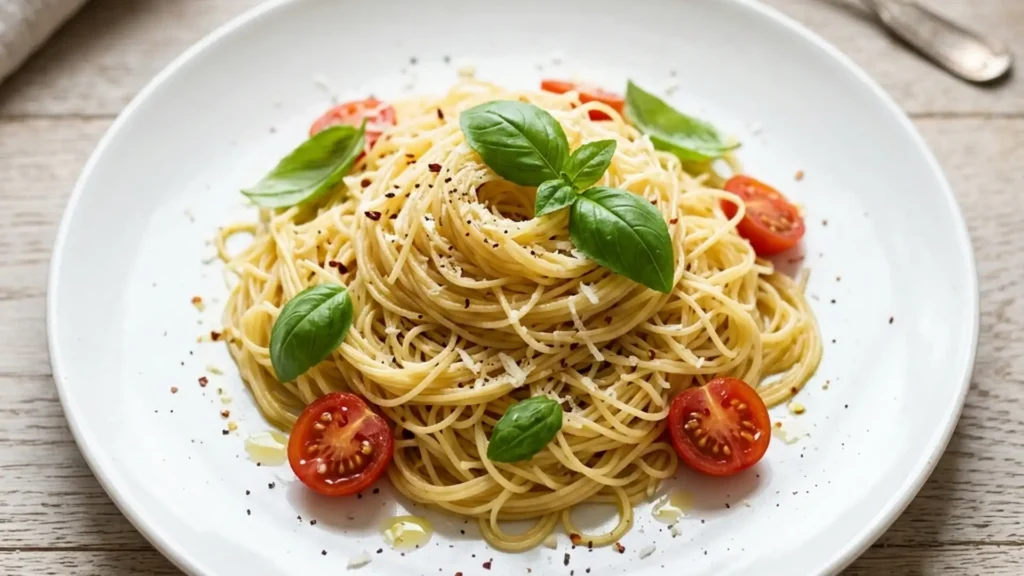
Angel hair pasta nutritional information looks simple on a box, but the box is exactly where people go wrong. A standard 2-ounce dry serving of angel hair (capellini) runs about 200 calories, 42 grams of carbohydrate, 7 grams of protein, 1 gram of fat, and 2 to 3 grams of fiber. That is the number that matters, and it is the one most people never actually eat, because angel hair cooks up into a small-looking tangle that begs to be over-portioned. Weighed out, the gap between “one serving on the label” and “what lands on the plate” is wider for angel hair than for almost any other shape. So here are the real numbers, the dry-versus-cooked translation nobody explains, a brand comparison, and the practical stuff about how this ultra-thin strand changes what you should do with it.
The short version: angel hair is nutritionally almost identical to regular spaghetti, because it is the same durum wheat dough, just extruded thinner. The thinness changes the cooking and the eating, not the macros. Once you see the comparison tables below, the whole thing gets a lot easier to plan around.
The Core Numbers (Standard Semolina Angel Hair)
Here is the panel for a typical enriched semolina angel hair, the classic dry kind in the blue box. Values are per 2-ounce (56 gram) dry serving, which is the manufacturer standard.
| Nutrient | Per 2 oz dry |
|---|---|
| Calories | about 200 |
| Total carbohydrate | about 42 g |
| Dietary fiber | 2 to 3 g |
| Sugars | 2 to 3 g |
| Protein | 7 g |
| Total fat | 1 g |
| Sodium | 0 to 5 mg (dry) |
Notice the sodium is essentially zero in the dry pasta. All the sodium in your finished dish comes from the water you salt and the sauce you add, which is good news, because it means you control it entirely. Enriched semolina angel hair is also fortified with B vitamins (niacin, thiamin, riboflavin, folic acid) and iron, so it carries a small but real micronutrient load on top of the macros.
Dry vs Cooked: The Translation Nobody Gives You
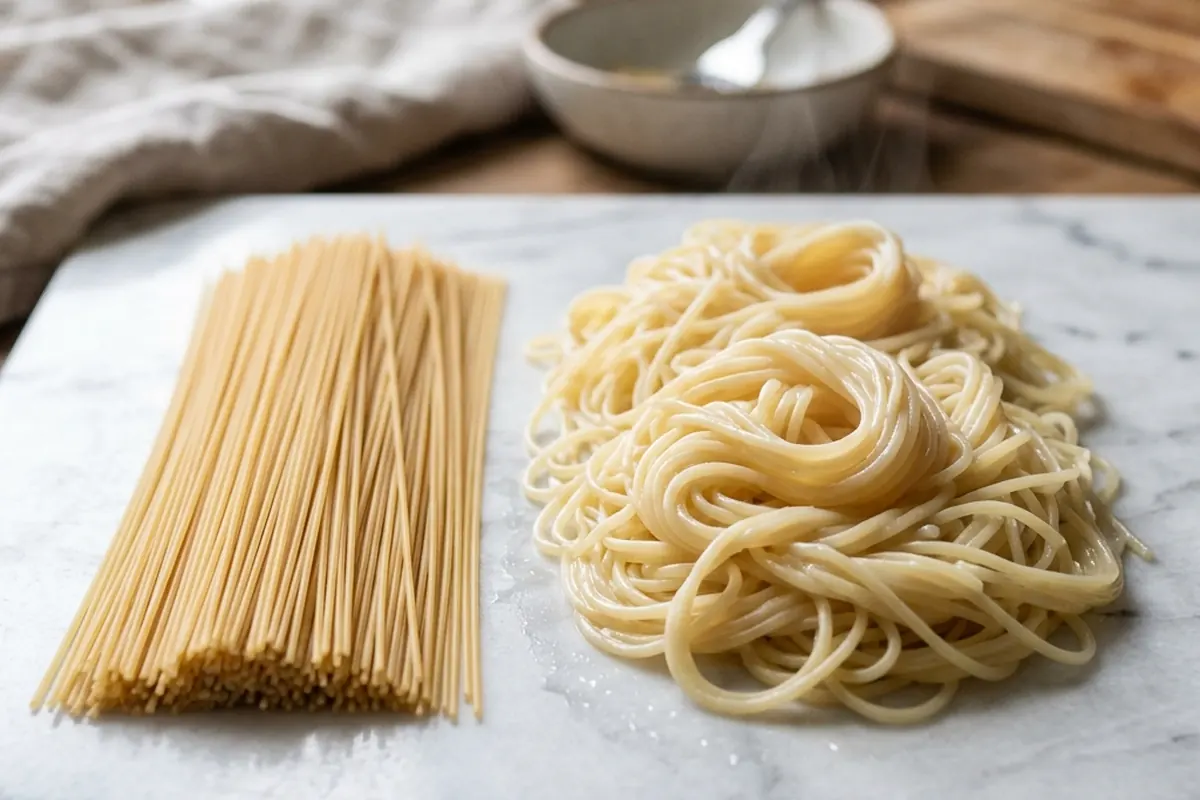
This is the single most confusing thing about reading any pasta panel, and it trips up angel hair worst of all. The label numbers are for dry pasta. When you cook it, the pasta roughly doubles to triples in weight as it absorbs water, but the calories and carbs do not change, they just spread out across more weight. So a “low” cooked-weight calorie figure and the dry figure can describe the exact same noodles.
| Measure | Approx. amount | Calories |
|---|---|---|
| 2 oz dry (1 serving) | about 1 cup cooked | about 200 |
| 4 oz dry | about 2 cups cooked | about 400 |
| 1 lb box dry | about 8 cups cooked | about 1,600 |
So when a database tells you “1 cup cooked angel hair is around 200 calories,” that is the same as one 2-ounce dry serving. They are not contradicting each other, they are describing the same plate at two moisture levels. Weigh dry if you can, it is the most reliable way to know what you are eating, because cooked volume swings with how long you boiled it and how packed the cup is.
Angel Hair vs Other Pasta Shapes: Are the Macros Different?
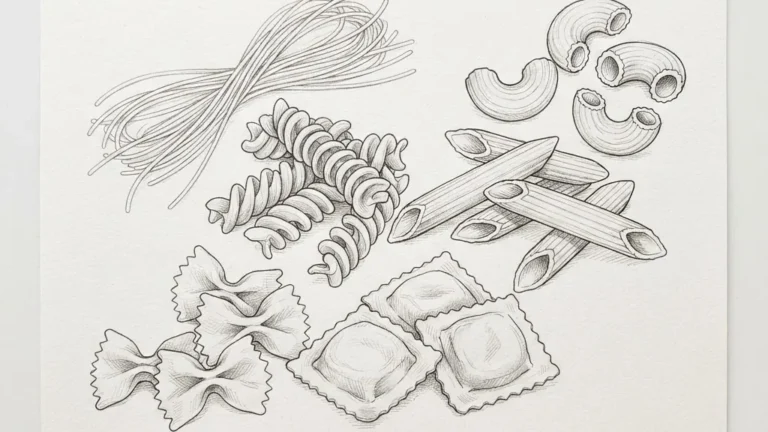
Short answer, no, not in any meaningful way. Angel hair, spaghetti, penne, and most dried shapes are the same semolina-and-water dough. Per 2-ounce dry serving they all land at roughly 200 calories, 42 grams of carb, 7 to 8 grams of protein, 1 gram of fat. The shape changes cook time, sauce-holding, and mouthfeel, not nutrition. If you have read that one shape is “lighter,” it is almost always a serving-size illusion, not a real macro difference. For the full picture of how shape affects everything except the calorie count, see this breakdown of the pasta families and the sauces they suit.
The real nutritional differences come from what the pasta is made of, not its shape. That brings us to the comparison that actually matters.
Regular vs Whole Wheat vs Protein vs Gluten-Free Angel Hair
This is the comparison the retail pages never put side by side. All figures per 2-ounce dry serving, rounded.
| Type | Calories | Carbs | Fiber | Protein |
|---|---|---|---|---|
| Regular semolina | about 200 | 42 g | 2 to 3 g | 7 g |
| Whole wheat | about 200 | 40 g | 5 to 7 g | 7 to 8 g |
| Protein (legume blend) | about 200 | 38 g | 4 to 5 g | 10 to 11 g |
| Gluten-free (rice/corn) | about 200 to 210 | 44 g | 1 to 2 g | 4 g |
The calories barely move. What changes is fiber and protein. Whole wheat roughly doubles the fiber. A protein blend (the kind made with lentils, chickpeas, and peas) bumps protein into the double digits. Gluten-free rice or corn angel hair is the one to watch: it usually has the least fiber and protein, so it gives the fastest blood-sugar rise of the bunch. If you are eating gluten-free by choice rather than necessity, you are often trading down nutritionally, and the alternatives worth considering are laid out in the guide to low-carb pasta alternatives.
Why “Cooked Weight” Numbers Confuse So Many People
It is worth lingering on the dry-versus-cooked confusion because it is responsible for most of the bad information floating around about angel hair calories. You will find one site swearing a cup of angel hair is 200 calories and another insisting it is 350, and both can be technically correct, because they are measuring different things. The 200-calorie figure is usually one 2-ounce dry serving, lightly packed after cooking. The higher figure often comes from a densely packed cup of pasta that came from more than 2 ounces dry, or from a serving that includes clinging sauce. The pasta did not gain calories by cooking, the measuring cup just captured more of it.
This is why weighing dry is the gold standard. Water is not calories, so the only honest way to know your intake is to measure the pasta before it absorbs water. If you must measure cooked, fluff the pasta and use a loose cup, and accept that the number carries more error than a dry weigh would. For a shape as fine and tangle-prone as angel hair, that error can easily be 50 to 100 calories per serving, which adds up fast over a week.
The Portion Trap That Hits Angel Hair Hardest
Here is the practical warning that no nutrition table gives you. Angel hair is so fine that a proper 2-ounce serving cooks into a small, modest nest that looks like not much food. The natural reaction is to grab more, and a quick double-handful can easily be 4 ounces, two servings and 400 calories, before a drop of sauce. With thicker shapes you can eyeball a portion. With angel hair, your eyes lie to you.
Two ways to get it right. The reliable one: weigh 2 ounces dry on a kitchen scale. The no-scale trick: a bundle of dry angel hair about the diameter of a US quarter coin is roughly one serving. If you want pasta to feel like a real meal at that portion, do not add more noodles, add bulk that is not pasta: a pile of vegetables, a protein, a little good fat. That keeps the calories sane and the plate satisfying.
Glycemic Impact and How Thinness Plays In
Angel hair has a moderate glycemic index, similar to other durum pastas, somewhere in the 45 to 55 range for the regular kind, lower than white bread or white rice. But thin pasta has a quiet catch: because the strands are so fine, angel hair overcooks in a blink, and overcooked pasta digests faster and raises blood sugar more. So the cooking margin matters more here than with any other shape. Angel hair cooks in roughly 3 to 5 minutes, and the window between perfect and mushy is maybe 60 seconds. Pull it early, taste constantly, and finish it in the sauce off the heat. Cooking it al dente is not just about texture with angel hair, it is the difference between a moderate and a fast glycemic response.
The whole-wheat and protein versions sit lower on the glycemic scale thanks to their extra fiber and protein, which is the main nutritional reason to choose them over regular semolina if blood sugar is a concern.
The Micronutrients Most People Overlook
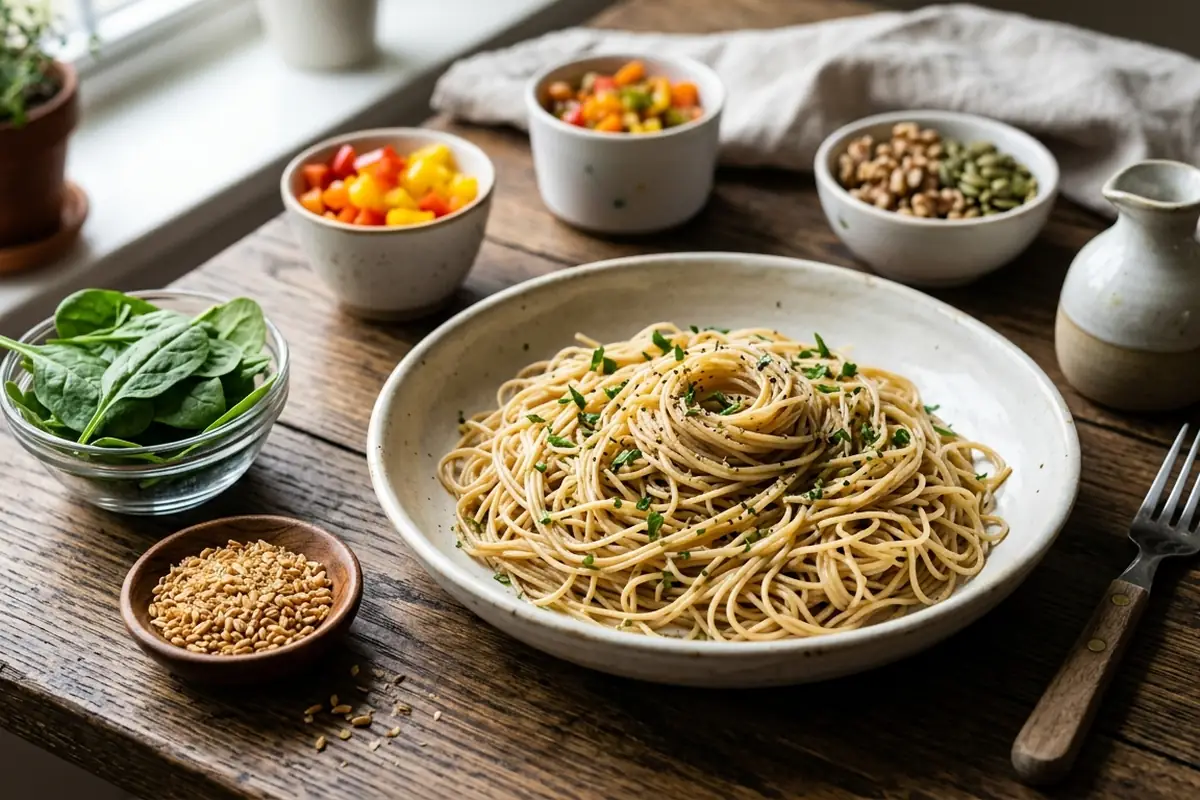
Calories and carbs get all the attention, but enriched semolina angel hair carries a quiet load of micronutrients that matters more than people give it credit for. United States enrichment standards mean the flour is fortified after milling strips the grain, so a 2-ounce serving typically delivers a meaningful share of your daily B vitamins and iron. You are looking at roughly 10 to 15 percent of the daily value for thiamin, niacin, riboflavin, and folic acid, plus around 10 percent of daily iron, all from one modest serving.
That folic acid line is worth a pause. Enriched pasta is one of the more reliable everyday sources of folic acid in the American diet, which is why it shows up on the panel at all. For anyone who is pregnant or planning to be, that fortification is a genuine, if small, contribution. Whole wheat angel hair trades some of the added fortification for the grain’s natural minerals (magnesium, zinc, more iron from the bran and germ), so it is not a straight downgrade, it is a different micronutrient profile. Gluten-free rice and corn versions are usually the least fortified of the bunch, another reason they sit at the bottom of the nutrition ranking unless the brand specifically adds vitamins back.
None of this turns pasta into a health supplement. But it does mean the “empty calories” label people slap on pasta is lazy. A serving of enriched or whole-wheat angel hair brings real B vitamins, iron, and a bit of plant protein along with the carbohydrate, which is more than you can say for most refined snack foods of the same calorie count.
Where the Sodium and Extra Calories Actually Come From
The dry pasta is nearly sodium-free and low in fat, so if your finished angel hair dish ends up salty or calorie-heavy, the pasta is not the culprit, the cooking and the sauce are. This is good news, because it puts the whole calorie and sodium budget in your hands. Salting the boiling water adds some sodium, though most of it goes down the drain when you lift the pasta out. The bigger swings come from the sauce and the finish.
A light garlic-and-oil treatment might add 100 to 150 calories per serving from a measured tablespoon or two of olive oil, almost no sodium beyond what you choose to add, and good monounsaturated fat. A jarred marinara adds maybe 70 to 100 calories and a few hundred milligrams of sodium, plus watch for added sugar, some jars carry a surprising amount. A cream or cheese sauce can double the calories of the whole dish and bring saturated fat and a lot of sodium with it. Grated hard cheese on top is concentrated, a couple of tablespoons of Parmigiano is another 40 to 50 calories and a salty hit.
The takeaway: angel hair gives you a clean, low-sodium, low-fat starting canvas at about 200 calories. Everything above that is a choice you make with the sauce. Knowing that, you can build a plate to whatever target you want, light or rich, without guessing, because the noodle baseline never moves.
How to Actually Eat It: Sauce Ratio Matters for the Macros
Because angel hair is so thin and light, it cannot carry a heavy, chunky sauce, the strands just collapse under the weight and clump. It wants light, brothy, or oil-based sauces: a simple garlic-and-oil, a light tomato, lemon and herbs, a thin seafood sauce. This is a nutrition point, not just a taste one. Light sauces add fewer calories and less saturated fat than the cream-and-cheese loads that thicker pasta can hold. In other words, angel hair naturally steers you toward lighter dishes, which is part of why people perceive it as the diet-friendly shape, even though the noodle itself is identical to spaghetti. Lean into that. A 2-ounce serving with garlic, olive oil, a squeeze of lemon, shrimp, and a fistful of greens is a genuinely light, balanced plate.
For trustworthy baselines beyond brand panels, the recipe testers at America’s Test Kitchen have tested how thin pastas behave when cooked and sauced, and the editors at Bon Appetit have practical writing on matching delicate strands to light sauces, which is exactly the move that keeps an angel hair dish on the lighter end.
Angel Hair on Common Diets: A Quick Reality Check
People search the nutrition panel because they are trying to fit pasta into a plan, so here is how angel hair lands on the diets that come up most.
Weight loss. Workable, with the portion discipline this shape demands. At 200 calories a serving the pasta is not the problem, the pile and the sauce are. A weighed 2-ounce serving with a light sauce, lean protein, and a heap of vegetables is a reasonable dinner. The trap is the visual under-serving that makes you reach for more. Weigh it and angel hair fits a calorie goal fine.
Higher-protein eating. Regular angel hair gives 7 grams of protein per serving, which is modest. If protein is your priority, buy the legume-blend protein version (10 to 11 grams) or, more importantly, add real protein on top. The pasta is a carbohydrate base, not a protein source, so build the plate accordingly.
Low-carb or keto. Angel hair does not fit. At about 42 grams of carbohydrate per serving it blows most low-carb budgets in one bowl. There is no thin durum pasta that solves this, the carbs are inherent to the wheat. If that is your goal you want a genuinely different product, and the trade-offs of the substitutes are covered in the low-carb alternatives guide linked above.
Heart-healthy eating. A natural fit, because angel hair is low in fat and sodium on its own and pairs with the light, oil-based, vegetable-forward sauces that heart-healthy patterns favor. Choose whole wheat for the extra fiber, go easy on cheese and cream, and lean on olive oil and tomatoes.
Frequently Asked Questions
How many calories are in angel hair pasta?
A standard 2-ounce dry serving has about 200 calories, which cooks up to roughly 1 cup. A full pound box is about 1,600 calories total. The calories come almost entirely from carbohydrate, with a small amount from protein and very little fat.
Is angel hair pasta healthier than spaghetti?
Not really. Angel hair and spaghetti are the same durum wheat dough, just different thicknesses, so their nutrition per serving is essentially identical. Angel hair feels lighter mostly because it pairs with lighter sauces and because a serving looks small. The base macros are the same.
How much fiber and protein does angel hair pasta have?
Regular semolina angel hair has about 2 to 3 grams of fiber and 7 grams of protein per 2-ounce dry serving. Whole wheat roughly doubles the fiber to 5 to 7 grams. Legume-blend protein versions push protein to 10 to 11 grams. Gluten-free rice or corn versions usually have the least of both.
How much is one serving of angel hair pasta?
One serving is 2 ounces dry, which is about 1 cup cooked. Because angel hair is so fine, a serving looks small, so people tend to over-portion it. Weigh it, or use a dry bundle about the diameter of a US quarter coin as a no-scale guide.
Does angel hair pasta have a high glycemic index?
No, regular angel hair has a moderate glycemic index in the 45 to 55 range, lower than white bread or white rice. The catch is that its thinness makes it overcook fast, and overcooked pasta digests quicker and raises blood sugar more. Cook it al dente to keep the response moderate.
Why does the cooked-weight nutrition differ from the box?
It does not, it is the same pasta at different moisture levels. The box lists dry weight. Cooking adds water, which spreads the same calories and carbs across more total weight. So 1 cup cooked and 2 ounces dry describe the same serving and the same roughly 200 calories.
Bottom Line
Angel hair pasta nutritional information comes down to one serving of about 200 calories, 42 grams of carb, 7 grams of protein, and not much fiber unless you choose a whole-wheat or protein version. The noodle itself is the same dough as spaghetti, so its reputation as the light option is really about portion perception and the light sauces it demands. Weigh a true 2-ounce serving, cook it carefully because thin pasta overcooks in seconds, pick whole-wheat or legume versions if you want more fiber and protein, and dress it with something light. Do that and the numbers on the box become a plan you can actually follow instead of a serving you accidentally double.