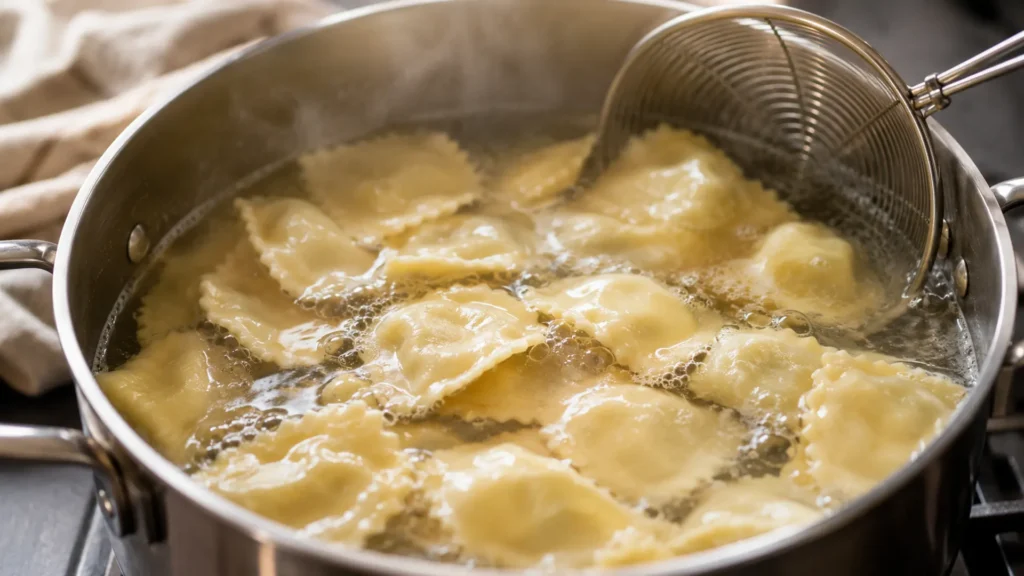
Learning how to cook ravioli well takes about ten minutes of attention and one habit most people get wrong, which is treating these delicate little pillows like sturdy spaghetti. Ravioli are stuffed pasta, which means the dough is doing two jobs at once. It has to cook through while protecting a soft filling that can leak the moment the seal gives. Get the water, the heat, and the timing right and they come out tender and intact every single time. This guide covers fresh, frozen, and dried ravioli, the sauces that flatter them, and the mistakes that turn dinner into a pot of cheese soup.
The good news is the technique is the same whether you bought a package at the store or rolled the dough yourself. Once you understand why ravioli behave the way they do, you stop guessing and start cooking with confidence.
Think of a ravioli as a tiny sealed pocket. Inside is filling that is already cooked or only needs gentle warming. Outside is a thin layer of pasta dough that has to soften and cook through. The whole game is getting that thin dough tender without letting the seam fail and the filling leak. Everything that follows, the water volume, the gentle simmer, the careful lifting, exists to protect that seam. Hold that picture in your head and every step makes sense.
Fresh, Frozen, and Dried Ravioli Are Not the Same
Before you put a pot on, know what you are working with, because the type changes everything about timing. Fresh ravioli, the kind sold in the refrigerated case or made at home, cook fastest. They are tender, the dough is thin, and they need only a few minutes. Frozen ravioli go straight from the freezer into the water with no thawing, but they take a couple of minutes longer because they have to come up to temperature first. Dried, shelf stable ravioli are the toughest of the three and need the longest cook, closer to what a dried pasta box suggests.
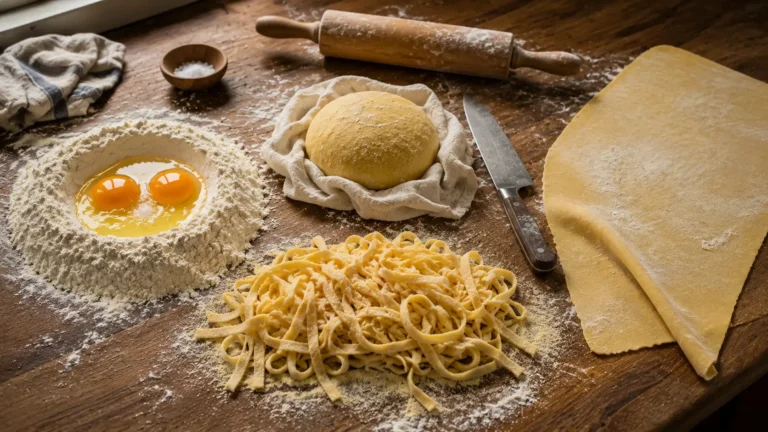
The trap is treating them all the same. Frozen ravioli dropped into water and timed like fresh ones come out cold in the middle. Fresh ravioli boiled like dried ones blow apart. If you ever want to make your own, the process starts with good dough, and the guide to how to make pasta from scratch walks through it step by step. For background on what fresh pasta actually is and how it differs from the dried stuff, the piece on fresh pasta fills in the gaps.
| Ravioli Type | Thaw First? | Cook Time | Doneness Cue |
|---|---|---|---|
| Fresh (homemade or refrigerated) | No | 3 to 4 minutes | Float and dough is tender |
| Frozen | No, cook from frozen | 5 to 7 minutes | Float, then 1 to 2 minutes more |
| Dried (shelf stable) | No | 8 to 11 minutes | Follow package, taste a corner |
Setting Up the Pot the Right Way
Ravioli need room and they need gentle water. Use a wide pot with plenty of water, at least four quarts for a pound, so the ravioli are not crowded and crushing against each other. Crowding causes them to stick together and tear when you separate them. Salt the water generously, about a tablespoon per four quarts, because that is the only seasoning the dough itself will get.
Now the part people skip. Bring the water to a rolling boil first to dissolve the salt and get everything hot, then turn the heat down so the water is at a gentle simmer with small bubbles, not a violent rolling boil. A hard boil is the enemy of ravioli. The churning water bashes them against each other and the sides of the pot, and that is when seals fail and filling escapes. A calm simmer cooks them just as fast without the violence. For more on why water volume and salt matter across all pasta, the detailed walkthrough on how to boil pasta covers the fundamentals that apply here too.
The Step by Step Boil
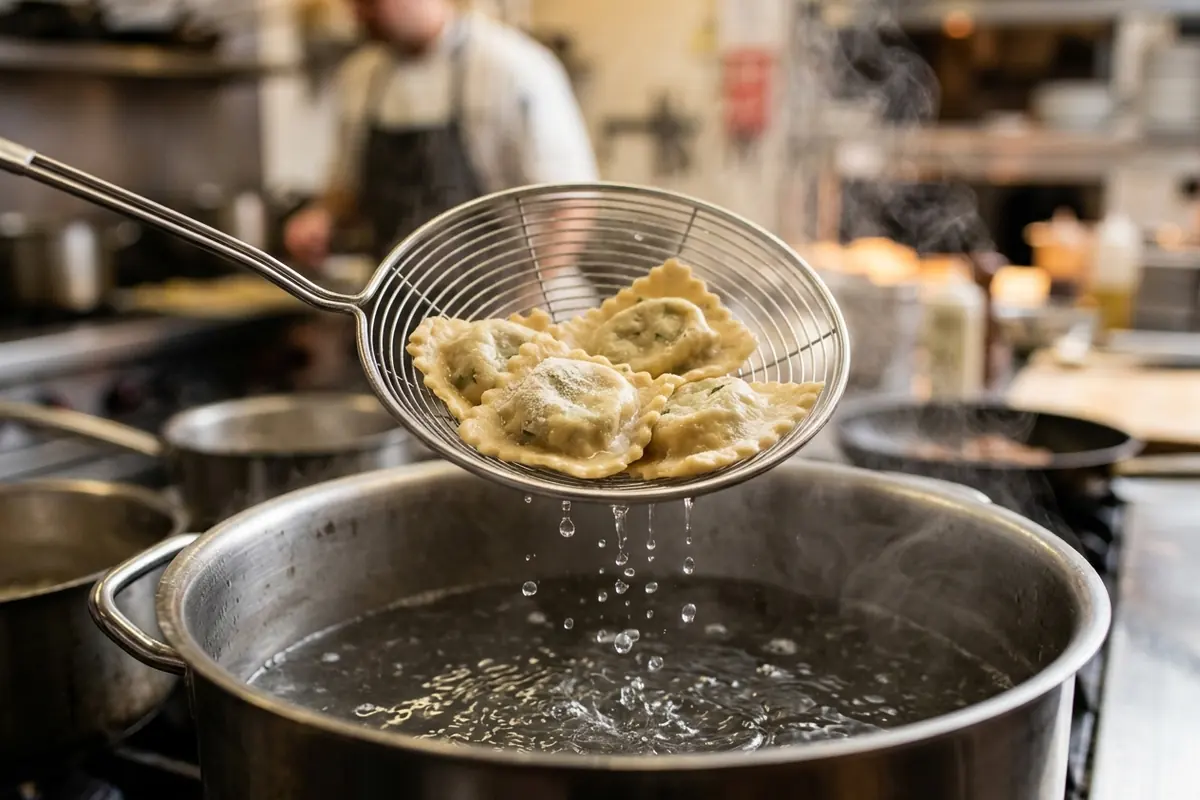
Lower the ravioli into the simmering water gently. Use a spider strainer or a slotted spoon to ease them in rather than dumping the whole package from a height, which splashes hot water and can crack the dough. Add them in a single layer if you can, working in batches for a big pot so they are not piled up.
Stir once, very gently, right after they go in so none stick to the bottom. Then leave them mostly alone. Ravioli tell you when they are getting close: they float. As the filling warms and the dough cooks, the parcels become buoyant and rise to the surface. Floating is a signal, not a finish line. Fresh ravioli are usually done within a minute of floating. Frozen ones need one to two minutes more after they rise. The only way to be certain is to fish one out and taste the corner of the dough, which should be tender with no raw, pasty bite at the seam where the pasta is thickest.
When they are done, lift them out with the spider or slotted spoon rather than dumping the whole pot into a colander. Pouring delicate ravioli into a colander piles them up and crushes the bottom layer. Lifting them keeps each one intact. Let them drain for a second over the pot, then move them straight into your warm sauce. A quick word on the seal: the thick double layer of dough where two sheets are pressed together always cooks slowest, so judge doneness there.
If you are cooking for a crowd, set up a small assembly line. Have your warm sauce ready in a wide pan off to the side before the ravioli even go in the water, because they wait for nobody once they are done. As each batch floats and tests tender, lift it straight into the sauce and give the pan a gentle swirl to coat. Keep the heat under the sauce low so it stays warm without reducing. This rhythm, cook a batch, lift it, sauce it, start the next, keeps every ravioli at its best instead of letting a finished batch sit and overcook while you fuss with the rest.
Saucing Ravioli Without Drowning Them
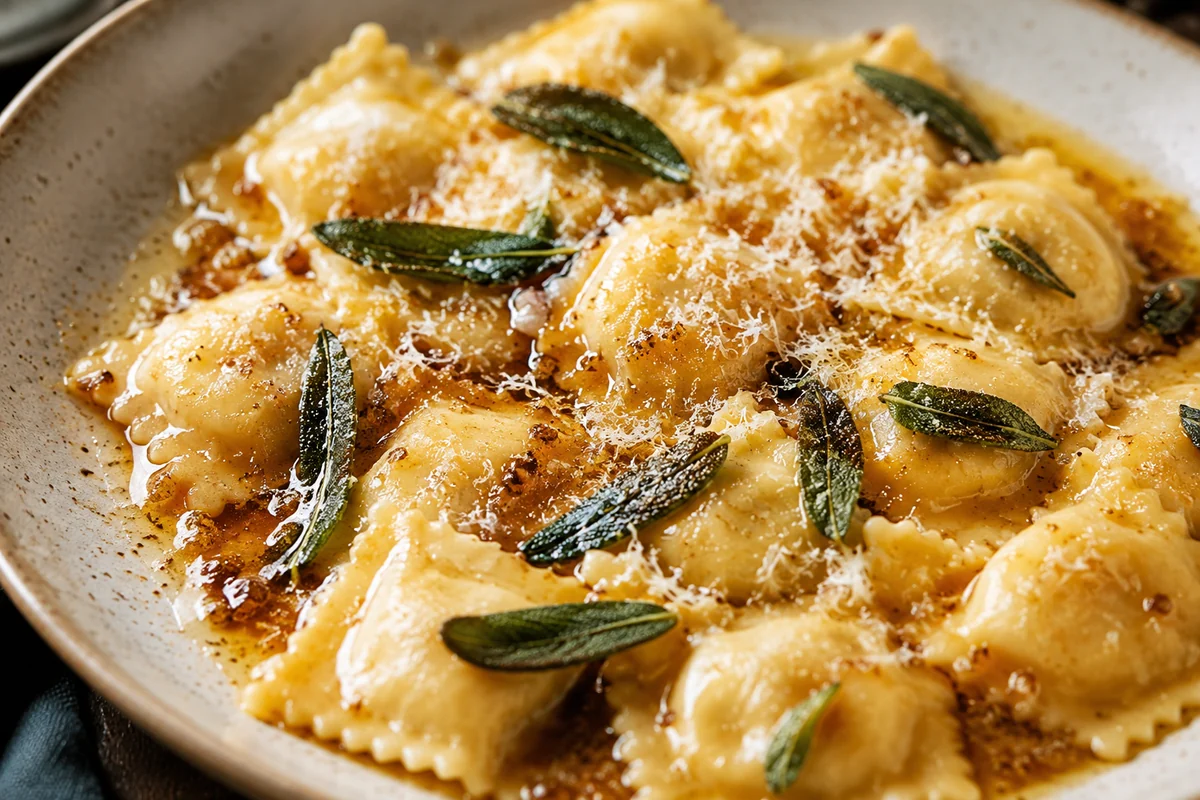
Stuffed pasta carries a lot of flavor on the inside, so the sauce should support it, not bury it. This is why the classic pairings for ravioli are light. Brown butter with crispy sage is the gold standard for cheese or squash filled ravioli, and it takes three minutes. Melt butter until it foams and smells nutty, toss in sage leaves until they crisp, then spoon it over the drained ravioli with a little grated parmesan and pasta water to loosen.
The portion of sauce matters as much as the type. With long pasta you can be generous, but ravioli want a lighter hand. Too much sauce buries the filling you worked to enjoy and turns the dish heavy. A good rule is just enough to gloss each piece, with a little pooling on the plate, not a swamp. Spoon the sauce over and around rather than drowning the ravioli in it, and let the filling stay the star.
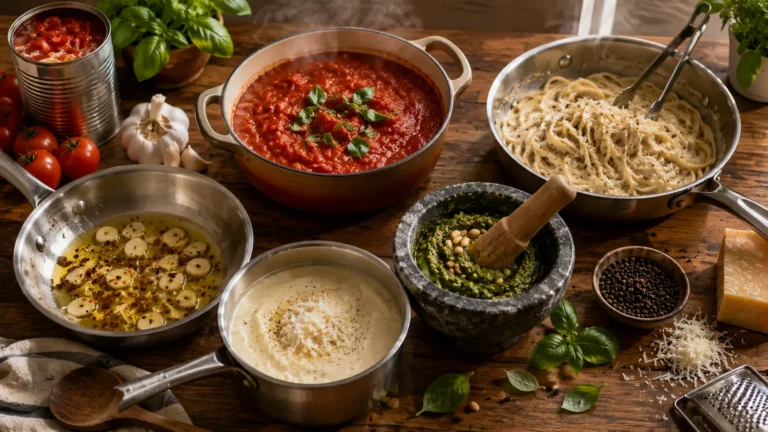
A simple tomato sauce works for meat filled ravioli, but keep it light and brothy rather than thick and heavy. Cream sauces flatter spinach and ricotta fillings, though a delicate hand is key so the dish does not turn rich on rich. The starchy pasta water trick matters here as much as anywhere: a few spoonfuls tossed with the ravioli and a knob of butter or a ladle of sauce creates a glossy coat that clings without weight. If you lean toward the silky side, this collection of cream sauce ideas gives you several gentle options that will not overpower a soft filling.
| Filling | Best Sauce | Finishing Touch |
|---|---|---|
| Cheese or ricotta | Brown butter and sage | Grated parmesan, black pepper |
| Squash or pumpkin | Brown butter, toasted nuts | Crispy sage, a little nutmeg |
| Meat | Light tomato or broth | Fresh basil, drizzle of olive oil |
| Spinach and ricotta | Gentle cream sauce | Lemon zest, parmesan |
| Mushroom | Garlic butter | Thyme, parmesan |
Mistakes That Burst Ravioli
Almost every ravioli disaster comes down to one of a few errors. The biggest is a hard rolling boil. The violent motion tears the delicate seams. Drop to a gentle simmer and most of your problems vanish. The second is overcrowding. Too many ravioli in too little water means they stick together and rip apart when you free them. Give them space and cook in batches.
Third is overcooking. Ravioli go from tender to mushy and split quickly, so start checking as soon as they float. A burst ravioli has usually been in the water too long, not too briefly. Fourth is dumping them into a colander, which crushes the lower layers. Lift them out one batch at a time. Fifth, and this one trips up home cooks who make their own, is a weak seal. If you rolled the dough yourself, press the edges firmly and push out trapped air pockets before sealing, because air expands in hot water and pops the parcel open. A small amount of water or egg wash brushed between the layers helps the seal hold. The principle of stuffed pasta is universal, and even gluten free versions follow the same gentle simmer rule, with worked examples in this set of gluten free pasta and pizza recipes.
Matching Ravioli to the Right Pot and Timing
Portion size and pot size go together more than people expect. A single serving of ravioli is roughly six to nine pieces depending on their size and the filling, since stuffed pasta is more filling than plain noodles. For a family of four you might cook thirty to forty pieces, which is too many for a single batch in a medium pot. Crowding is the enemy, so either use a large stockpot or cook in two batches and hold the first in a little warm sauce while the second cooks.
Timing also shifts with the filling, not just the dough. A dense meat filling takes a touch longer to heat through than a light cheese one, even if the pasta is the same thickness. This is why the taste test matters more than the clock. The dough may look done while the center is still cool, especially with frozen ravioli straight from the freezer. When in doubt, give them another thirty seconds and taste again. Ravioli are forgiving on the early side and unforgiving on the late side, so it is better to check often than to walk away.
Water temperature recovery is the quiet variable. When you drop cold or frozen ravioli into the pot, the water temperature falls. With a small pot and a lot of ravioli, it can drop so far that the water stops simmering entirely, and the ravioli sit in lukewarm water turning soggy. A big pot of water holds its heat better and bounces back fast. This is the single biggest reason to use more water than you think you need.
Storing and Reheating Cooked Ravioli
Ravioli are best eaten the moment they come out of the pot, but life does not always cooperate. If you have leftovers, store the cooked ravioli and the sauce separately when you can, because ravioli sitting in sauce keep absorbing liquid and turn soft and bloated. Cooled cooked ravioli keep in an airtight container in the fridge for about three days. Uncooked fresh ravioli are more delicate and should be cooked within a day or two, while frozen uncooked ravioli hold for a couple of months.
Reheating is where most people ruin good ravioli. Do not blast them in the microwave, which heats unevenly and can make the dough rubbery while the filling stays cold. Instead, reheat gently. A quick dip in simmering water for thirty to sixty seconds revives boiled ravioli beautifully, or you can warm them slowly in a pan with a little sauce or butter over low heat. If you must use the microwave, cover them, add a spoonful of water or sauce to create steam, and heat in short bursts. The goal is gentle, even warmth, the same principle that governs cooking them in the first place.
Freezing your own uncooked ravioli is a smart make ahead move. Arrange them in a single layer on a floured tray, freeze until solid, then transfer to a bag. Freezing them flat first stops them from clumping into one frozen brick. When you want dinner, drop them straight into simmering water from frozen, no thawing, and add a couple of minutes to the cook time. This is the same path commercial frozen ravioli take, and it works just as well at home.
Beyond Boiling: Other Ways to Cook Ravioli
Boiling is the standard, but it is not the only road. Pan frying or “toasting” ravioli is a great trick for fresh or frozen ones. Boil them for a minute or two less than usual, then finish them in a hot skillet with a little butter or oil until the outside crisps and turns golden. The contrast between the crunchy edge and the soft filling is fantastic, and it works beautifully as an appetizer dipped in marinara.
You can also bake ravioli into a layered dish much like lasagna, with sauce and cheese, where they cook through in the oven and the top browns. This skips boiling entirely, so use fresh or thawed ravioli and enough sauce to keep them from drying out. For a long history of the dish, its regional fillings, and how it spread across Italy, the overview of ravioli is worth a read. And if you are watching the nutrition side, the filling drives most of it, so a cheese filled ravioli leans richer while a vegetable filling lightens things up. Harvard’s guide to the best foods for vitamins and minerals is a useful reference when you want to build a balanced plate around whatever filling you choose.
Frequently Asked Questions
How do you know when ravioli is done?
Ravioli float to the surface as they cook, which is the first signal. Fresh ravioli are usually done within a minute of floating, while frozen ones need one to two minutes more after rising. To be certain, lift one out and taste the corner of the dough at the sealed edge, which should be tender with no raw or pasty bite.
Do you cook ravioli in boiling or simmering water?
Bring the water to a boil first to dissolve the salt, then lower the heat to a gentle simmer before adding the ravioli. A hard rolling boil tosses the delicate parcels around and bursts the seams, letting the filling escape. A calm simmer cooks them just as quickly while keeping each one intact.
Can you cook frozen ravioli without thawing?
Yes, cook frozen ravioli straight from the freezer without thawing. Drop them into gently simmering salted water and add a couple of extra minutes to the cook time so the centers heat through. Thawing first makes the dough sticky and more likely to tear, so it is better to cook them frozen.
Why do my ravioli fall apart when cooking?
Ravioli fall apart from boiling too hard, overcrowding the pot, overcooking, or a weak seal. Use plenty of water at a gentle simmer, cook in batches so they are not crushed together, and lift them out with a slotted spoon instead of dumping them into a colander. If you make your own, press the edges firmly and push out trapped air.