
The one decision that changes this dish before you touch a pan: cream or no cream. A chicken fettuccine alfredo recipe can run on half-and-half (Natasha’s Kitchen), heavy cream (Food Network, The Salty Marshmallow), or no cream at all: the Roman original that Serious Eats and Wikipedia both document as butter, young Parmesan and starchy pasta water. The mistake that wrecks all three is the same: a hard boil or pre-shredded cheese, which breaks the sauce into a greasy, grainy mess. Pick your cream level first, keep the heat at a low simmer, and grate the cheese off the block.
Quick answer. For a lighter chicken fettuccine alfredo, build the sauce on 3½ cups half-and-half and simmer it 8-10 minutes until it begins to thicken. For a richer version, use heavy cream and Parmigiano-Reggiano. For the authentic dish, skip cream entirely: butter and young Parmesan aged no more than 18 months, emulsified with pasta water. Whichever you choose, keep the pan below a boil and grate cheese fresh from the block so the sauce stays smooth.
❤️ Why this chicken fettuccine alfredo is worth cooking

Most recipe pages hand you one sauce and call it the right one. The sources behind this dish do not agree, and that disagreement is useful. Food Network’s test kitchen openly declines to use half-and-half, saying rich cream gives the dish “its irresistible texture.” Natasha’s Kitchen runs the same plate on half-and-half for 509 kcal per serving across 8 servings. Serious Eats and Wikipedia both trace the original to Rome, c. 1907-1908, with only three ingredients.
So this page gives you the choice, not a verdict: a lighter weeknight sauce, a classic rich one, or the no-cream version Alfredo Di Lelio actually served. See also: our Pasta and Cream Recipes guide.
Ingredients for chicken fettuccine alfredo, three versions compared

The table below lines up what each documented recipe puts in the pan, so you can see exactly where the cream decision lands and what it costs in richness.
| Element | Half-and-half (Natasha’s Kitchen) | Heavy cream (Food Network) | No-cream Roman (Serious Eats) |
|---|---|---|---|
| Dairy base | 3½ cups half-and-half | 2 cups heavy cream | No cream at all |
| Fat / butter | 1 Tbsp butter + olive oil | 1 stick (8 Tbsp) butter | 1 stick butter |
| Cheese | Parmesan to taste | 1½ cups Parmigiano-Reggiano | 4 oz Parmigiano per 1 lb pasta |
| Chicken | 2 lbs breast | – | Not in base recipe |
| Yield | 8 servings | 4 servings | Per 1 lb fettuccine |
The chicken and mushrooms in the version written out below follow Natasha’s Kitchen, which pairs 2 lbs chicken breast with 1 lb white mushrooms and a half-and-half sauce. Food Network’s figures (2 cups heavy cream, 1½ cups Parmigiano-Reggiano) come from its test kitchen recipe; Serious Eats’ ratio is a stick of butter and 4 oz cheese per pound of pasta.
🧈 Ingredients you need

This block makes the half-and-half version for 8 servings. Every line starts with a quantity, so you can shop from it directly.
- 2 lbs chicken breast, sliced into strips
- ¾ lb fettuccine (or angel hair or vermicelli)
- 1 lb white mushrooms, thickly sliced
- 1 small onion, finely chopped
- 3 cloves garlic, minced
- 3½ cups half-and-half
- ¼ cup parsley, finely chopped, plus more to garnish
- 1 tsp sea salt, plus more for pasta water
- ¼ tsp black pepper
- 3 Tbsp olive oil, divided
- 1 Tbsp unsalted butter
If you want a creamier, thicker result, half-and-half can be swapped for equal parts milk and heavy whipping cream. For the authentic path, drop the cream and mushrooms entirely and hold 4 oz young Parmesan against 1 lb of fettuccine.
The best chicken fettuccine alfredo depends on your cream choice

There is no single “best” here, so here is the rule each source actually supports. Choose the half-and-half build if you want a lighter plate that still coats the noodles: it is designed to thicken during a rest rather than from fat content. Choose heavy cream if texture matters most; Food Network’s developers reject half-and-half outright for that reason.
Choose the no-cream Roman method if you want what Di Lelio served: Serious Eats reports the original “contains absolutely no cream, black pepper, or other ingredients beyond pasta, cheese, butter, and salt.” Wikipedia, citing Carla Lalli Music in Bon Appétit, goes further (“no authentic fettuccine Alfredo recipe should include cream (because it dulls the flavor of the cheese).”)
One figure settles the cheese question for the no-cream path: Serious Eats specifies Parmigiano-Reggiano aged no more than 18 months, or Grana Padano, for a sweeter, less spicy flavor. Wikipedia likewise references “young” Parmesan in the original three ingredients.
How to make chicken fettuccine alfredo (half-and-half method)
Before you start: salt your pasta water, slice the chicken into strips, chop the onion and mushrooms, and have the half-and-half measured. Cook from this list in order.
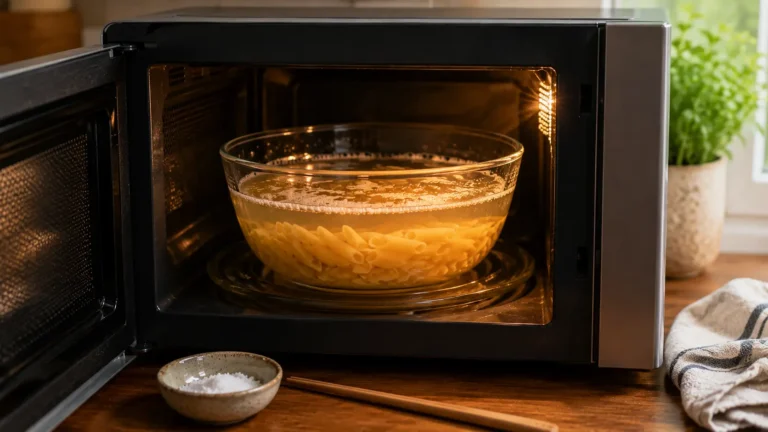
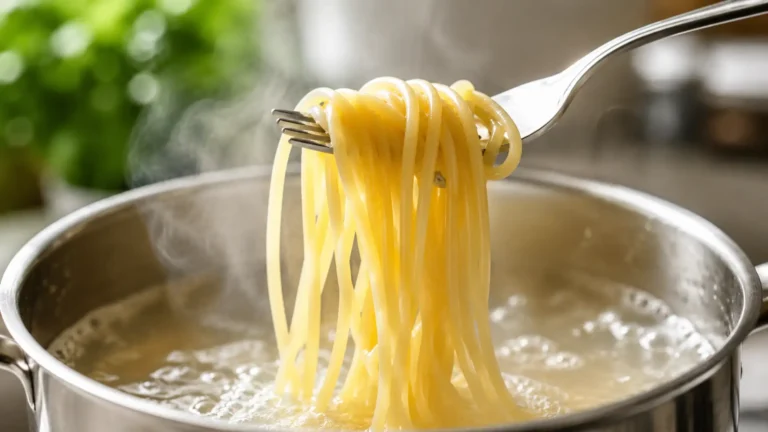
- Boil the fettuccine in salted water (4 qts water, 1 Tbsp salt) to just short of al dente.
- Drain and set aside. Remove it while still firm: it finishes in the sauce.
- Season the chicken strips with salt and pepper. Heat 2 Tbsp olive oil in a large, deep skillet over medium-high and sauté the chicken until lightly golden and cooked through, about 5 minutes. Remove and set aside.
- Add 1 Tbsp olive oil and 1 Tbsp butter to the same pan. Sauté the onion 3 minutes until soft: this draws out sweetness that the cream alone cannot.
- Add the sliced mushrooms and cook 5-7 minutes, stirring often, until soft and their water has cooked off. Stir in the garlic until fragrant.
- Pour in the 3½ cups half-and-half and simmer over medium-high 8-10 minutes until it begins to thicken. Keep it below a rolling boil so the dairy does not break.
- Return the chicken to the pan, add ¼ cup parsley, and season to taste (½ to 1 tsp salt, ¼ tsp pepper).
- Add the drained pasta and toss to combine. Heat one minute more until warmed through.
- Turn off the heat, cover, and let the pasta rest 10-15 minutes. This rest is make-or-break: the half-and-half thickens as it sits and clings to the noodles instead of pooling. Stir and serve, garnished with parsley.
If you are building the no-cream Roman version instead, the rhythm is different: cook fettuccine, then off low heat toss butter and finely grated young Parmesan with reserved starchy pasta water until it emulsifies into a glossy sauce; Serious Eats notes that starchy water “keeps it light with no need for cream.” For a cream-only sauce on the side, The Salty Marshmallow simmers butter, heavy cream, garlic and Parmesan over low heat for about 2 minutes, not boiling.
Easy chicken fettuccine alfredo: the three fixes that keep it smooth
A thin, broken or grainy sauce almost always comes from one of three errors, and no single recipe page assembles all three fixes. Here they are together.
- Grate the cheese off the block. The Salty Marshmallow advises freshly grated Parmesan “right off of the block so that your sauce isn’t grainy”: the anti-caking agents in shaker cheese keep it from melting clean. Serious Eats adds that finely grating it on small holes helps it melt evenly.
- Keep a low simmer, never a boil. Cream and cheese separate under a hard boil. The Salty Marshmallow holds its sauce at a simmer “but not boil” for about 2 minutes; Natasha’s half-and-half simmers 8-10 minutes on controlled heat.
- Use starchy pasta water to hold the emulsion. Serious Eats calls the starchy water “essential to helping to hold that emulsion and preventing the sauce from separating in a greasy, broken mess.” It also thins a sauce that tightened too far.
If the sauce still reads thin, patience beats more cheese. The Salty Marshmallow lets it stand 2-3 minutes to set; Natasha’s version is built to thicken across its 10-15 minute rest. When reheating leftovers that have gone gluey, loosen them over medium-low with a splash of water. For a related chicken-and-cream build, see also: our Chicken Tetrazzini guide.
About nutmeg: Food Network adds two pinches to offset the richness of the cheesy, creamy sauce. It is optional and belongs to the heavy-cream version, not the Roman one, where salt and young cheese carry the flavor on their own.
Frequently asked questions
Why is Fettuccine Alfredo not popular in Italy?
What Italians eat is the Roman original Alfredo Di Lelio made in 1907 or 1908: just three ingredients: fettuccine, young Parmesan and butter. The cream-heavy, chicken-topped plate common abroad is a US addition; Wikipedia notes cream and additions like chicken appear “outside Italy,” which is why the dish reads as foreign there.
What is a common mistake when making Alfredo sauce?
Boiling it. Cream and cheese break into a greasy or grainy sauce under high heat. The Salty Marshmallow holds a simmer, not a boil, for about 2 minutes; Serious Eats relies on starchy pasta water to keep the emulsion intact. The second frequent error is shaker cheese, which will not melt smooth off anti-caking agents.
What cheese is best in Alfredo sauce?
Parmigiano-Reggiano, grated fresh from the block. For the no-cream Roman style, Serious Eats specifies a young wheel aged no more than 18 months (or Grana Padano) for a sweeter, less spicy result: matching the “young” Parmesan in Wikipedia’s original three-ingredient recipe. Pre-grated shaker cheese turns the sauce grainy.
What is an easy 3-ingredient Alfredo sauce?
The authentic one. Di Lelio’s dish is three ingredients: fettuccine, young Parmesan and butter, bound with starchy pasta water instead of cream. Serious Eats reports it “contains absolutely no cream, black pepper, or other ingredients beyond pasta, cheese, butter, and salt.” Toss it off the heat so the cheese melts into a glossy coat.