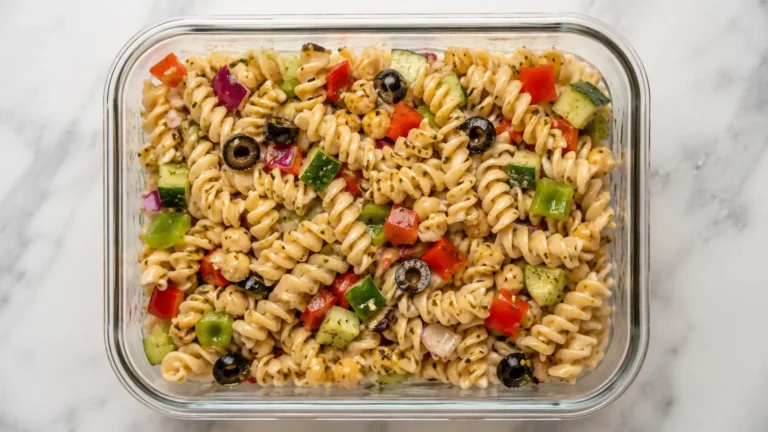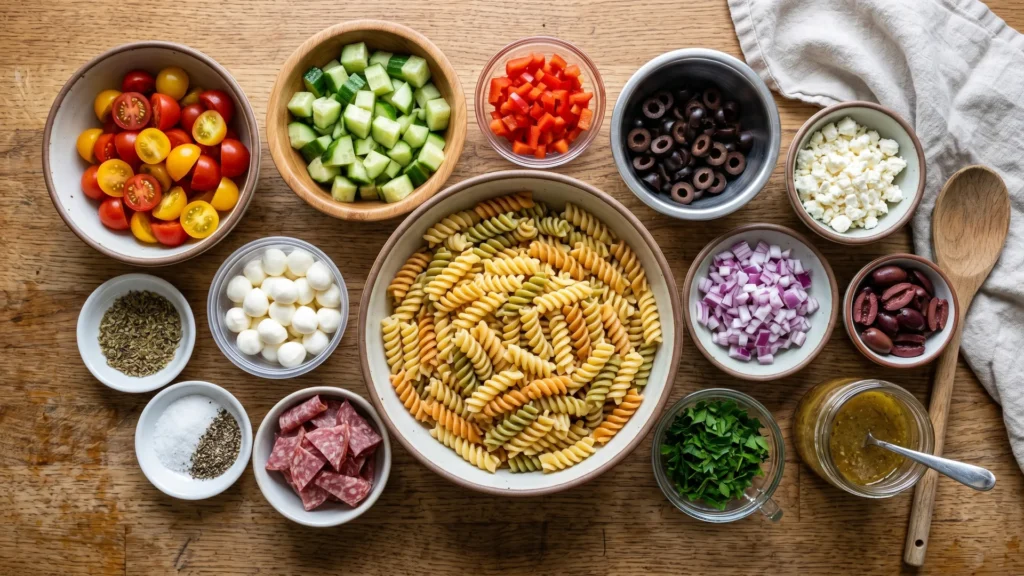
What goes into a pasta salad is, at its core, five things working together: a sturdy short pasta, a crunchy mix of vegetables, a protein or cheese for substance, fresh herbs for lift, and a bold dressing that ties it all together. Get the ratio and the technique right and a pasta salad is one of the best make-ahead dishes there is, holding up for days and often tasting better the next morning once the flavors settle. Get them wrong and you end up with bland, dry, clumpy noodles that nobody reaches for at the potluck. The secrets are not exotic ingredients but a handful of techniques: pick a shape with ridges and pockets, cook it a touch past al dente, dress it generously while warm, and season harder than you think you need to. In this guide I lay out the full formula, the best pasta shapes, the vegetables and proteins that work, how to build a dressing that clings, and the make-ahead and storage moves that keep a pasta salad good.
The Five-Part Formula
Every great pasta salad is a balance of five parts, and once you understand the role each one plays you can build endless versions without a recipe.
| Component | Role | Examples |
|---|---|---|
| Pasta | The base, holds dressing | Rotini, fusilli, penne, farfalle |
| Vegetables | Crunch, color, freshness | Cherry tomatoes, cucumber, bell pepper, red onion |
| Protein or cheese | Substance, savory depth | Mozzarella, feta, salami, chicken, chickpeas |
| Herbs and extras | Brightness, accent | Basil, parsley, olives, artichokes, pepperoncini |
| Dressing | Binds and seasons everything | Red wine vinaigrette, Italian, creamy mayo-based |
A rough starting ratio is about equal volumes of cooked pasta and combined add-ins (vegetables plus protein and cheese), then enough dressing to coat everything generously with a little pooling at the bottom of the bowl. Too little dressing is the most common pasta-salad failure, because cold pasta drinks it up. From there you flex toward whatever style you want: more vegetables for a lighter salad, more protein and cheese for a heartier one.
Pick the Right Pasta Shape
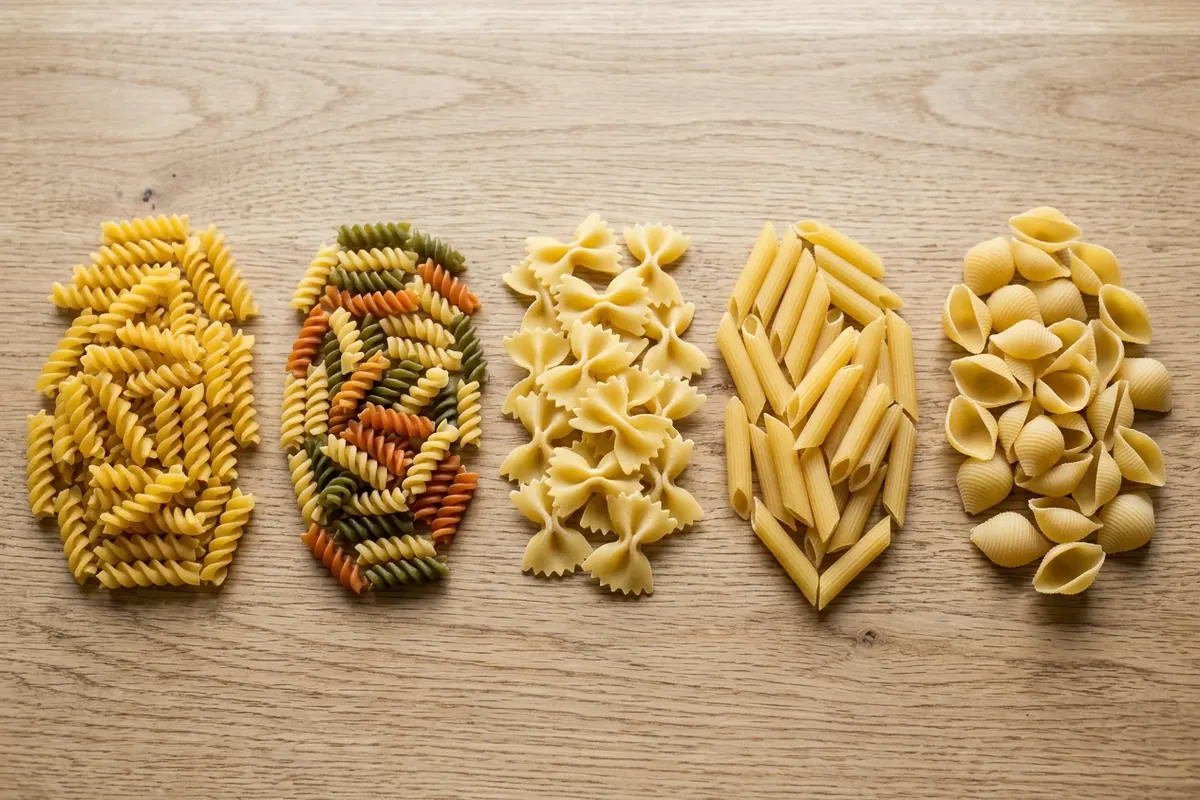
Shape matters more than people expect. The best pasta-salad shapes are short ones with ridges, twists, and pockets that trap dressing and small bits of cheese and vegetable: rotini and fusilli (corkscrews) are the classic top choice, with farfalle (bow tie), penne, cavatappi, and small shells close behind. These hold a forkful of salad together and grip the dressing instead of letting it slide off. Avoid long strands like spaghetti, which tangle and do not mix evenly with chunky add-ins, and avoid very smooth or delicate shapes that go limp. For a deeper map of which shape suits which job, our guide to pasta shapes breaks down the logic, and our overview of the types of pasta shows where the salad-friendly shapes sit among the rest. If you are feeding a gluten free crowd, a sturdy short gluten free shape works fine; just follow the cooking note below carefully, because gluten free pasta needs extra attention in a cold salad.
The Cooking Trick: Slightly Overcook, Then Rinse
This is the technique that separates a good pasta salad from a chalky one, and it runs opposite to how you cook pasta for a hot dish. For pasta salad you want to cook the noodles 1 to 2 minutes past al dente, because pasta firms up and dries out as it chills in the fridge; noodles cooked to a firm al dente turn hard and chalky once cold, while slightly softer ones land at a pleasant just-right texture. The second half of the trick is to rinse the cooked pasta under cold water. This is the one time rinsing is correct: it stops the cooking instantly and washes off the surface starch that would otherwise make a cold salad gluey and pasty. Drain it well after rinsing so the dressing is not diluted by clinging water. Then, while the pasta is still a little warm and just-rinsed, toss it with a portion of the dressing right away. Warm pasta absorbs dressing far better than cold, so dressing it early seasons the noodles from the inside rather than just coating the surface.
Vegetables: Crunch, Color, and Freshness
Vegetables bring the contrast that keeps a pasta salad from feeling heavy. The reliable crunchy core is cherry or grape tomatoes (halved), cucumber (seeded if very watery), bell peppers, and red onion (soaked in cold water for ten minutes to tame its bite). From there you can add shredded carrot, blanched broccoli or green beans, celery, radish, or corn for sweetness. Marinated or jarred vegetables pull double duty as both vegetable and flavor punch: marinated artichoke hearts, roasted red peppers, sun-dried tomatoes, and pepperoncini add tang and depth along with texture. Keep watery vegetables in check, since cucumber and tomato shed liquid that thins the dressing over time; salt and drain very watery ones briefly, or add them closer to serving. Cut everything to a roughly bite-size, consistent size so each forkful gets a mix. The goal is a salad where the vegetables read as fresh and crisp against the soft pasta.
Protein and Cheese: Making It a Meal
Protein and cheese turn a side into a main. Cheese is almost universal in pasta salad: fresh mozzarella pearls, cubed provolone, crumbled feta, or a generous handful of grated Parmesan each bring a different character, with feta adding salty tang and mozzarella adding mild creaminess. For protein, the Italian-deli route adds salami, pepperoni, or cubed ham; the lighter route adds grilled or rotisserie chicken, shrimp, or canned tuna; and the meat-free route leans on chickpeas, white beans, or extra cheese and a hard-boiled egg. A scoop of beans does the same filling work as meat while keeping the salad vegetarian, and it pairs naturally with a vinaigrette. If you want the salad to be a full lunch rather than a side, aim for a real handful of protein per serving rather than a token sprinkle. America’s Test Kitchen has published careful work on building balanced cold salads at America’s Test Kitchen, and the principle holds: protein plus cheese plus a sharp dressing is what makes a pasta salad satisfying instead of just a pile of noodles.
The Dressing: What Ties It All Together
The dressing is the make-or-break element, because it seasons every component and binds the salad. Two families cover most pasta salads. A vinaigrette-style dressing, the Italian classic, is built from olive oil and an acid (red wine vinegar or lemon juice) at roughly a 3-to-1 oil-to-acid ratio, plus garlic, dried oregano, salt, pepper, and often a spoon of Dijon to emulsify and a pinch of sugar to balance. A pinch of the briny liquid from pepperoncini or olives deepens it. The other family is creamy: mayonnaise (often cut with a little vinegar, mustard, and sometimes sour cream or buttermilk) for a classic American deli pasta salad. Whichever you choose, season aggressively, because cold food mutes flavor and an under-seasoned pasta salad tastes flat. Make extra dressing and reserve some, since the pasta keeps drinking it up; stir the reserved portion in just before serving to refresh the salad. Bon Appetit covers the ratios and emulsifying tricks for these dressings at Bon Appetit, and the takeaway is to dress generously and taste-correct cold, not warm.
Building It in the Right Order
Sequence keeps the salad from going soggy or bland. Cook and rinse the pasta, then toss it warm with a portion of the dressing so it absorbs seasoning. Let that cool while you prep everything else. Add the sturdy vegetables, the protein, and the cheese, then more dressing, and toss. Chill for at least 30 minutes (an hour or two is better) so the flavors marry. Just before serving, add the delicate items: fresh herbs, anything very watery like extra tomato, and any crunchy topping you want to stay crisp, then stir in the reserved dressing and taste for salt and acid one final time. This staged approach means the pasta is well seasoned, the salad is not waterlogged, and the fresh elements still read fresh at the table.
Make-Ahead and Storage
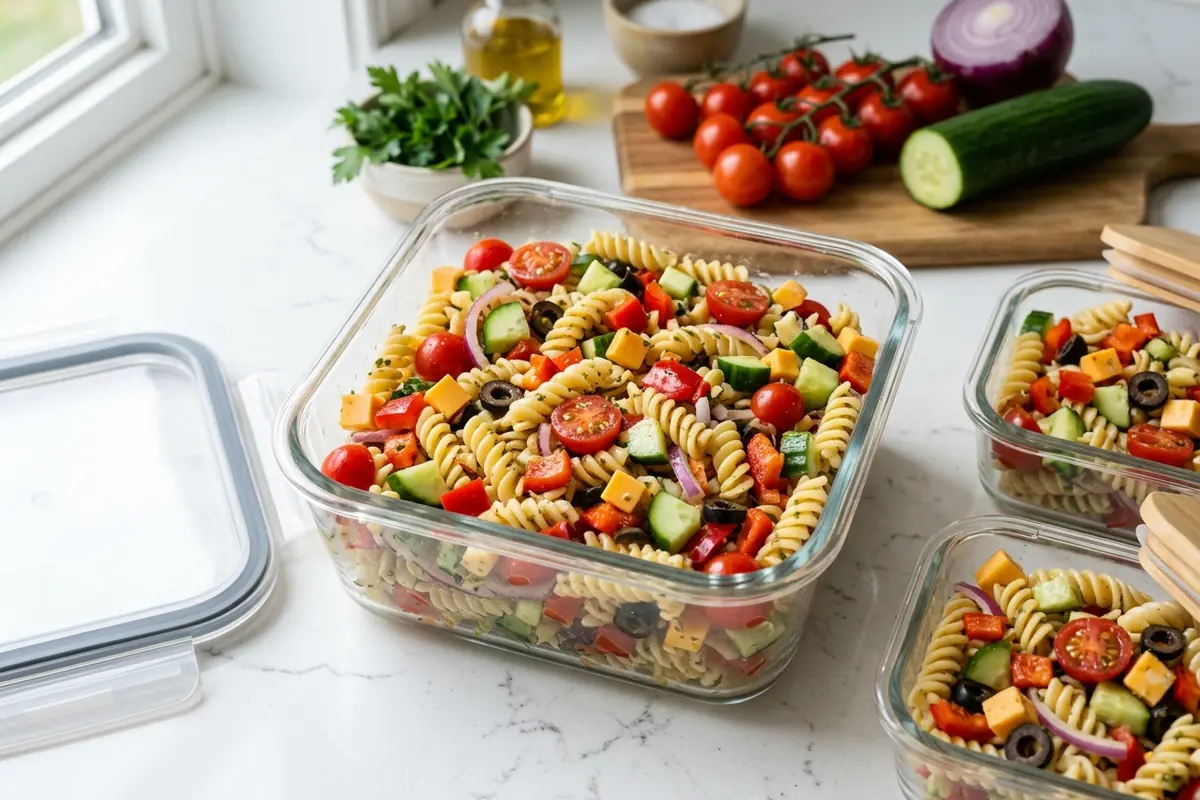
Pasta salad is a champion make-ahead dish, and many versions improve after a rest as the dressing soaks in. A vinaigrette-based salad keeps best, holding 3 to 4 days covered in the fridge; creamy mayonnaise-based salads are a little more perishable but still good for 2 to 3 days and should stay well chilled, especially at outdoor events. The thing to plan for is that the pasta keeps absorbing dressing as it sits, so a salad that was perfectly dressed yesterday can taste dry today. The fix is to hold back some dressing and stir it in before serving, or simply drizzle a little extra oil and vinegar and a pinch of salt to revive it. Add tender herbs and watery vegetables fresh rather than days ahead. For how long the cooked pasta itself stays good and the signs it has turned, our guide on whether pasta can go bad covers the storage details that apply to the salad too.
Seasoning and Balance: The Part Most People Skip
The difference between a forgettable pasta salad and one people ask about is almost always seasoning and balance, not the ingredient list. Cold food tastes flatter than warm food, because chilling dulls our perception of salt and aroma, so a pasta salad that tasted right while you were mixing it warm will taste underseasoned once it comes out of the fridge. The fix is to build in more salt, more acid, and more punch than you think you need, then taste it cold and adjust again right before serving. Balance is the other half. A good pasta salad hits salty (cheese, olives, cured meat), acidic (vinegar or lemon in the dressing), and a little sweet or bitter to round it out (a pinch of sugar, sweet peppers, or a few bitter greens). If a salad tastes dull, it usually needs acid or salt rather than more dressing volume. If it tastes harsh, a touch of sweetness or fat softens it. Keep a small bowl of extra vinaigrette and a flaky salt on hand when you serve, because a final correction at the table is what makes the whole thing snap. Texture balance counts too: you want the soft pasta played against something crisp (raw vegetable, toasted nuts, crunchy celery) so every bite has contrast rather than turning into one soft note.
Common Pasta Salad Mistakes
A few repeat offenders ruin more pasta salads than bad ingredients ever do. The first is undersaucing, which leaves the pasta dry and bland as it absorbs whatever dressing was there; the answer is to dress warm and dress generously, with extra held back. The second is undercooking the pasta, which gives you hard, chalky noodles once cold; cook a minute or two past al dente for salad. The third is skipping the rinse, which leaves a starchy film that turns the salad gluey. The fourth is adding watery vegetables and tender herbs too early, so they weep liquid and wilt; add those close to serving. The fifth is underseasoning for cold, already covered above. The sixth is mixing in long, tangly shapes that do not hold a forkful. Avoid those six and you have cleared the bar that most pasta salads fail. None of them require special skill, just a little sequencing and a willingness to taste and correct rather than dressing once and walking away. For a sense of how shape choice ties into all of this, our wider notes on the salad-friendly options are worth a look alongside this guide.
Easy Variations
Once you have the formula, the variations write themselves. An Italian pasta salad uses rotini, mozzarella, salami, olives, roasted peppers, and an oregano vinaigrette. A Greek version swaps in feta, cucumber, Kalamata olives, red onion, and a lemon-oregano dressing. A creamy deli pasta salad uses shells, peas, cheddar, and a mayo dressing. A caprese version keeps it simple with mozzarella, tomato, basil, and balsamic. A protein-packed version leans on a legume pasta plus chickpeas and grilled chicken. A pesto pasta salad skips the vinaigrette and tosses everything in basil pesto thinned with a little oil. The structure stays the same: short pasta, vegetables, a protein or cheese, herbs, and a bold dressing. Change the supporting cast and you have a new dish. A taco-style salad brings corn, black beans, peppers, and a lime-cumin dressing; a southwest version adds avocado and cilantro; a deli macaroni salad keeps it nostalgic with elbow pasta, celery, and a sweet-tangy mayo dressing. The point is that the five-part structure is a launching pad, not a fixed recipe, so let what is fresh and what you are craving guide the build.
FAQ
What are the main ingredients in a pasta salad?
A pasta salad needs five things: a short sturdy pasta (rotini, fusilli, penne, or bow tie), crunchy vegetables (tomato, cucumber, bell pepper, red onion), a protein or cheese (mozzarella, feta, salami, chicken, or beans), fresh herbs and extras (basil, parsley, olives), and a bold dressing that binds and seasons it all.
What is the best pasta for pasta salad?
Short shapes with ridges and pockets work best because they trap dressing and hold a forkful together. Rotini and fusilli are the top picks, with farfalle, penne, cavatappi, and small shells close behind. Avoid long strands like spaghetti, which tangle and mix unevenly with chunky add-ins.
Should you cook pasta salad pasta differently?
Yes. Cook it 1 to 2 minutes past al dente, because pasta firms and dries as it chills, so slightly softer noodles end up just right cold. Rinse it under cold water to stop the cooking and remove sticky starch, drain well, then toss it warm with some dressing so it absorbs the seasoning.
How do you keep pasta salad from being dry?
Dress it generously and dress it warm, since cold pasta absorbs less. The pasta keeps drinking dressing as it sits, so make extra and stir in a reserved portion just before serving. A last-minute drizzle of oil and vinegar with a pinch of salt revives a salad that has gone dry in the fridge.
How long does pasta salad last in the fridge?
A vinaigrette-based pasta salad keeps 3 to 4 days covered and chilled, and often tastes better after a rest. Creamy mayonnaise-based salads are good for 2 to 3 days and should stay well chilled, especially at outdoor gatherings. Add fresh herbs and watery vegetables close to serving rather than days ahead.
Can you make pasta salad ahead of time?
Yes, and a vinaigrette version is ideal made ahead, since the dressing soaks in and the flavors marry. Build it a day before, hold back some dressing and the delicate herbs and watery vegetables, then stir those in and taste-correct for salt and acid just before serving.
Bottom Line
What goes into a pasta salad comes down to a simple, flexible formula: a sturdy short pasta cooked slightly soft and rinsed, a crunchy mix of vegetables, a protein or cheese for substance, fresh herbs, and a bold, generous dressing that ties everything together. Dress the pasta warm, season harder than feels necessary because cold mutes flavor, and hold back a little dressing to refresh it before serving. Master that structure and you can build an Italian, Greek, creamy, or protein-packed salad from whatever is in the fridge, and it will hold up beautifully for the potluck, the lunch box, or the week ahead.