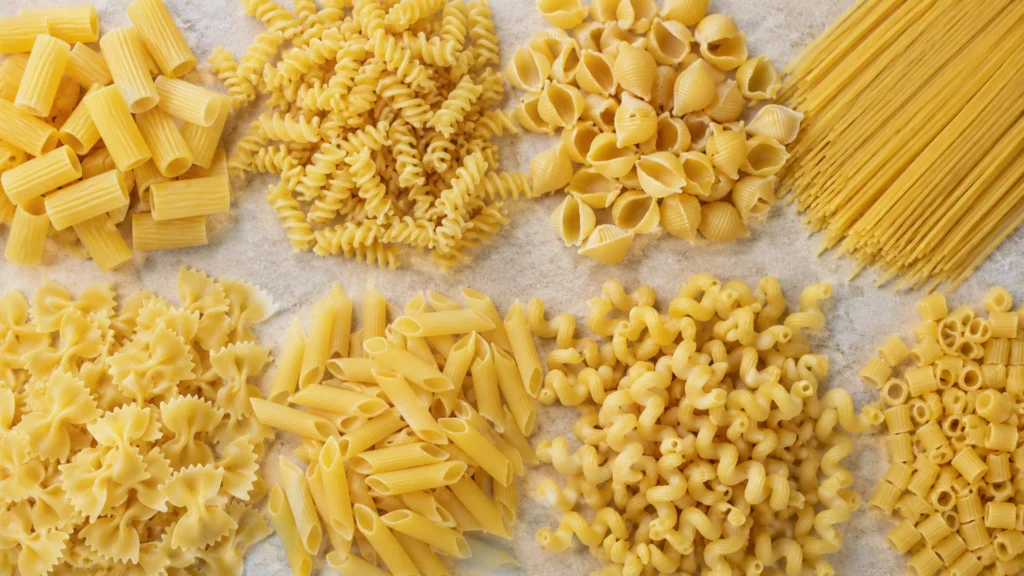
Pasta shapes are not random art. Every ridge, curve, hollow, and twist exists to do one job: hold sauce a particular way so the bite in your mouth tastes balanced instead of dry or drowned. Once you understand that single idea, the wall of boxes at the store stops being confusing and starts reading like a tool rack. In this guide I sort the shapes the way a pasta lab does, by how they behave with sauce, then walk through the long ribbons, the short tubes, the curly catchers, the tiny soup cuts, and the stuffed pockets, with the names, the literal translations, and the sauces that make each one sing. By the end you will be able to look at any shape and predict, with reasonable accuracy, what belongs on it.
Why Shape Decides the Sauce
The governing rule is surface and capture. A sauce clings to a noodle by two mechanisms: it coats the outside, and it gets trapped in pockets, ridges, and hollows. Smooth, thin strands have little to grab with, so they want thin, slick sauces (olive oil, light tomato, seafood) that coat evenly without pooling. Ridged tubes and curly shapes have lots of texture and interior space, so they want thick, chunky sauces (meat ragu, vegetables, cream) that lodge into every groove. Match the two and every forkful carries a fair share of sauce. Mismatch them and you get a plate where the sauce slides to the bottom of the bowl while the pasta stays bare. Hold this mechanism in your head as you read, because the pairings below all flow from it rather than from tradition alone.
Two more variables matter. Thickness controls cooking time and chew: a thick pappardelle ribbon stays toothy under a heavy sauce, while delicate angel hair turns soft in seconds and cannot bear weight. Size controls what the shape can scoop: a cupped orecchiette catches diced vegetables and small beans that would roll right off a flat noodle. Keep surface, thickness, and size in mind and the rest is just vocabulary.
It also helps to know that most shape names are plain Italian descriptions, which makes them easy to remember once you spot the pattern. The endings tell you size: the suffix -ini or -ette means little (spaghettini is thin spaghetti, orecchiette is little ears), -oni means big (rigatoni is the big ridged tube, tortelloni is the big tortellini), and -elle or -elli is a middling diminutive. The roots describe the look: rigate means ridged, lisce means smooth, farfalle means butterflies, penne means pens, vermicelli means little worms. So a name like bucatini decodes as little holed pasta and capellini as little hairs. You do not need Italian to cook, but reading the label this way tells you the size and surface of a shape you have never seen before, which is most of what you need to guess its pairing.
Long Pasta: Strands and Ribbons
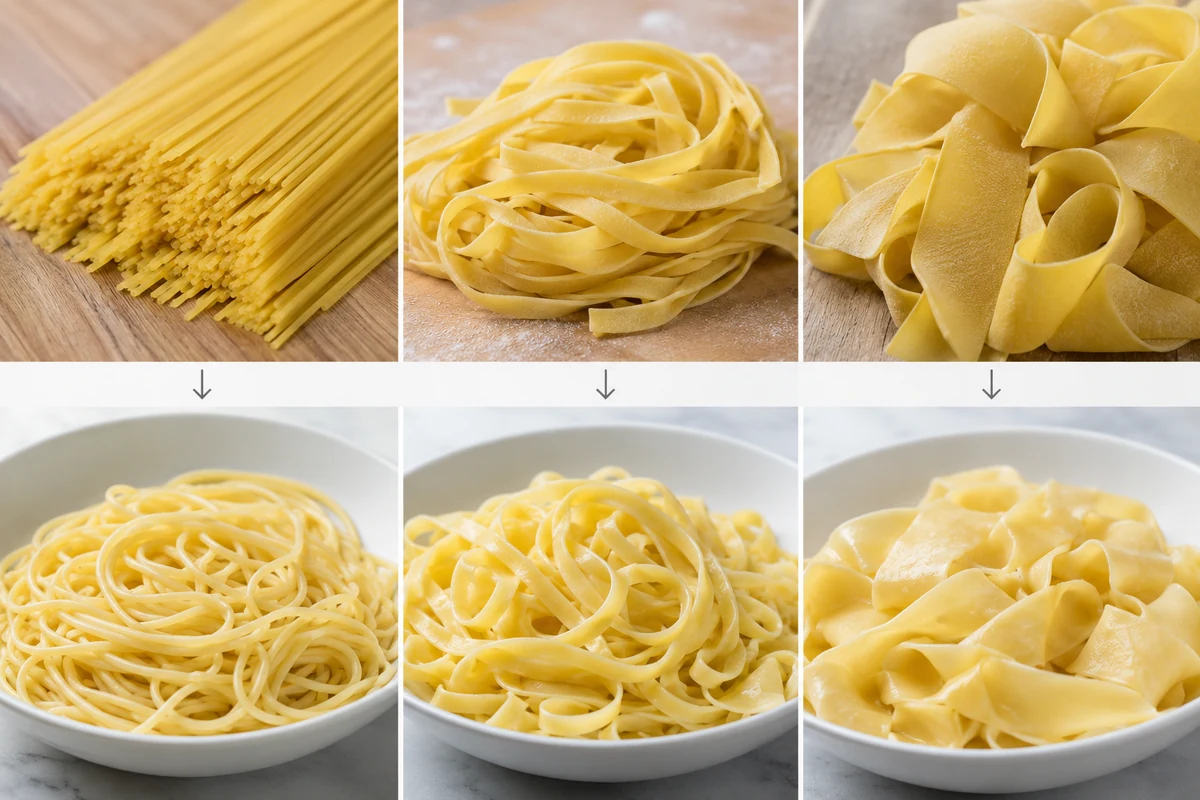
Long pasta (pasta lunga) is the family most people picture first, and it splits cleanly into round strands and flat ribbons. The round strands run from fine to sturdy. Capellini, nicknamed angel hair, is the thinnest, and its delicacy means it can only carry the lightest of partners: a splash of good olive oil, fresh tomato, lemon, a few shrimp. Anything heavier crushes it. Spaghetti is the medium-weight everyman, equally at home under a simple tomato sauce, garlic and oil, or a classic cacio e pepe. Bucatini looks like fat spaghetti but hides a hollow channel down the center, named for the Italian buco meaning hole, and that channel sucks up thin sauces, which is why Romans built amatriciana and cacio e pepe around it.
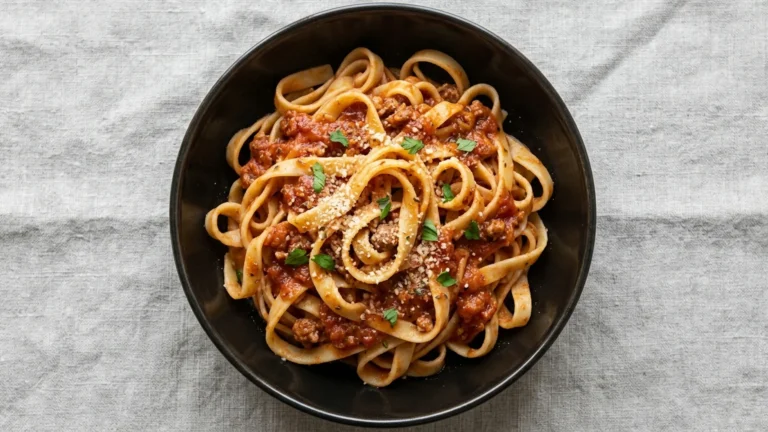
The flat ribbons are built for richer company. Fettuccine, meaning little ribbons, is thick and flat and was practically invented for cream and butter sauces that drape over its broad face. Tagliatelle is its slightly thinner northern cousin and the traditional partner for a slow-cooked meat ragu. Pappardelle is the widest of the group, broad enough to act like edible sheets, and it shines under hearty braises and mushroom sauces where its surface area can carry serious weight. Linguine sits between round and flat, a narrow ribbon that loves seafood and pesto. The pattern across all the ribbons is simple: the wider and flatter the noodle, the heavier the sauce it can support.
Short Pasta: Tubes and Curls
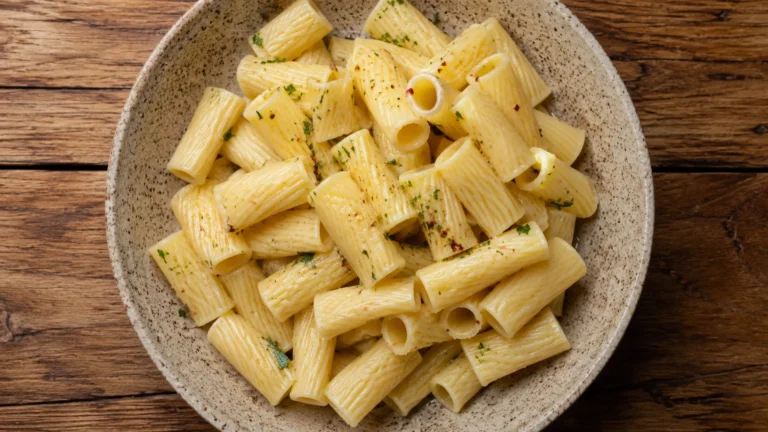
Short pasta (pasta corta) is the workhorse category for weeknight cooking, baked dishes, and pasta salads, and it divides into tubes and textured curls. Among the tubes, penne is the headliner, a cylinder cut on an angle to points at both ends (penna means pen, after the slanted nib of a quill). Penne comes smooth (lisce) and ridged (rigate), and the ridged version grabs far more sauce, which is why penne rigate is the safer default for anything chunky. Rigatoni is a wider, ridged tube with a generous interior that catches chunky meat and vegetable sauces and holds up to baking. Ziti is a smoother, narrower straw, the classic for baked ziti casseroles. For a stovetop tube sauce, try a ridged shape with a sausage-and-garlic sauce the way the garlic penne with spicy sausage leans on the ridges to hold every bit of fat and spice.
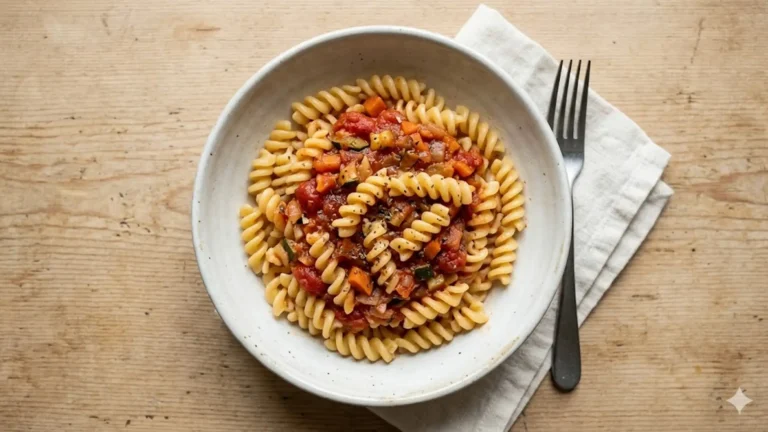
The curls and shaped shorts are the great sauce-catchers. Fusilli and rotini are corkscrews whose spiral grooves trap thick sauces and cling to dressing in cold salads. Farfalle, the bow ties named after the Italian for butterfly, have a pinched center and ruffled wings that catch chunky bits, making them a pasta-salad favorite. Orecchiette, meaning small ears, are concave little domes from southern Italy whose cupped shape scoops up small vegetables, sausage crumbles, and beans. Elbow macaroni, the small C-shaped tube, is the king of cheesy bakes because its bend and hollow hold creamy cheese sauce in every piece. The lesson repeats: more curves and ridges mean more grip, which means thicker sauces.
Tube Pasta in Detail: When to Bake, When to Toss
Tubes deserve a closer look because their behavior changes with size. Narrow tubes (penne, ziti) work both tossed on the stovetop and baked, since they cook evenly and hold a medium sauce. Wide tubes (rigatoni, tortiglioni) are baking and chunky-sauce specialists; their large openings swallow meat and roasted vegetables that smaller tubes would push aside. The truly large tubes (cannelloni, manicotti) are not meant to be tossed at all. They are stuffed with cheese or meat filling, lined up in a baking dish, blanketed with sauce, and baked, functioning more like edible containers than noodles. So when a recipe calls for a tube, read the diameter: small means versatile, medium means chunky sauce, and jumbo means stuff and bake.
Soup Pasta: The Tiny Shapes
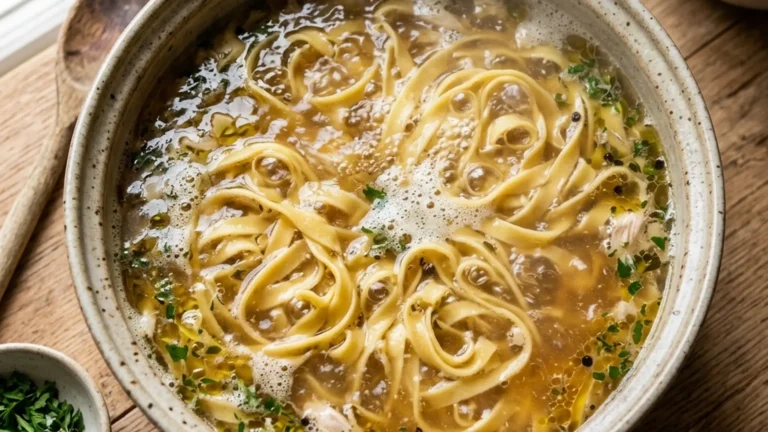
Soup pasta (pastina) is its own small world, made up of miniature shapes designed to cook fast and float in broth. Ditalini are tiny ridged tubes, the backbone of minestrone and pasta e fagioli, small enough to ride on a spoon with the beans. Stelline are little stars that cook in about five minutes and are the comfort food of choice in clear broths and children’s soups. Orzo looks like fat grains of rice and works in brothy soups as well as warm and cold salads. Acini di pepe, meaning peppercorns, are tiny spheres for delicate broths. Anelli are little rings, and fideo is a short, thin strand toasted before it goes into brothy dishes. The rule here is scale: the shape should be small enough to share a spoonful with whatever else is in the bowl, so it integrates into the soup rather than fighting it.
One technique note for soup shapes: cook them separately when you plan to store leftovers. Pastina left sitting in hot broth keeps drinking liquid and turns to mush by the next day, so for a soup you want to keep, boil the pasta on its own, drain it, and add it to each bowl at serving time. For a soup eaten in one go, cooking the pasta directly in the broth is fine and even better, since the released starch gives the broth a little body. That single choice (cook-in versus cook-apart) is the difference between a soup that reheats well and one that turns into a solid block.
Stuffed Pasta: Pockets of Filling
Stuffed pasta (pasta ripiena) turns the noodle into a container for a filling, and the shape signals both the filling tradition and the right sauce. Ravioli are flat squares or rounds sealing a filling between two sheets, anything from ricotta and spinach to mushroom to lobster, and they want the gentlest sauces so the filling stays the star: browned butter and sage, a light tomato, a thin cream. Tortellini are small rings, said to be modeled on a navel, usually filled with meat or cheese and often served in broth or a light cream. Tortelloni are the larger cousins, typically cheese-filled. Cappelletti, little hats, and agnolotti, pinched pillows, round out the family. Because the filling does the heavy flavor work, stuffed shapes punish heavy sauces; restraint is the whole game. A cheese-filled shape like a broccoli cheese tortellini shows the principle, where a light coating lets the filling lead instead of burying it. If you want to roll your own filled shapes by hand, the technique in this guide to making pasta from scratch covers sealing ravioli without a machine.
Fresh Versus Dried: The Same Shape Behaves Differently
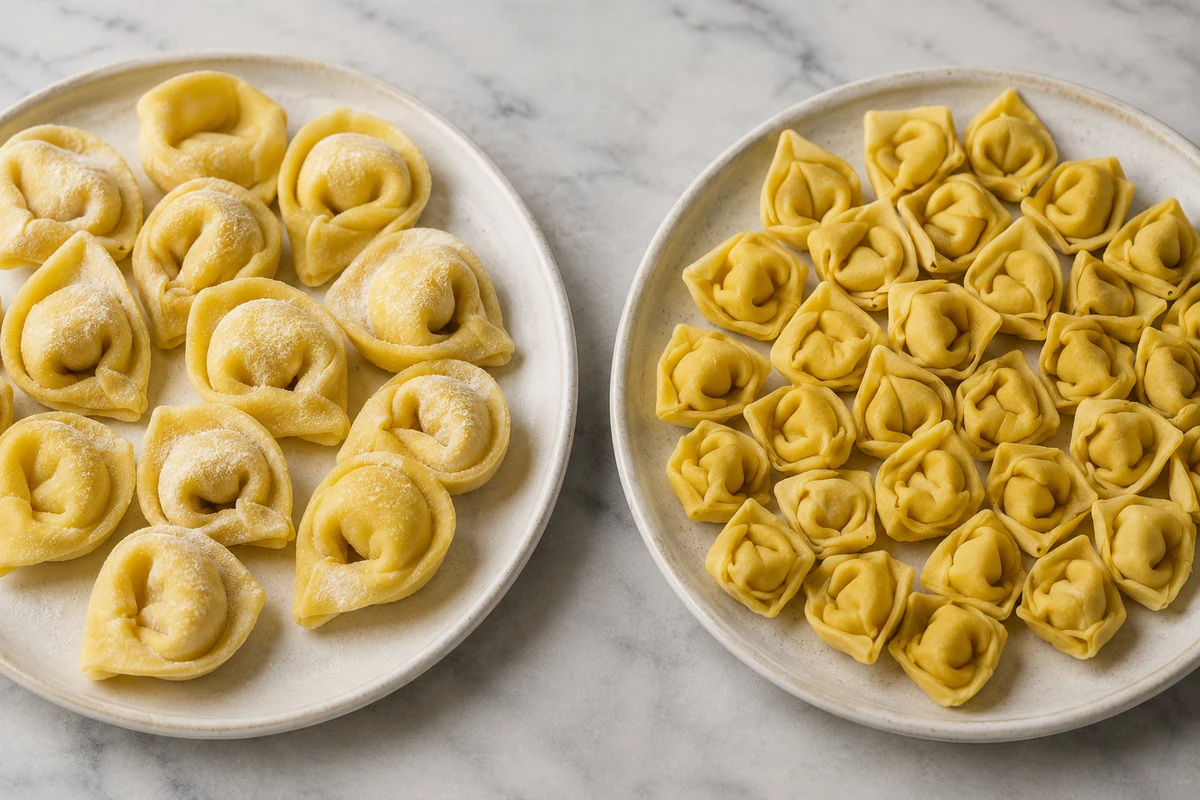
A shape is not the whole story, because the same outline behaves differently in fresh egg pasta versus dried semolina pasta. Fresh egg pasta (think tagliatelle, pappardelle, ravioli) is softer, more porous, and richer; it soaks up cream, butter, and tender ragu and cooks in two to three minutes. Dried pasta, extruded from semolina and water and pushed through bronze or Teflon dies, has a firmer, chewier bite and holds its shape under bold, long-cooked sauces. Bronze-die dried pasta has a rougher, chalkier surface that grips sauce better than the slicker Teflon-die kind, which is worth seeking out on the label. So a dried rigatoni wants a robust tomato or meat sauce, while a fresh pappardelle of the same broad shape wants something more delicate and buttery. The shape suggests the pairing; the fresh-or-dried distinction fine-tunes it.
Regional Shapes and Why They Exist
Many shapes are tied to a region and a reason, which is worth knowing because it explains the pairing without memorization. Orecchiette comes from Puglia in the south, where it is the classic partner for broccoli rabe and sausage; the cupped ears were shaped to hold the bitter greens and a little oil. Trofie, the short hand-rolled twists of Liguria, were built for pesto, their grooves catching the loose green sauce. Bucatini and the Roman tube tradition grew up alongside guanciale-and-tomato amatriciana. Cavatelli, little hand-pressed shells from the south, scoop chunky vegetable and bean sauces. The pattern is that each shape evolved next to the ingredients local cooks had, so the shape and its traditional sauce are two halves of one idea. When a recipe pairs an unfamiliar regional shape with a specific sauce, trust it: that combination was refined over generations for exactly the reason of surface and capture we started with.
This also explains why authentic recipes can feel strict about shape. A carbonara is traditionally spaghetti or rigatoni because both carry the silky egg-and-cheese sauce well; a thin angel hair would clump and a wide pappardelle would overwhelm it. The rules are not snobbery, they are the distilled result of a lot of people cooking the same dish until they found the shape that made each bite balanced. You can break them, and sometimes a swap works beautifully, but knowing the original pairing tells you what the dish is trying to do.
A Quick Pairing Cheat Sheet
| Shape | Family | Best sauce |
|---|---|---|
| Capellini (angel hair) | Long, thin | Light oil, fresh tomato, seafood |
| Spaghetti | Long, round | Tomato, garlic and oil, cacio e pepe |
| Fettuccine | Long, flat | Cream, butter, cheese |
| Pappardelle | Long, wide | Braised meat, mushroom ragu |
| Penne rigate | Short tube | Chunky tomato, sausage, baked dishes |
| Rigatoni | Short tube | Hearty meat sauce, roasted veg, bakes |
| Fusilli / rotini | Short curl | Thick sauces, pasta salad |
| Orecchiette | Short cup | Greens, sausage, small beans |
| Ditalini / stelline | Soup | Broths, minestrone, bean soups |
| Ravioli / tortellini | Stuffed | Browned butter, light tomato, broth |
How to Cook Each Shape Without Overcooking
Shape affects cooking, not just sauce. Thin strands (capellini, angel hair) cook in three to four minutes and overcook in a blink, so taste early. Thick ribbons and tubes need a wider window and benefit from finishing in the pan with the sauce for the last minute, where they drink up flavor and the starch helps the sauce cling. Always salt the water hard, about a tablespoon per four quarts, because that is the only chance to season the pasta itself. Pull each shape a minute before the box time, reserve a cup of starchy cooking water, and finish in the sauce; the residual heat takes it to al dente while the starch water emulsifies everything together. For long-strand shapes, do not break them to fit the pot, just let them soften and slide under as they go. If you are unsure of a shape’s timing, the cooking-water test (bite one, look for a thin white core) beats the clock every time.
FAQ
How many pasta shapes are there?
Estimates run to roughly 310 documented forms known by more than 1,300 regional names, since the same shape often goes by different names in different parts of Italy. For practical cooking you only need to know about a dozen families, sorted by long, short, tube, curl, soup, and stuffed.
What pasta shape holds the most sauce?
Ridged and curly shapes hold the most. Rigatoni, penne rigate, fusilli, and rotini have grooves and twists that trap thick sauce, while orecchiette and shells cup it. Smooth, thin strands like spaghetti and capellini hold the least, which is why they pair with thinner sauces.
Why are some pasta shapes ridged and some smooth?
Ridges (rigate) add surface texture so sauce grips better, which suits chunky and hearty sauces. Smooth shapes (lisce) let slick, oily, or seafood sauces slide and coat evenly. With bronze-die pasta, even the smooth versions have a slightly rough surface that grabs sauce well.
What is the difference between fettuccine, tagliatelle, and pappardelle?
They are all flat egg ribbons that differ mainly in width. Tagliatelle is the thinnest, fettuccine slightly wider, and pappardelle the broadest. Narrower ribbons take cream and butter; the wide pappardelle is built for heavy braises and mushroom ragu.
Which pasta shapes are best for baking?
Sturdy tubes and shells bake best because they hold sauce and keep their structure in the oven. Rigatoni, ziti, penne, and large shells are classics, and jumbo tubes like cannelloni and manicotti are stuffed and baked rather than tossed.
What pasta shape is best for soup?
Tiny pastina shapes are made for soup: ditalini for minestrone and bean soups, stelline (little stars) and acini di pepe for clear broths, and orzo for brothy bowls. They are small enough to share a spoonful with the other ingredients instead of dominating the bowl.
Does the pasta shape really change the taste of a dish?
Yes, indirectly. The shape controls how much sauce each bite carries and where it sits, so the same sauce on the right shape tastes balanced and on the wrong shape tastes either dry or heavy. Texture and chew also differ, which changes how the dish feels in the mouth.
Can I substitute one pasta shape for another?
Within a family, yes. Swap penne for ziti, fusilli for rotini, fettuccine for tagliatelle, and the dish still works. Crossing families is riskier: a thin strand will not carry a chunky meat sauce, and a wide tube will swim in a light oil sauce. Match the new shape’s surface and size to the sauce.
Bottom Line
Pasta shapes are a system, not a mystery. Sort any shape by its family (long strand, flat ribbon, short tube, curl, soup cut, or stuffed pocket), then read its surface and size: smooth and thin wants light, slick sauce; ridged, curly, and cupped wants thick, chunky sauce; flat and wide wants rich and heavy; tiny wants broth; stuffed wants restraint. Layer in whether it is fresh or dried to fine-tune the pairing, and cook each shape to al dente by taste rather than the clock. Learn those few rules and the shelf of boxes turns into a clear set of choices, each one pointing you toward the dish it was built to make. For reliable shape-by-shape detail and sauce science, America’s Test Kitchen is a dependable reference, and this catalog of pasta shows just how deep the variety goes.