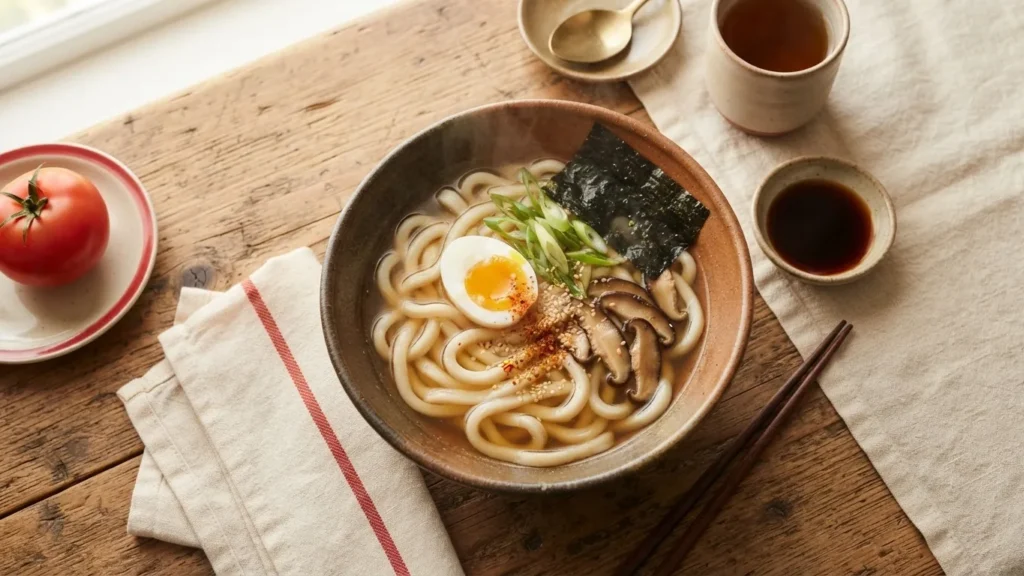
A properly made udon dough feels almost wrong in the hands: dense, dry at the edges, closer to modeling clay than to bread dough. That stiffness is the point. When a from-scratch udon noodle recipe hands you a slab too hard to roll out, the reliable fix is more resting time; extra water rarely fixes it. Udon is a wheat-flour noodle from Japan built on three ingredients, and most of the skill sits in how you rest, roll, boil, and rinse them. The quantities below are drawn from the published formulas of Japanese Cooking 101, Just One Cookbook, and Bon Appétit, with a store-bought shortcut from Kikkoman Corporation for nights without a long rest.
A from-scratch udon noodle recipe needs three pantry items: all-purpose flour, salt, and warm water. Expect a stiff, dry-looking dough, and read that firmness as correct. Rest it at least 2 hours, and up to 12, so it rolls without snapping back; sheet it to 3 mm thick and cut 3 mm-wide strands. Boil fresh noodles in unsalted water, roughly 8 to 15 minutes depending on thickness, then rinse them under cold water to firm the chew. Dried udon follows the time on its package, while sealed precooked frozen udon only needs reheating, about 1 minute in boiling water.
Flour, salt, water: what three udon kitchens actually weigh out
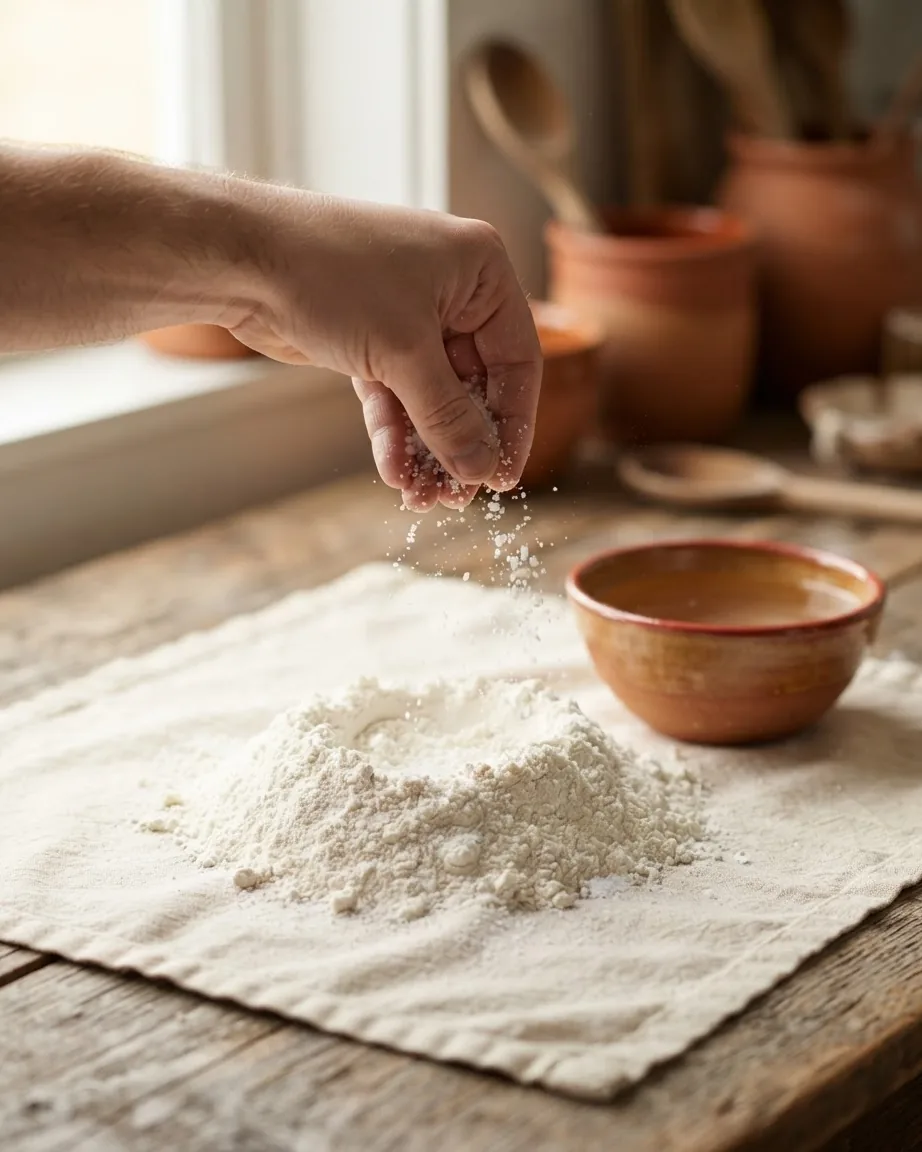
Three documented formulas agree on the ingredient list and split on the ratio. Japanese Cooking 101 mixes 1 cup warm water, 1 Tbsp salt, and 14 oz all-purpose flour for 4 servings. Just One Cookbook scales smaller, with 7 oz flour, 6 Tbsp water, and 0.35 oz (3½ tsp) Diamond Crystal kosher salt, plus potato starch or cornstarch held back for dusting. Bon Appétit weighs 3¼ cups (406 g) flour against 198 g water.
The salt figure in the Just One Cookbook formula looks heavy for a dough this size. Some of it leaves the strands during boiling, which is why the amount runs higher than you would guess from the finished taste. Because kosher salts vary in crystal size, weighing the salt rather than measuring by spoon keeps the dough consistent.
The canonical udon is wheat flour, salt, and water, and the salted dough that results is firmer than any bread dough by design. One deviation in this guide is deliberate: Kikkoman Corporation’s beef udon starts from 200g of dried store-bought udon instead of hand-cut strands, a trade of texture for speed that is worth naming rather than hiding.
How long udon dough rests, and why under two hours fails
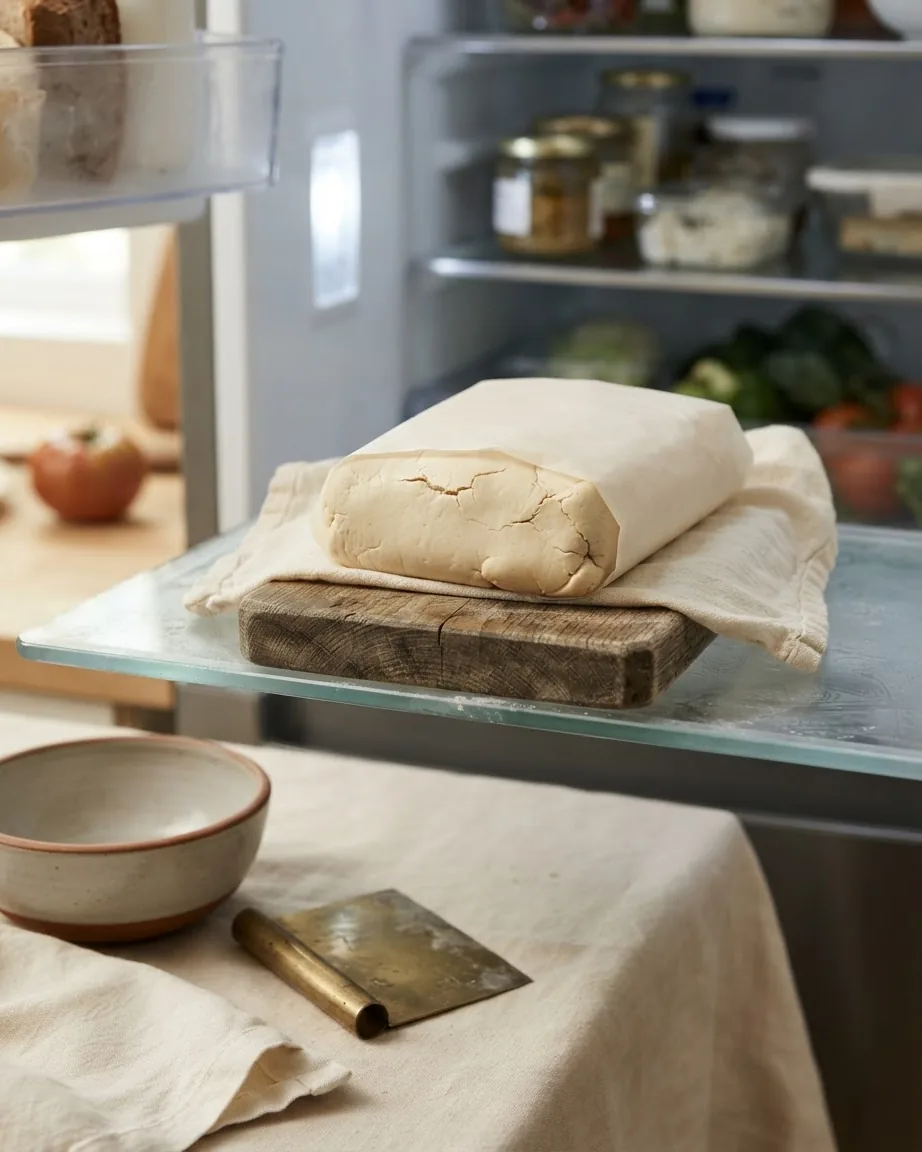
When a stiff udon dough refuses to roll, the correction is a longer rest; adding water rarely does it. Resting hydrates the flour evenly and relaxes the gluten so the slab stops springing back under the pin. The published schedules differ because each is tied to its own workflow and kitchen temperature, and they do not contradict one another so much as describe different setups.
- Japanese Cooking 101 rests its machine-mixed dough at least 3 hours in the refrigerator, and preferably overnight.
- Just One Cookbook, which works the dough by stepping on it inside a bag, rests it 2 hours at room temperature, or 3 hours in winter, and allows an overnight hold in the fridge to continue the next day.
- Bon Appétit opens a wider window, from at least 2 hours to 12 hours.
Pick the schedule that matches your evening and your room temperature. A warm kitchen relaxes the dough faster; a cold one needs the longer end. If the sheet still fights back when you roll it, give it another half hour before adding anything.
Udon noodle recipe: the from-scratch method
This is the cookable version, built on the Japanese Cooking 101 formula. It yields 4 servings, with about 30 minutes of hands-on prep spread around a rest that can run from 3 hours to overnight, plus a 10-to-15-minute boil.
Ingredients
- 14 oz all-purpose flour, plus extra for dusting
- 1 Tbsp salt
- 1 cup warm water
- Potato starch or cornstarch, for dusting the cut strands
Steps
- 1. Dissolve the salt into the warm water, stirring until no grains remain.
- 2. Combine the salt water with the flour and mix with a dough hook on medium speed about 5 minutes, until it gathers into a stiff, shaggy mass.
- 3. Wrap the dough and rest it at least 3 hours in the refrigerator, or up to 12 hours; this relaxes the gluten so the slab will roll without springing back.
- 4. Bring the cold dough back to room temperature, then knead by hand a couple of minutes until it turns smooth and elastic.
- 5. Roll it to 3 mm thick on a heavily floured surface, dusting often so it will not stick, then fold the sheet into three layers.
- 6. Cut 3 mm-wide strands, separate them, and dust with potato starch or cornstarch so they do not clump.
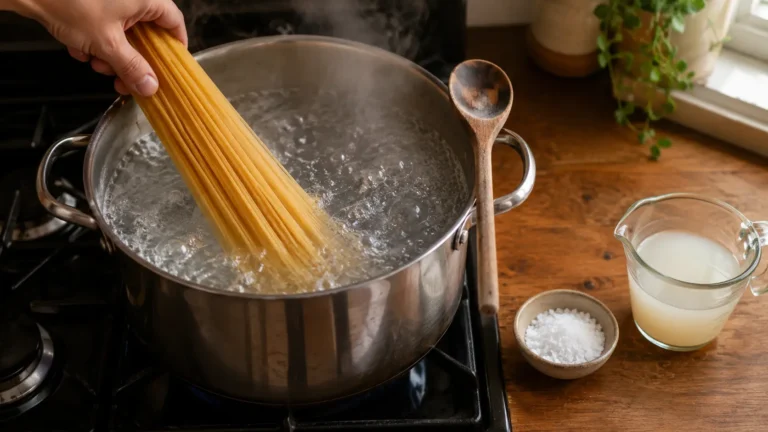
- 7. Boil in a large pot of unsalted water 10 to 15 minutes, until a strand is cooked through to the center with no chalky core.
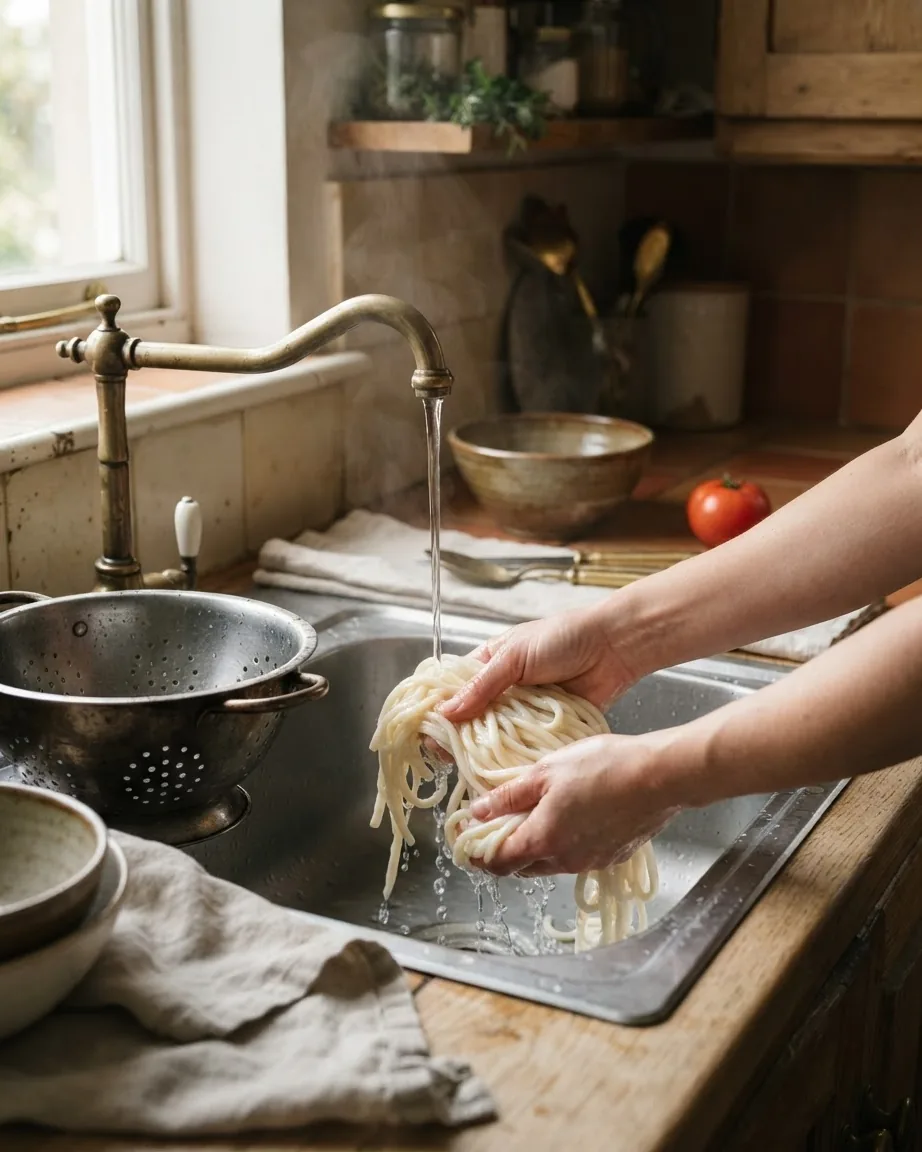
- 8. Drain, then rinse under cold running water, working the noodles with your hands until the surface is no longer slippery.
No single boiling time: fresh, dried, and frozen udon
There is no one boiling time for udon, and treating the three forms as interchangeable is the common mistake. For fresh homemade strands, Japanese Cooking 101 boils 10 to 15 minutes before straining and washing; Just One Cookbook runs about 10 minutes, adjusting for thickness; Bon Appétit lists a shorter 8 to 10 minutes. The spread comes from cut width and how long the dough rested, so thicker, firmer noodles need the upper end. Judge by biting one rather than by the clock.
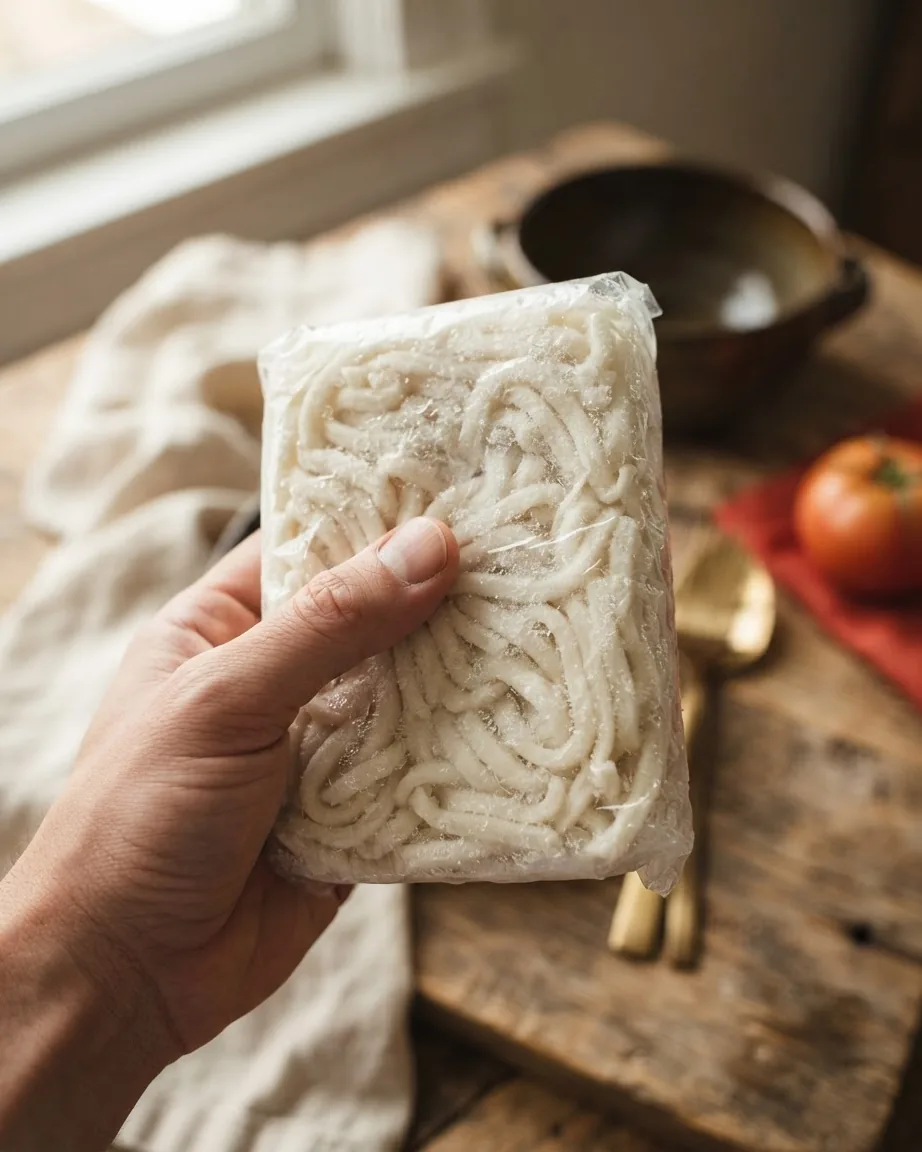
Dried udon follows the time printed on its package, and nothing published here overrides that number. Precooked frozen udon, the kind sold in sealed bricks, is already cooked, so it only needs reheating, about 1 minute in boiling water. Homemade noodles that were frozen raw behave differently again: Just One Cookbook cooks those straight from frozen for 12 minutes, then rinses. Identify which form sits in your hand before you set the timer.
Why cold water finishes every bowl of udon
Rinsing cooked udon under cold water does two jobs, and the texture job matters even when the noodle is headed into hot soup. The cold water halts the cooking and washes surface starch off the strands; skip it and the noodles stay slippery and slack. The rinse tightens the surface and brings back the chew that defines udon. Just One Cookbook finishes its fresh noodles under cold running water for this exact reason. For a hot bowl, reheat the rinsed noodles briefly, a quick dip in hot water, before the broth goes on top.
Keep the noodles out of the simmering broth
Cooking the noodles in the broth you plan to serve looks efficient and costs you a clear soup. As udon boils it sheds starch into the water, which is why the boil happens in a separate pot of plain water. Drop raw strands into the dashi and that released starch clouds and thickens it. Boil and rinse the noodles first, then warm the drained strands in the tsuyu for a moment just before serving.
Make it ahead: one day in the fridge or a month in the freezer
Storage depends entirely on whether the noodles are raw or cooked, and the numbers are not interchangeable. Bon Appétit keeps uncooked cut udon in the refrigerator up to 1 day, a short window, since raw strands dry out and stick together. For anything longer, Just One Cookbook portions the raw noodles into 150 g servings and freezes them up to a month. Dust those strands with potato starch or cornstarch rather than wheat flour before freezing, because the starch keeps them from fusing into one block.
Cooked noodles hold up to 3 days in the refrigerator or up to 3 months in the freezer. When you store a finished soup, keep the noodles and the broth in separate airtight containers in the fridge for up to 3 days, so the strands do not sit in liquid and swell.
Turning plain udon into niku udon
The quickest bowl skips scratch noodles. Kikkoman Corporation’s beef udon starts from 200g of dried udon and builds a dashi from 10g of kombu and 20g of bonito flakes in 1000 ml of water: slip the kombu out just before the boil, add the bonito, and simmer up to 2 minutes before straining. Season the strained dashi with 2 Tbsp mirin and 1 Tbsp Kikkoman Soy Sauce. Thinly sliced beef shoulder, 250g, browns in a pan with sake, mirin, and sugar, then crowns the noodles. The whole bowl comes together in about 30 minutes.
Dried, frozen, or hand-cut, the finished strands carry a sauce as readily as a broth. See also: our Spicy Black Pepper Noodles and Honey Garlic Chicken Udon.
Questions cooks still ask about homemade udon
Can I make udon noodles without a stand mixer?
Yes. The traditional method uses body weight instead of a hook: seal the dough in a bag, set it between towels, and press it flat with your heels. Just One Cookbook repeats that stepping cycle five times before the long rest. Hand-kneading the stiff mass works too; it simply asks for more arm effort on such a low-hydration dough.
Why do the recipes boil udon in unsalted water?
The dough already carries its own salt, 1 Tbsp in the Japanese Cooking 101 formula, and the strands shed some of it into the pot as they cook. Adding more to the boiling water pushes the finished noodle past where it should land and can leave the broth too sharp. Plain water is the published standard for this reason.
How fast is a homemade dashi for the soup?
Quicker than most cooks expect. A scratch kombu-and-bonito dashi takes under 30 minutes, and Just One Cookbook treats that fresh base as the one worth the effort for its udon soup. Pull the kombu before the water boils to keep the stock from turning bitter, then steep the bonito briefly and strain.
Salt and water by the numbers
The recipes quote their salt and water in raw amounts, which hides how much is actually in the dough. Run the ratios and two things get clearer: why the salt “looks heavy,” and how firm the dough is meant to be.
- Salt = 5% of flour weight. Just One Cookbook’s 0.35 oz salt against 7 oz flour works out to 0.35 / 7 = 5%. That is high for a dough, and it is on purpose, since some salt leaves the strands in the boil.
- Hydration = 48.8%. Bon Appétit’s 198 g water against 406 g flour is 198 / 406 = 48.8%. Well under bread dough territory, which is exactly why the slab feels like modeling clay and needs the long rest to roll.