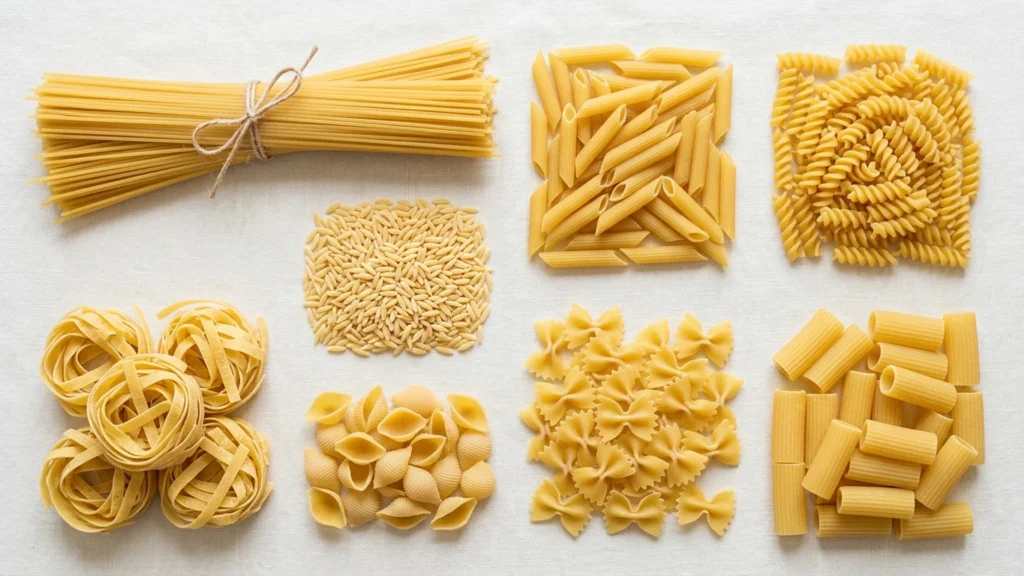
Types of pasta noodles is a question that sounds simple and turns out to be enormous, because Italy alone recognizes hundreds of named shapes and many of them go by different names from one region to the next. There is no need to memorize every one. What actually helps in the kitchen is a working map: the handful of categories that organize the whole universe, the dozen or so noodles you will actually meet on store shelves, and the simple logic that tells you which sauce belongs with which shape. This guide gives you that map. By the end you will be able to look at any box of pasta and know roughly how it behaves, what to cook with it, and what to reach for when the recipe calls for something you do not have.
The trap most beginners fall into is treating pasta names as trivia to be memorized. The names are not the point. The point is that shape determines behavior: how much sauce a noodle holds, how it feels in the mouth, how long it takes to cook, and what kind of dish it suits. Once you understand the categories, the individual names become easy because you can predict what a shape will do just by looking at it. That predictive skill is what separates someone who follows recipes from someone who can cook pasta confidently with whatever is in the cupboard.
The Big Categories: How Pasta Is Organized
Almost every pasta noodle falls into one of a few broad families, and learning these is more useful than memorizing names. The first and largest split is long versus short. Long pasta means strands and ribbons, spaghetti, linguine, fettuccine, the noodles you twirl. Short pasta means the cut, bite-sized shapes, penne, rigatoni, fusilli, the ones you scoop. That single distinction already tells you a lot about how a noodle will eat and what sauce suits it.
Within those two big groups sit smaller families. Tube shapes are hollow short pasta like penne, ziti, and rigatoni that trap sauce inside as well as outside. Ribbon shapes are flat long pasta like fettuccine, tagliatelle, and pappardelle that offer broad surfaces for sauce to cling to. Filled or stuffed pasta like ravioli, tortellini, and cannelloni hold a filling of cheese, meat, or vegetables. Tiny soup pasta, called pastina, includes orzo and stelline meant for broths. And a handful of shapes sit slightly apart, like gnocchi, which are soft potato dumplings rather than true wheat noodles. The official catalog of these families is vast, and the full sweep is laid out in this reference list of pasta shapes if you ever want to go deep.
There is also the fresh versus dried distinction, which cuts across all of these. Dried pasta, made from durum wheat and water, is firm, holds its shape, and is the workhorse of the pantry. Fresh pasta, usually made with eggs and softer wheat, is tender and silkier and cooks in a fraction of the time. The difference comes down to the wheat itself, traditionally durum wheat ground into semolina, and we cover the ingredient side of that in our breakdown of the different types of pasta and how they are made. If you want a name-by-name visual reference for individual shapes, our illustrated guide to pasta shapes walks through each one and its best sauce.
Long Pasta Noodles, Strand by Strand
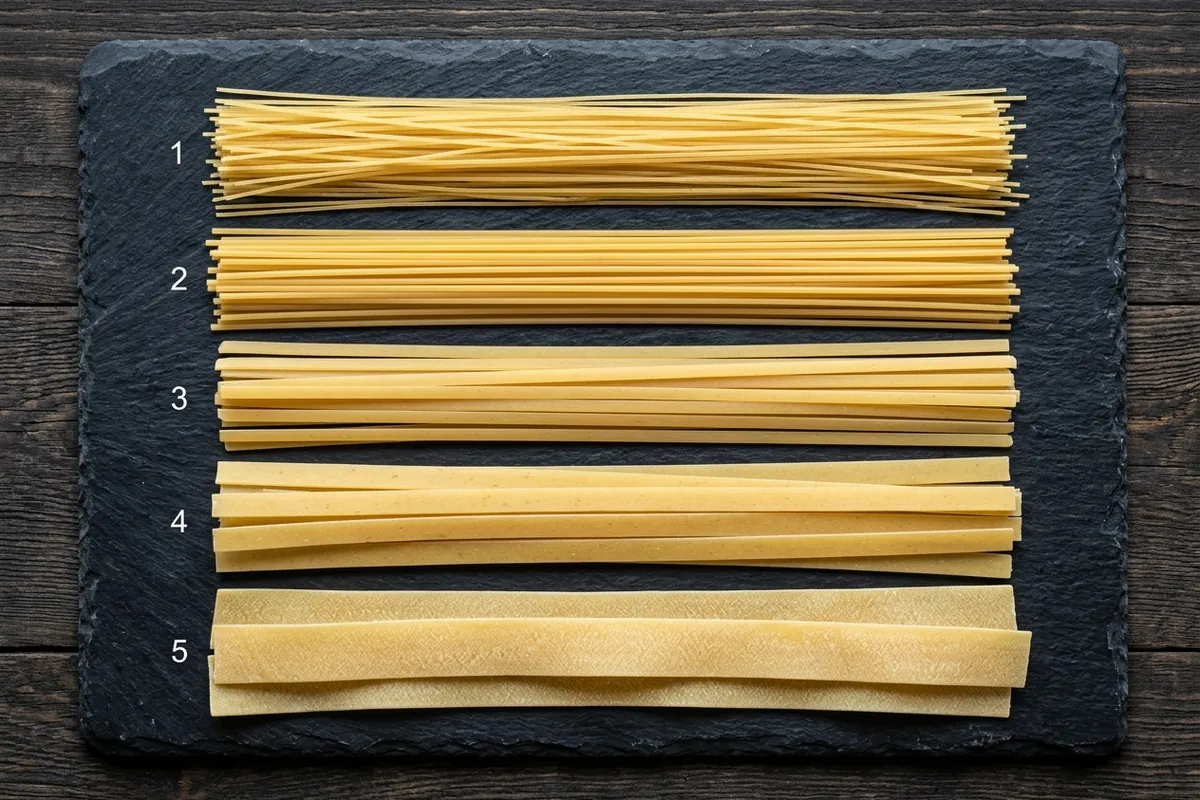
Long pasta is the most iconic category, and the noodles within it differ mostly by thickness and cross-section. Spaghetti is the round, medium-thin standard, the most recognizable pasta in the world and a perfect match for oil-based sauces, simple tomato sauces, and light preparations. Angel hair, or capellini, is the thinnest of all, so delicate that it overcooks in a blink and demands only the lightest sauces, a brush of olive oil and herbs, or a thin broth.
Going wider and flatter, linguine is a slightly flattened strand that gives sauce more surface to grip and shines with seafood and pesto. Fettuccine is a flat ribbon, wider still, built for rich, clinging sauces like alfredo. Tagliatelle is its close cousin, traditionally paired with meat ragu. Pappardelle is the widest ribbon of all, broad enough to cradle the heartiest braised and meat sauces. Then there is bucatini, which looks like fat spaghetti but hides a hollow center that pulls sauce inside as you eat. The rule that ties them together is intuitive once you see it: the richer and chunkier the sauce, the wider and sturdier the noodle should be.
Short Pasta Noodles and Why Ridges Matter
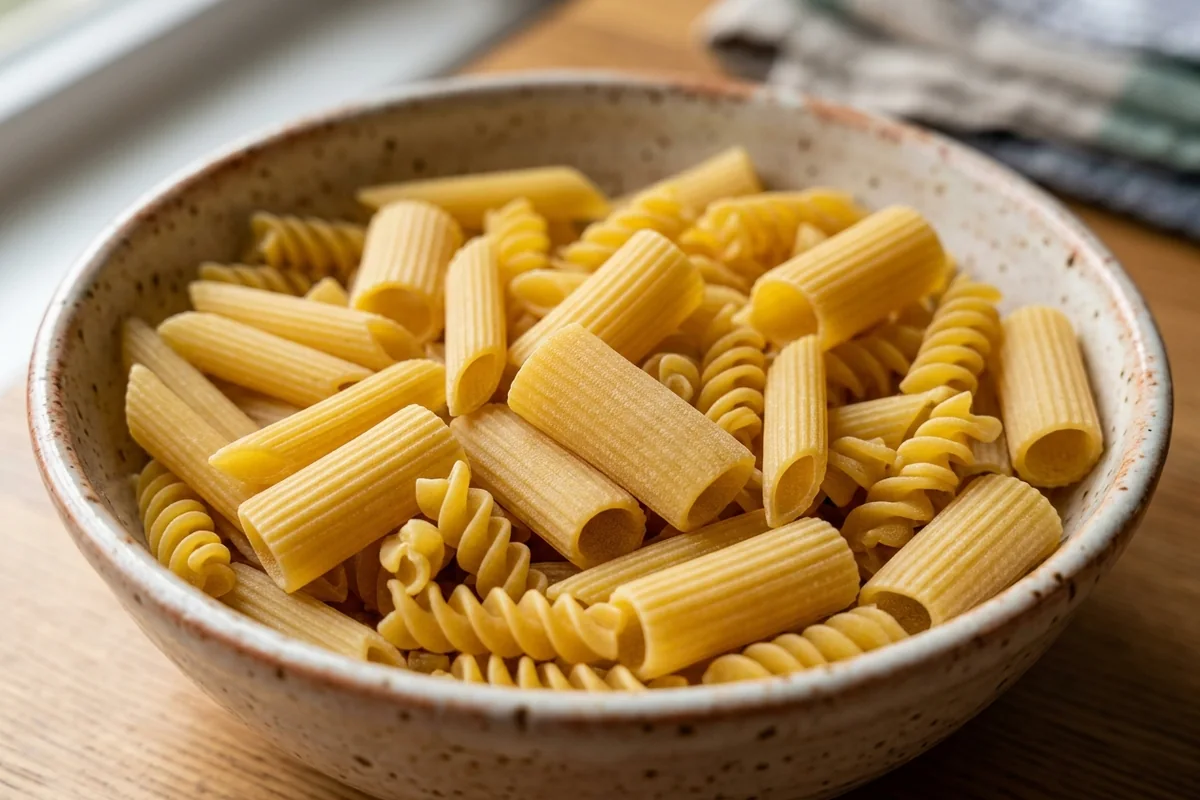
Short pasta is the category that rewards understanding texture. These shapes are designed to hold sauce, and small features make a big difference. Penne are angled tubes, and the ridged version, penne rigate, has grooves that grab clinging sauces far better than the smooth version. Rigatoni are larger, wider ridged tubes, excellent for hearty meat and baked dishes because chunks of sauce lodge inside them. Ziti are smooth tubes famous in baked casseroles.
Twisted and curled shapes work on the same principle. Fusilli are corkscrews and rotini are tighter spirals, both built to trap bits of sauce in their twists, which makes them great in pasta salads and with chunky sauces. Cavatappi is a hollow helix, a relatively modern shape that combines the tube and the spiral for maximum sauce-grabbing. Farfalle, the bow tie, has a pinched center and ruffled wings that hold light, creamy sauces. Shells, or conchiglie, are scoops that cup sauce, and the jumbo version is made to be stuffed. Elbow macaroni is the small curved tube that defines mac and cheese. The lesson across all of them is the same: ridges and twists exist to hold sauce, so a chunky or creamy sauce belongs with a ridged or twisted shape, and a smooth shape suits a thinner, more uniform sauce.
Filled, Tiny, and Specialty Noodles
Filled pasta is a category of its own because the noodle is a wrapper, not just a vehicle for sauce. Ravioli are flat pockets of dough sealed around a filling. Tortellini are small rings, traditionally stuffed with cheese or meat, and their larger cousin tortelloni holds more filling. Cannelloni and manicotti are large tubes meant to be piped full and baked under sauce. With filled pasta the sauce should usually be simple, a light butter, a clean tomato, or a brothy bath, because the filling is already carrying the flavor.
At the other end of the size scale is pastina, the family of tiny pasta made for soups. Orzo looks like grains of rice and works in soups, salads, and pilaf-style dishes. Stelline are little stars, ditalini are short tubes for minestrone, and acini di pepe are tiny beads. These shapes are about texture in a spoonful of broth rather than sauce-carrying. Finally there are the specialty and regional shapes worth knowing because you will eventually meet them: orecchiette, the little ears from Puglia that cup chunky vegetable sauces; gnocchi, the soft potato dumplings that eat like pasta but cook differently; and squid ink or whole grain versions that change color and nutrition without changing the basic logic of shape and sauce.
Matching Noodles to Sauce: The Simple Logic
If you take one practical skill from this guide, make it the pairing logic, because it frees you from recipes. The governing idea is that the sauce and the shape should be matched in weight and texture. Thin, light, oil-based sauces belong on thin, smooth long noodles like spaghetti and angel hair, where they coat without overwhelming. Rich, creamy sauces belong on flat ribbons like fettuccine and tagliatelle, whose broad surfaces hold a clinging coat.
Chunky sauces, the ones with vegetables, meat, or beans, belong on shapes that can catch and hold those chunks: ridged tubes like rigatoni, twists like fusilli, and scoops like shells. Hearty braised and meat ragus want the widest, sturdiest noodles, pappardelle and tagliatelle, that can stand up to them. Delicate filled pasta wants a restrained sauce that does not compete with the filling. And tiny pasta belongs in soup. The chart below condenses the whole pairing system into one place so you can scan it before you cook.
| Sauce type | Best shapes | Why it works |
|---|---|---|
| Thin, oil-based | Spaghetti, angel hair | Light coat on smooth thin strands |
| Rich, creamy | Fettuccine, tagliatelle | Broad ribbons hold a clinging coat |
| Chunky veg or meat | Rigatoni, fusilli, shells | Ridges and scoops catch the chunks |
| Hearty braised ragu | Pappardelle, tagliatelle | Wide, sturdy noodles stand up to it |
| Light tomato | Penne, spaghetti | Even coat, easy to eat |
| Broth or soup | Orzo, ditalini, stelline | Tiny pasta for a spoonful |
| Delicate filling | Ravioli, tortellini | Simple sauce lets the filling lead |
Substitutions: What to Use When You Run Out
One of the most useful payoffs of understanding categories is that you can substitute confidently. The rule is to swap within the same family. If a recipe calls for penne and you have rigatoni, fusilli, or cavatappi, any of them will do because they all hold chunky sauce the same way. If you are out of spaghetti, linguine or bucatini will behave similarly with the same sauces. Fettuccine and tagliatelle are nearly interchangeable. Out of one tiny soup pasta, reach for another.
The substitutions that fail are the ones that cross categories. Standing in a delicate angel hair for a sturdy rigatoni in a chunky meat sauce leaves you with a tangled, overwhelmed mess, and using thick pappardelle where a light oil sauce wanted spaghetti gives you heavy, underdressed ribbons. Keep your swaps inside the same shape family and you will rarely go wrong. If you are cooking for dietary needs, the same logic holds across alternative flours: gluten-free shapes mirror the wheat ones, and you can find reliable versions across this hub of gluten-free pasta and pizza. For a fully plant-based table, the shape rules are identical, and these vegan pasta dishes show the same pairings in action.
Cooking Times and Why Shape Changes Them
One practical consequence of all these shapes is that they do not cook at the same rate, and ignoring that is a quiet source of mushy or undercooked pasta. Thickness and density drive cooking time more than length does. Thin strands like angel hair cook in just two or three minutes and overcook almost instantly, so they need watching. Standard spaghetti and penne land in the eight to twelve minute range for most dried brands. Thick, dense shapes like rigatoni and large shells take longer, sometimes thirteen minutes or more, because the water has to penetrate more pasta.
Fresh pasta is a different world entirely, often cooking in just one to three minutes because it is softer and already contains moisture. The only reliable rule is to start tasting a minute or two before the package time, pulling the pasta when it is al dente, firm to the bite with no chalky raw center. Cooking time also shifts when you finish pasta in a sauce, a technique worth using, since you pull the noodles slightly early and let them finish in the pan, absorbing flavor. Salt the water generously, give the pasta room to move in plenty of boiling water, and stir early to keep pieces from sticking, and any shape will cook evenly.
Whole Grain, Legume, and Alternative Noodles
Beyond shape, pasta now comes in a range of base ingredients that change nutrition and behavior without changing the pairing logic. Whole wheat pasta uses the whole grain, so it carries more fiber and a nuttier, heartier flavor, and it pairs well with robust sauces that stand up to its stronger taste. Legume-based noodles made from chickpeas, lentils, or edamame pack noticeably more protein and fiber, which appeals to anyone building a higher-protein plate, and they cook a little differently, often softening faster and needing a careful eye to avoid going mushy.
Gluten-free noodles made from rice, corn, or blends let people who avoid wheat keep pasta on the menu, though they can be more delicate and benefit from being cooked just to al dente and rinsed less. The reassuring part is that all of these alternatives map onto the same shape families: a chickpea penne behaves like wheat penne when it comes to sauce, a brown rice spaghetti suits the same oil-based sauces as regular spaghetti. So once you understand the shape-to-sauce logic, you can apply it across every base ingredient. The pairing rules do not change; only the cooking attention and the flavor do.
Bottom Line
The world of pasta noodles is huge, but you do not need to memorize it. Learn the families, long and short, tubes and ribbons, filled and tiny, and the single rule that the weight of the sauce should match the weight of the noodle, and you can navigate any shelf with confidence. Use ridges and twists for sauces that need gripping, smooth strands for light coats, wide ribbons for rich sauces, and sturdy shapes for hearty ragus. Substitute within a family and you will rarely go wrong. That working map, not a memorized list of names, is what lets you cook pasta well with whatever you have on hand. The next time you stand in the pasta aisle, you will not see a confusing wall of shapes; you will see a handful of tools, each suited to a job, and you will know exactly which one to grab for the sauce you have in mind.
FAQ
What are the main types of pasta noodles?
Pasta noodles fall into a few core families. Long pasta includes strands and ribbons like spaghetti, linguine, fettuccine, and pappardelle. Short pasta includes cut shapes like penne, rigatoni, fusilli, and shells. Filled pasta such as ravioli and tortellini wraps a filling, and tiny soup pasta like orzo and ditalini goes in broths. Learning these categories is more useful than memorizing individual names.
How do I know which pasta shape goes with which sauce?
Match the sauce and shape by weight and texture. Thin, oil-based sauces suit thin smooth noodles like spaghetti. Creamy sauces cling best to flat ribbons like fettuccine. Chunky sauces with vegetables or meat need shapes that catch the pieces, like ridged rigatoni, twisted fusilli, or scooped shells. Hearty braised ragus want wide sturdy noodles like pappardelle, and tiny pasta belongs in soup.
What is the difference between fresh and dried pasta noodles?
Dried pasta is made from durum wheat and water, is firm and shelf-stable, and is the everyday pantry workhorse. Fresh pasta is usually made with eggs and softer wheat, is tender and silkier, and cooks in just a few minutes. Neither is better overall; dried pasta holds up to chunky, hearty sauces, while fresh pasta shines with delicate butter and cream sauces.
Can I substitute one pasta noodle for another?
Yes, as long as you stay within the same family. Penne, rigatoni, fusilli, and cavatappi are interchangeable for chunky sauces because they all hold sauce the same way. Spaghetti, linguine, and bucatini swap cleanly for oil-based sauces. Avoid crossing categories, such as using delicate angel hair where a sturdy tube was needed, because the noodle will not handle the sauce well.