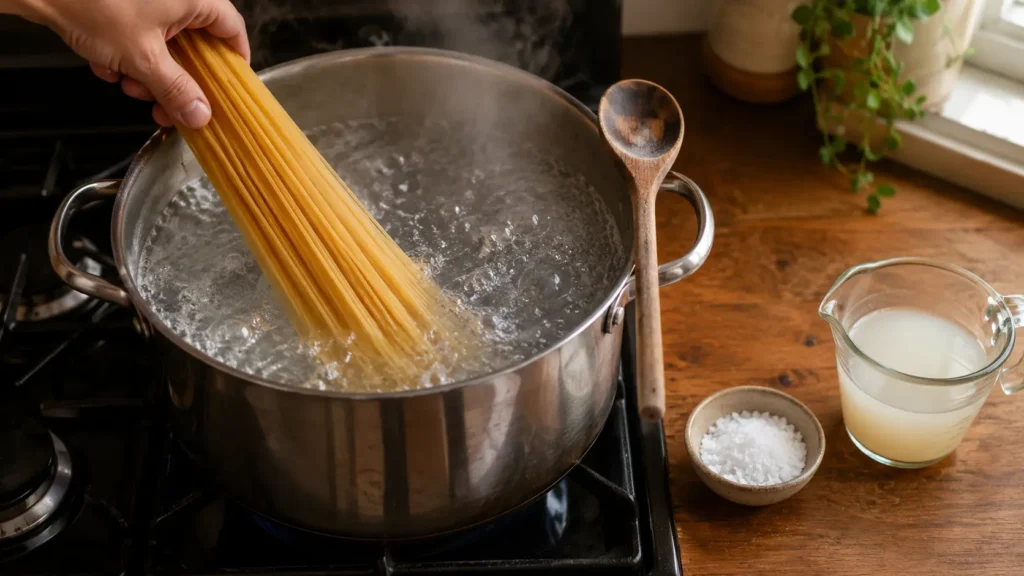
How can I cook pasta so it comes out tender with a real bite instead of soft and gluey? It’s five moves, and none of them are hard. Boil pasta in a big pot of well-salted water, stir it in the first minute so it doesn’t clump, cook it about a minute shy of the box time, save a mugful of the starchy water before you drain, skip the rinse, and finish the noodles right in the sauce. That’s the whole game. The difference between sad, sticky pasta and the kind that clings to its sauce like it was built for it isn’t a secret ingredient; it’s the water, the salt, the timing, and that last minute in the pan. This guide walks each step in order, with a cooking-time chart by shape and the handful of mistakes that quietly wreck an otherwise good dinner. Get these down once and you’ll cook pasta on autopilot for the rest of your life.
The Quick Version: Five Steps to Perfect Pasta
If you only remember the skeleton, remember this: big pot, salty water, stir, taste early, finish in sauce. Bring 4 to 6 quarts of water to a rolling boil, salt it until it tastes like the sea, drop the pasta and stir, start tasting a minute or two before the box says, scoop out a cup of pasta water, drain without rinsing, and toss the pasta with your sauce for a final minute. Everything below is just the detail behind those moves, the why that turns a decent plate into a great one. None of it asks for special equipment, only a pot, a colander, and a little attention at the right moments.
Step 1: The Right Pot of Water (and How Much)
Pasta needs room to move. Use a large pot with at least 4 to 6 quarts of water per pound of pasta, because crowded pasta in a small pot drops the water temperature, sticks together, and cooks unevenly. Bring it to a true rolling boil before the pasta ever goes in; lukewarm water turns the surface starch to glue and the strands weld on contact. You don’t need oil in the water, despite what you may have been told. Oil floats on top and never touches the pasta, and worse, it can leave a slick coating that makes sauce slide off later. The only two things your water needs are volume and a hard boil.
Do You Really Need a Big Pot of Water?
Here’s a fair question, because boiling 6 quarts of water takes time and energy. The traditional answer is that pasta needs a lot of water so the temperature doesn’t crash when the cold pasta goes in and so there’s room to dilute the starch it sheds. That’s all true, and a big pot is the reliable, no-thinking-required choice. But you can cook pasta in less water if you’re willing to pay attention. Using just enough water to cover the pasta works fine as long as you stir more often, especially in the first two minutes, to stop sticking, and accept that the cooking water will come out much starchier.
That extra-starchy low-water method actually has an upside: the concentrated pasta water is even better at thickening a sauce, so some cooks do it on purpose. The trade-off is attention. Less water means a narrower margin for clumping and boiling over, so it rewards a cook who’s standing at the stove and punishes one who wanders off. If you want a set-it-and-stir-occasionally experience, use the big pot. If you’re trying to save time and you’ll stay close, a smaller pot with frequent stirring gets you to the same tender, well-seasoned place.
Step 2: Salt Like You Mean It
This is the step most home cooks underdo, and it’s the one that separates flat pasta from seasoned pasta. Add about 1 to 1.5 tablespoons of salt per pound of pasta, and add it once the water is boiling, just before the pasta goes in. The old line is that the water should “taste like the sea,” and it’s a good target. This is your only chance to season the pasta itself from the inside; salt added later sits on the surface and never gets in. Don’t worry about the amount sounding large, because most of that salt stays in the water you pour down the drain. The pasta only keeps a fraction of it, and that fraction is exactly what makes it taste finished rather than bland.
Step 3: Add the Pasta, Stir, and Taste for Al Dente

Drop the pasta into the boiling water all at once and give it a good stir within the first 30 seconds, then again every couple of minutes. That early stir is what stops strands and shapes from clumping while the surface starch is at its stickiest. Now start watching the clock, but trust your teeth more. Cook dried pasta to al dente, an Italian phrase meaning “to the tooth,” which is pasta that is tender all the way through but still offers a slight, springy resistance at the very center. The reliable move is to start tasting a piece one to two minutes before the package time, because you’ll be finishing it in the sauce and it will keep cooking there. For the technical background on al dente and why that bite matters, the texture is not just tradition; pasta cooked al dente has a lower glycemic response and simply holds sauce better than a soft, overcooked strand.
Step 4: Save the Pasta Water, Then Drain Without Rinsing
About a minute before you pull the pasta, dip a measuring cup into the pot and reserve a cup or two of that cloudy, starchy water. It looks like nothing, but it’s the single most useful thing in the kitchen for finishing pasta: the dissolved starch helps a sauce thicken, emulsify, and cling to every strand. Then drain the pasta in a colander and stop there. Do not rinse it. Rinsing washes away the very surface starch that helps sauce grab on, and it cools the pasta down right when you want it hot and receptive. The only time to rinse is when you’re making a cold pasta salad, where you actually want to stop the cooking and remove the stickiness.
Step 5: Finish the Pasta in the Sauce

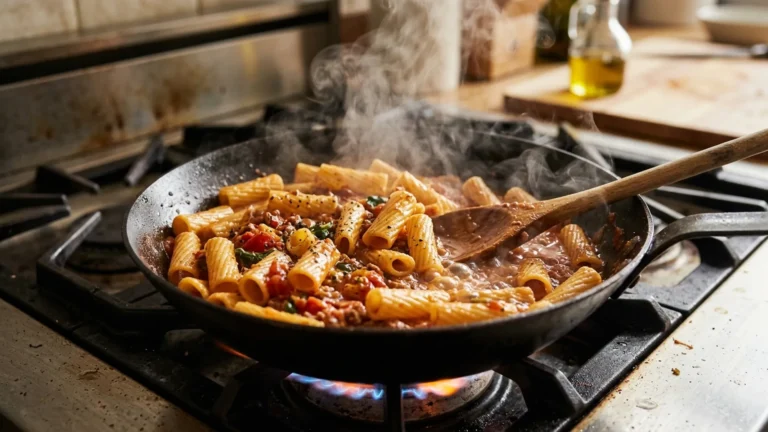
Here’s the move restaurants use that most home cooks skip. Don’t plate naked pasta and spoon sauce on top. Instead, add the drained pasta straight into the warm sauce in the pan and toss them together over heat for one to two minutes, splashing in a little reserved pasta water as you go. The pasta drinks in flavor, the starch and fat emulsify into a glossy coating, and everything binds into one dish instead of two things sharing a plate. This is the step that makes a simple mushroom fettuccine taste like it came from a restaurant. A few tablespoons of pasta water at a time is plenty; you can always add more, but you can’t take it back out. Keep the heat on medium while you toss, because the gentle bubbling is what drives the emulsion: the fat in the sauce, the starch in the water, and the pasta all come together into something silky that no amount of spooning sauce over plated noodles can match. If the sauce looks tight and oily, it needs a splash more water and a harder toss; if it looks thin and watery, give it another minute to reduce. You’re cooking for texture here, not just temperature, and thirty seconds of attention at this stage is what people taste when they say a dish “tastes like a restaurant made it.”
Cooking Times by Pasta Shape
Box times are a starting point, not gospel, and they vary by brand and thickness. Use this as a guide, then taste to confirm. Remember to pull the pasta about a minute early if you’re finishing it in sauce.
| Pasta | Approx. al dente time |
|---|---|
| Angel hair / capellini | 3 to 5 min |
| Spaghetti / linguine | 8 to 10 min |
| Penne / rigatoni / ziti | 10 to 12 min |
| Fusilli / rotini / farfalle | 9 to 11 min |
| Fresh pasta | 2 to 4 min |
Water and Salt at a Glance
| Pasta amount | Water | Salt |
|---|---|---|
| 1/2 lb (about 2 servings) | 3 qt | 2 tsp |
| 1 lb (about 4 servings) | 4 to 6 qt | 1 to 1.5 tbsp |
| 2 lb (about 8 servings) | 8 to 10 qt | 2 to 3 tbsp |
Adjusting for Soups, Salads, and Baked Pasta
“Cook the pasta” doesn’t mean the same thing for every dish, and the al dente target shifts depending on where the pasta is headed next. For a cold pasta salad, cook the pasta a touch past al dente, because it firms up as it chills and a too-firm noodle from the fridge is unpleasant. This is also the one time you should rinse: a quick cold rinse stops the cooking and rinses off surface starch so the salad doesn’t turn into a gummy block. For a baked pasta like ziti or a casserole, cook the pasta a couple of minutes shy of al dente, because it will keep cooking and absorbing liquid in the oven, and fully cooked pasta going into a bake comes out soft and tired.
For pasta in soup, you have a choice. Cooking the pasta separately and adding it at the end keeps the broth clear and the noodles firm, while cooking it directly in the soup is easier but thickens the broth and softens the pasta as it sits. If you’re building a hearty broth and noodle soup meant for leftovers, cook the pasta on the side and combine bowl by bowl, or the noodles will drink the broth and bloat overnight. Match the doneness to the destination and the same pot of pasta can serve three completely different dinners.
Cooking Pasta Ahead of Time
You can absolutely cook pasta in advance, which is a lifesaver for parties and meal prep. Boil it to just under al dente, drain it, toss it with a thin film of olive oil to keep it from sticking, and spread it on a sheet pan to cool. Store it in the fridge for up to a few days. When you’re ready, drop the cooked pasta into boiling water or straight into a simmering sauce for 30 to 60 seconds to reheat and finish cooking. Because you stopped it early, it comes back to life at a perfect al dente instead of overcooking. For a crowd, par-cooking this way the day before turns a frantic dinner into a calm one: the hard part is already done, and all that’s left is the quick reheat and a toss with sauce.
Common Pasta-Cooking Mistakes
Most pasta disasters come from the same short list of habits, and they’re all easy to undo. Too little water drops the boil and gives you a sticky, gummy clump; give the pasta room. Adding pasta before the boil turns the surface to paste, so wait for the full rolling boil. Skipping the early stir lets pieces fuse in the first minute when they’re stickiest. Oil in the water does nothing useful and can repel your sauce later. Overcooking is the most common of all; pasta keeps cooking from its own heat after draining, so pull it while it still has a bite. And rinsing hot pasta strips the starch your sauce needs. Fix those six and there isn’t much left to get wrong. One shape-specific note: gluten-free pasta cooks faster and slides from firm to mushy in a blink, so start tasting it a full two to three minutes early.
One more that deserves its own mention: not tasting. The package time is an estimate built around one brand’s average shape and thickness, and your stove, your altitude, and your pot all nudge it. The only instrument that’s never wrong is your own mouth, so pull a piece out, blow on it, and bite. When it’s tender with the faintest firm center, it’s ready, no matter what the timer says. A creamy chicken alfredo lives or dies on that judgment call, because a soft noodle in a rich sauce turns to mush in seconds.
FAQ
How can I cook pasta without it sticking together?
Use plenty of water at a rolling boil, salt it, and stir the pasta within the first 30 seconds and again every couple of minutes. The early stir, while the surface starch is stickiest, is what keeps strands and shapes from fusing. Oil is not needed and does not help.
Should I rinse pasta after cooking?
No, not for hot dishes. Rinsing washes off the surface starch that helps sauce cling and cools the pasta down. The one exception is cold pasta salad, where you want to stop the cooking and remove stickiness.
How much salt should I add to pasta water?
About 1 to 1.5 tablespoons per pound of pasta, added once the water boils. It should taste pleasantly salty, like seawater. Most of it drains away; the pasta keeps just enough to season it from the inside.
What does al dente mean?
It is Italian for “to the tooth” and describes pasta that is fully tender but still has a slight, springy bite at the center. Start tasting a minute or two before the box time, especially if you will finish the pasta in sauce.
Why save pasta water?
The starchy cooking water helps your sauce thicken, emulsify, and coat the pasta in a glossy layer. Reserve a cup or two before draining and add it a splash at a time while tossing pasta with sauce.
Do I need to add oil to the pasta water?
No. Oil floats on top and never touches the pasta, and any that clings can make sauce slide off later. Water volume, a hard boil, salt, and stirring are all you need.
Can I cook pasta directly in the sauce?
You can, using the one-pot method, where dried pasta simmers in a thinned sauce with extra liquid until tender. It’s convenient and deeply flavored, but it needs frequent stirring and careful liquid amounts so the pasta cooks evenly without scorching the sauce. For most cooks, boiling separately and finishing in the sauce is more reliable.
Bottom Line
So, how can I cook pasta that actually tastes like something? Give it a big pot of hard-boiling, properly salted water, stir it early so it never clumps, and taste for that al dente bite a minute before the box claims it’s done. Save a cup of the starchy water, drain without rinsing, and finish the noodles in the sauce so the two become one glossy, coated dish. That last minute in the pan is the whole trick most people miss. Cook it this way a few times and the steps stop being a checklist; they become the way you just cook pasta, every single night.