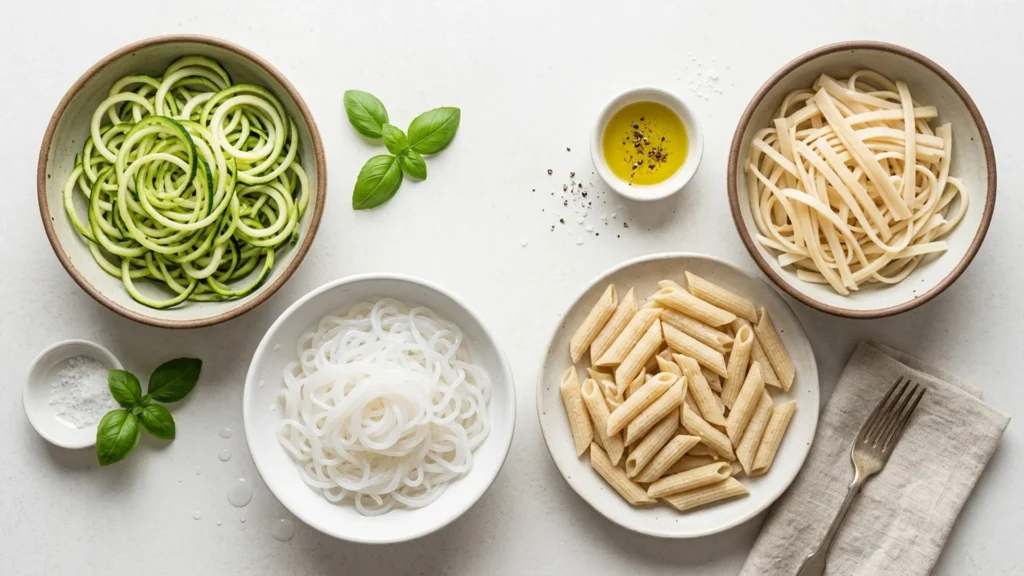
Low carb pasta alternatives fall into two camps: vegetables cut into noodle shapes, like zucchini and spaghetti squash, and processed low-starch noodles, like shirataki, hearts of palm, and kelp. The vegetable options give you nutrition and freshness but never truly taste like pasta; the processed options get closer on carbs (some are essentially zero) but bring odd textures you have to manage. There is also a middle road, legume pasta, which is not truly low carb but cuts the net carbs while doubling the protein. The honest truth most listicles skip is that none of these is a perfect pasta clone, and the best one for you depends on whether you care most about carbs, texture, protein, or convenience. In this lab guide I give the real carb counts per serving, the texture you should expect, exactly how to cook each one so it is not watery or rubbery, and which sauces and dishes each alternative actually suits.
The Carb Counts, Side by Side
Numbers cut through the marketing. Regular wheat pasta runs about 40 to 43 grams of carbohydrate per 2-ounce dry serving, with very little fiber. Here is how the common alternatives compare per typical serving, so you can see what you are actually saving.
| Alternative | Net carbs (per serving) | Calories | Texture |
|---|---|---|---|
| Regular wheat pasta | 40-43 g | ~200 | Firm, classic chew |
| Shirataki noodles | 0-1 g | 5-15 | Slippery, chewy, rubbery |
| Kelp noodles | 0-1 g | ~6 | Crunchy then soft when soaked |
| Hearts of palm pasta | 2-4 g | 20-25 | Tender, slight tang, firm |
| Zucchini noodles | 3-4 g | ~20 | Crisp-tender, watery if overcooked |
| Spaghetti squash | 7-8 g | ~40 | Strand-like, mild, slightly sweet |
| Edamame / chickpea pasta | 15-25 g | ~180-190 | Firm, beany, closest to wheat |
The takeaway is that the zero-carb options (shirataki and kelp) win on carbs but lose hardest on texture, the vegetable options sit in a sweet spot of low carbs plus real nutrition, and legume pastas barely qualify as low carb but eat the most like the real thing while loading on protein. Choose based on which axis matters most for your meal. If protein is the goal more than carbs, our guide to high protein pasta covers the legume options in depth.
Zucchini Noodles: The Fresh Default
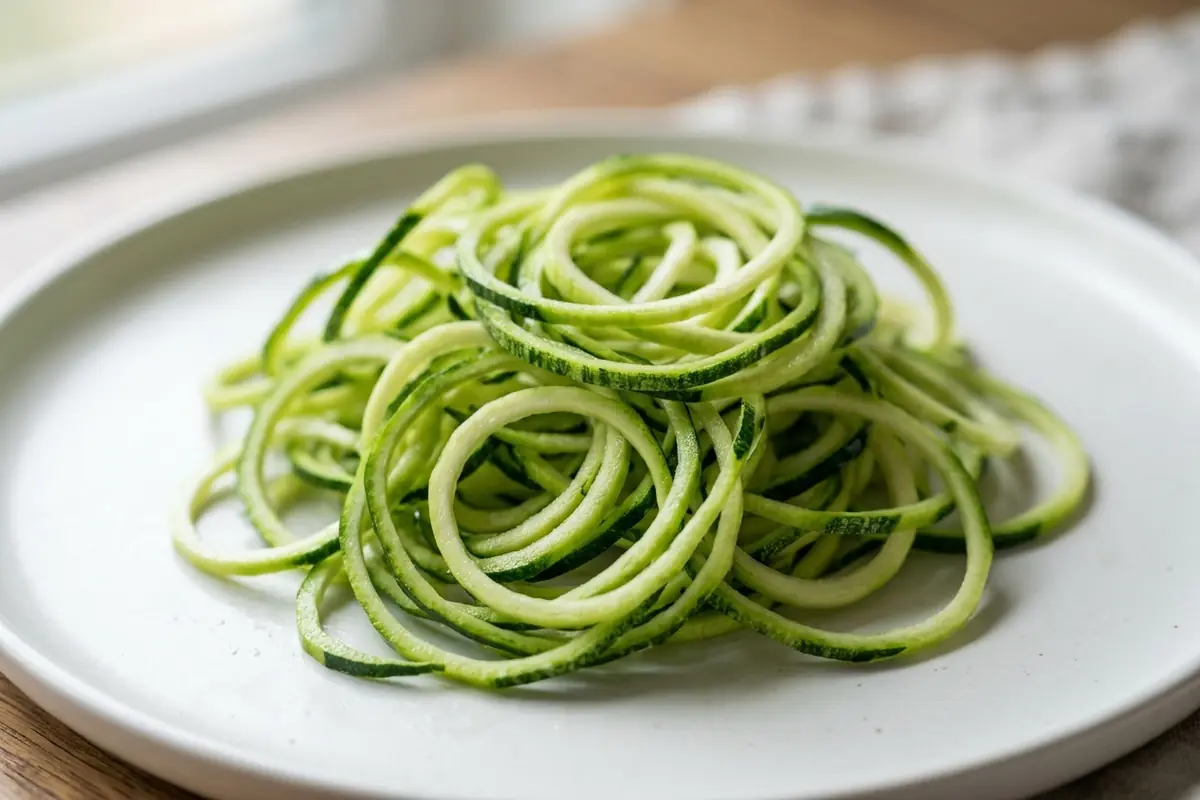
Zucchini noodles, often called zoodles, are the most popular vegetable alternative because they are cheap, fresh, and take any sauce. Spiralize a zucchini into thin strands or use a julienne peeler for flat ribbons. The single biggest mistake is watery zoodles, and the fix is to manage moisture: after spiralizing, salt the strands lightly, let them sit in a colander for 10 to 15 minutes, then squeeze and pat them dry in a towel before cooking. This pulls out the water that would otherwise flood your sauce.
Cook them fast and hot. Toss the dried strands in a hot pan with a little oil for just 2 to 3 minutes, until barely tender but still with a slight bite; any longer and they collapse into mush and weep liquid. Better yet, leave them mostly raw and let the hot sauce finish them at the table. They suit light sauces, fresh tomato, pesto, garlic and oil, and shrimp scampi, where their mild flavor and crisp texture shine. They do not stand up well to heavy long-simmered ragus, which overwhelm and waterlog them.
Spaghetti Squash: The Strand That Roasts Itself
Spaghetti squash is the alternative whose flesh naturally separates into noodle-like strands, which is its charm. It has more carbs than the vegetable noodles at 7 to 8 grams per cup, but it is more filling and has a pleasant, faintly sweet flavor. Roast it: halve the squash lengthwise, scoop the seeds, rub the cut faces with oil, and roast cut side down at 400 degrees Fahrenheit for 35 to 45 minutes until a fork pierces the skin easily. Let it cool a few minutes, then drag a fork across the flesh to release the strands.
The key to good spaghetti squash is not overcooking it, because overcooked squash turns to mush instead of distinct strands. Roast just until tender, and if the strands seem wet, spread them on a towel for a few minutes. It pairs beautifully with tomato sauces, garlic and herb butter, and meat sauces, and it is sturdy enough to hold a heavier sauce than zucchini can. You can also microwave a halved squash for 8 to 12 minutes if you are short on time, though roasting gives better flavor.
Shirataki Noodles: Nearly Zero Carbs, Tricky Texture
Shirataki noodles are made from glucomannan, a soluble fiber from the konjac root, and they are the closest thing to a free pass on carbs: essentially zero net carbs and only 5 to 15 calories per serving. The catch is texture and smell. Straight from the package they have a fishy odor and a slippery, rubbery bite that turns people off. The good news is that proper preparation transforms them.
Drain the noodles, rinse them very well under cold water for a full minute to remove the packing liquid and the smell, then dry-fry them in a hot nonstick pan with no oil for 5 to 8 minutes. The dry-fry drives off excess water and changes the texture from rubbery and slippery to firm and almost springy, which is the single most important step. After that they take on the flavor of whatever sauce you add. They work best in Asian-style dishes, ramen, stir-fries, and cold noodle salads, where their chew suits the format, and less well as a stand-in for a classic Italian plate.
Hearts of Palm and Kelp Noodles
Hearts of palm pasta is cut from the inner core of certain palm trees and comes ready to eat in cans or pouches, with 2 to 4 grams of net carbs and a tender, slightly tangy bite. It needs no boiling: drain, rinse to soften the tang, and either warm it in your sauce for a few minutes or use it cold in a salad. Soaking it in warm water for a few minutes before saucing mellows the acidity further. It holds its shape better than zucchini and suits both hot tomato sauces and cold dishes.
Kelp noodles, made from seaweed, are also near zero carbs and arrive crunchy in the package. To soften them toward a noodle texture, soak them in warm water with a squeeze of lemon juice or a pinch of baking soda for 10 to 30 minutes; the acid breaks down their firmness and they go pliable. They are best in cold Asian salads and brothy soups, where their mineral note and slippery bite fit the dish. Both of these are convenient, low-prep options once you know the one trick each needs.
Legume Pasta: Not Truly Low Carb, but the Closest Bite
Edamame, chickpea, and lentil pastas get grouped with low carb alternatives, but they are better described as lower-carb, higher-protein pasta rather than truly low carb. They still carry 15 to 25 grams of net carbs per serving, well above the vegetable and zero-carb options, but far below wheat pasta, and they deliver double or triple the protein and a lot of fiber. The real advantage is texture: legume pasta is the only alternative that genuinely eats like pasta, with a firm chew and a familiar shape.
Cook them carefully, because they soften fast and turn to paste if you treat them like wheat. Use plenty of water, skim the heavy foam, and pull them 1 to 2 minutes before the box time, tasting often. Sauce them immediately. They suit bold sauces (tomato, pesto, meat ragu) that complement their earthy flavor. If your goal is cutting net carbs without giving up a pasta-like meal, this is the most satisfying route, and our breakdown of whether rice is better than pasta puts these numbers in context against other starches. For keto-friendly main dishes built around these and other low-carb bases, the keto dinners hub has plenty of ideas.
Net Carbs, Fiber, and Reading the Label
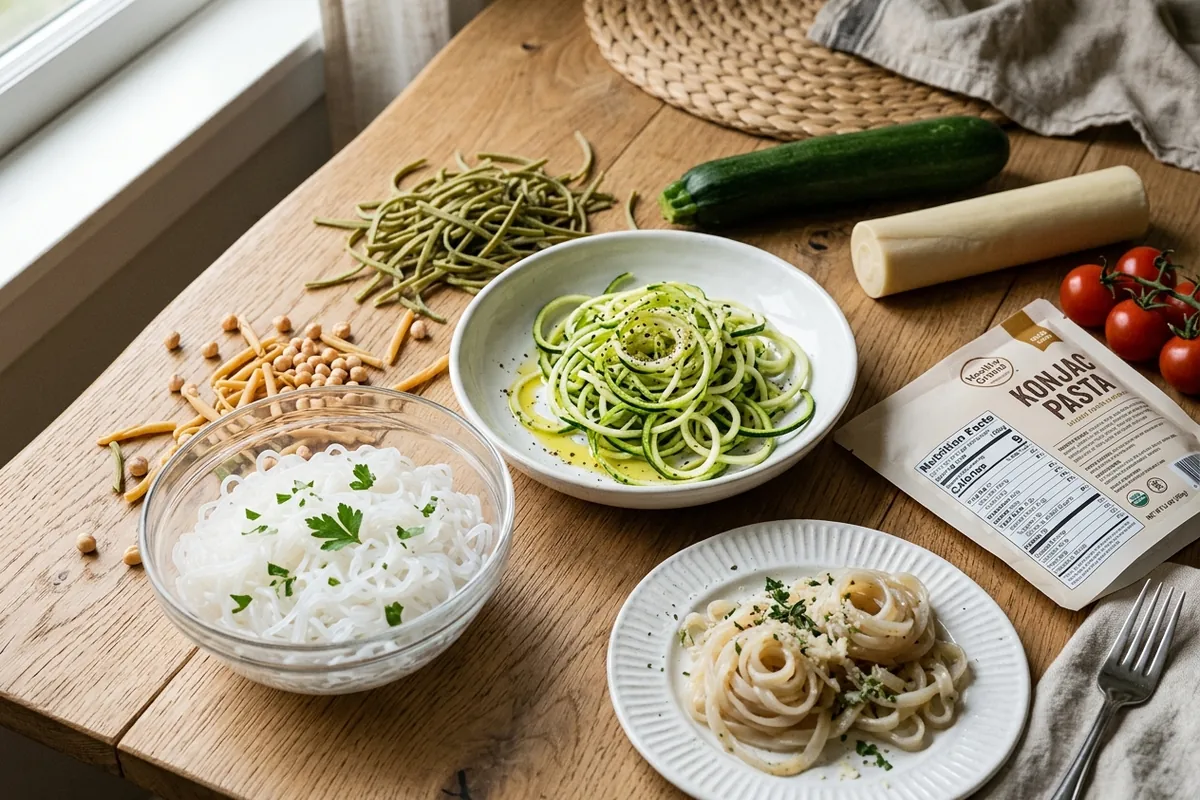
When you compare alternatives, the number that matters for most low-carb and keto eating is net carbs, not total carbs. Net carbs are the total carbohydrates minus fiber, because fiber is not digested into blood sugar the way starch and sugar are. This is why a legume pasta with 35 grams of total carbohydrate can show only 15 to 20 grams of net carbs once you subtract its heavy fiber load, and why konjac-based shirataki, which is almost entirely fiber, lands at essentially zero net carbs. Read the Nutrition Facts panel and do the subtraction yourself rather than trusting front-of-package claims, because the marketing often quotes whichever number looks best.
Watch the serving size while you are at it, since some brands quote a small portion to make the carb count look lower than what you would actually eat. Standardize your comparison to a portion that actually fills you, and the picture gets honest fast. Fiber is a bonus, not just a deduction: the high fiber in legume pasta and konjac noodles slows digestion and keeps you full, which is part of why these alternatives can be more satisfying than their calorie counts suggest. If you are new to high-fiber alternatives, increase them gradually, because a sudden jump in fiber can cause bloating until your gut adjusts.
Cost and Shopping
Price varies widely and is worth knowing before you commit. Zucchini and spaghetti squash are the cheapest by far, especially in season, and you can spiralize zucchini yourself with an inexpensive tool. Shirataki and kelp noodles are mid-priced and shelf-stable, sold in pouches in the refrigerated or Asian section. Hearts of palm pasta and legume pastas are the most expensive per serving, often two to four times the price of a box of wheat pasta. If budget matters, lean on the vegetable options for everyday meals and save the pricier processed alternatives for when their specific texture is worth it. Buy one or two to test before stocking up, since texture preferences are personal and the zero-carb noodles in particular are divisive.
How to Choose: Match the Alternative to the Goal
The right alternative depends on what you are optimizing. If you want the lowest possible carbs and do not mind managing texture, shirataki or kelp noodles get you near zero, especially in Asian dishes. If you want low carbs plus real vegetable nutrition and freshness, zucchini noodles and spaghetti squash are the everyday picks, with squash being the sturdier of the two. If you want convenience with low carbs, hearts of palm pasta needs no cooking and holds its shape. If you want the closest thing to a real pasta bite and care more about protein than hitting rock-bottom carbs, legume pasta wins. And if you are feeding a skeptical family, spaghetti squash under a familiar tomato sauce and legume pasta under a bold ragu are the two most likely to win them over.
No single alternative does everything, so many people keep two or three on hand: a vegetable option for light fresh meals, a zero-carb option for Asian dishes, and legume pasta for when they want something close to the real thing. America’s Test Kitchen has tested these alternatives for texture and cooking behavior at America’s Test Kitchen, and the practical lesson lines up with the table above: each one needs its own handling, and matching the alternative to the dish matters more than chasing the lowest number.
Common Mistakes and How to Avoid Them
Most disappointment with low carb pasta alternatives comes from a few avoidable errors. The first is watery results, almost always from skipping the salt-and-dry step on zucchini or not draining squash and hearts of palm; moisture management is half the battle. The second is rubbery shirataki, which comes from skipping the rinse and dry-fry; both steps are non-negotiable for good texture. The third is mushy legume pasta from overcooking; pull it early. The fourth is mismatched sauces: delicate vegetable noodles drown under heavy ragus, and zero-carb noodles taste best in the Asian dishes their texture suits rather than as a one-for-one Italian swap. Bon Appetit has covered how to keep vegetable noodles from going soggy at Bon Appetit, and the fix is consistent: remove water before cooking, cook briefly, and let the sauce do the rest. Get those right and any of these alternatives goes from a sad compromise to a dish worth making again.
FAQ
What is the lowest carb pasta alternative?
Shirataki noodles and kelp noodles are the lowest, with essentially zero net carbs and only a handful of calories per serving. Shirataki is made from konjac fiber and kelp from seaweed. Both need specific prep (rinsing and dry-frying for shirataki, soaking for kelp) and suit Asian dishes more than classic Italian plates.
Are zucchini noodles really low carb?
Yes. A serving of zucchini noodles has only 3 to 4 grams of net carbs and about 20 calories, compared with 40-plus grams in wheat pasta. The catch is moisture: salt the spiralized strands, let them drain 10 to 15 minutes, squeeze them dry, and cook only 2 to 3 minutes so they stay crisp-tender instead of watery.
Is legume pasta low carb?
Not truly. Chickpea, edamame, and lentil pastas still carry 15 to 25 grams of net carbs per serving, far more than vegetable or konjac noodles. They are better described as lower-carb, higher-protein pasta. Their advantage is texture: they are the only alternative that genuinely eats like real pasta, with double or triple the protein.
How do you make shirataki noodles taste good?
Rinse them very well under cold water for a full minute to remove the packing liquid and fishy smell, then dry-fry them in a hot nonstick pan with no oil for 5 to 8 minutes. The dry-fry drives off water and turns them from rubbery to firm and springy. After that they absorb the flavor of any sauce you add.
What is the best low carb pasta alternative for spaghetti and meatballs?
Spaghetti squash is the best fit, because its strands are sturdy enough to hold a meat sauce and its mild sweetness pairs with tomato. Roast it until just tender, fork out the strands, and top with sauce and meatballs. Legume pasta is the next best if you want a firmer, more pasta-like bite and do not need rock-bottom carbs.
Which low carb pasta alternative tastes most like real pasta?
Legume pasta, especially chickpea and edamame, tastes and chews the most like wheat pasta, with a firm bite and a familiar shape, though it has an earthy note and more carbs than the others. Among the very low carb options, none truly mimics pasta, but hearts of palm pasta comes closest in shape while staying tender and near zero carbs.
Bottom Line
Low carb pasta alternatives are not one thing, and the best choice depends on what you are after. Shirataki and kelp get you to near-zero carbs if you manage their texture; zucchini and spaghetti squash give low carbs with real vegetable nutrition; hearts of palm offers convenience; and legume pasta trades the lowest carbs for the most pasta-like bite and a big protein boost. The errors that ruin these are predictable: watery vegetables from skipping the dry step, rubbery shirataki from skipping the rinse and dry-fry, and mushy legume pasta from overcooking. Pick the alternative that fits the meal, handle it the way it needs, and let the sauce carry the flavor.