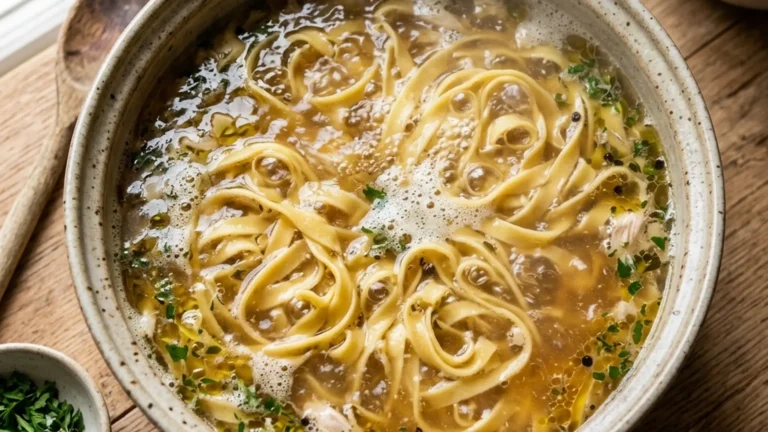
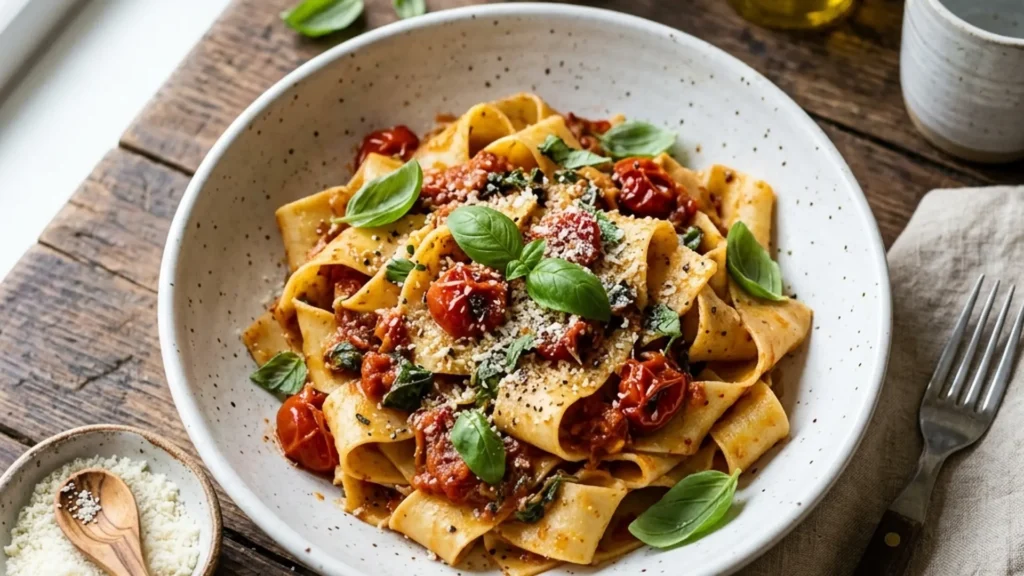
Gluten free pappardelle pasta is the trickiest gluten-free shape to get right, and the reason is geometry. Pappardelle is a wide, flat ribbon, usually 3/4 inch to an inch across, and all that surface area means it sticks to itself, tears under its own weight, and goes from al dente to mush faster than any narrow noodle. Strip the gluten out of that wide ribbon and you have a delicate sheet that wants to fall apart at every step: in the pot, in the colander, on the fork. Here is the full picture: whether to buy or make it, which store brands actually hold together, the anti-stick cooking protocol the recipe blogs skip, the sauces this ribbon was built for, and how to make a homemade gluten-free dough that does not shred.
The payoff is worth the care. Pappardelle is the noodle for big, rich, chunky sauces, the kind that need a wide surface to cling to, and a good gluten-free version handles a mushroom ragu or a braised short rib sauce just as well as the wheat one. You just have to respect how fragile it is.
Buy or Make? A Quick Decision
Both are valid, and the right answer depends on what you want. Buy a box when you want reliable convenience and a sturdier ribbon that survives a busy kitchen, because commercial gluten-free pappardelle is extruded and dried to be more durable than fresh. Make it from scratch when you want the silky, tender texture that only fresh pasta delivers, and you are willing to handle a fragile dough carefully. Fresh gluten-free pappardelle is genuinely better eating, but it tears more easily and does not keep, so it is a weekend project, not a weeknight shortcut.
If you are new to working with delicate filled and shaped pastas in general, the techniques transfer. The same gentle-handling logic that protects fragile ribbons is the logic behind getting filled ravioli to hold together without splitting, and once you have that touch, gluten-free pappardelle stops feeling impossible.
The Store Brands Worth Buying
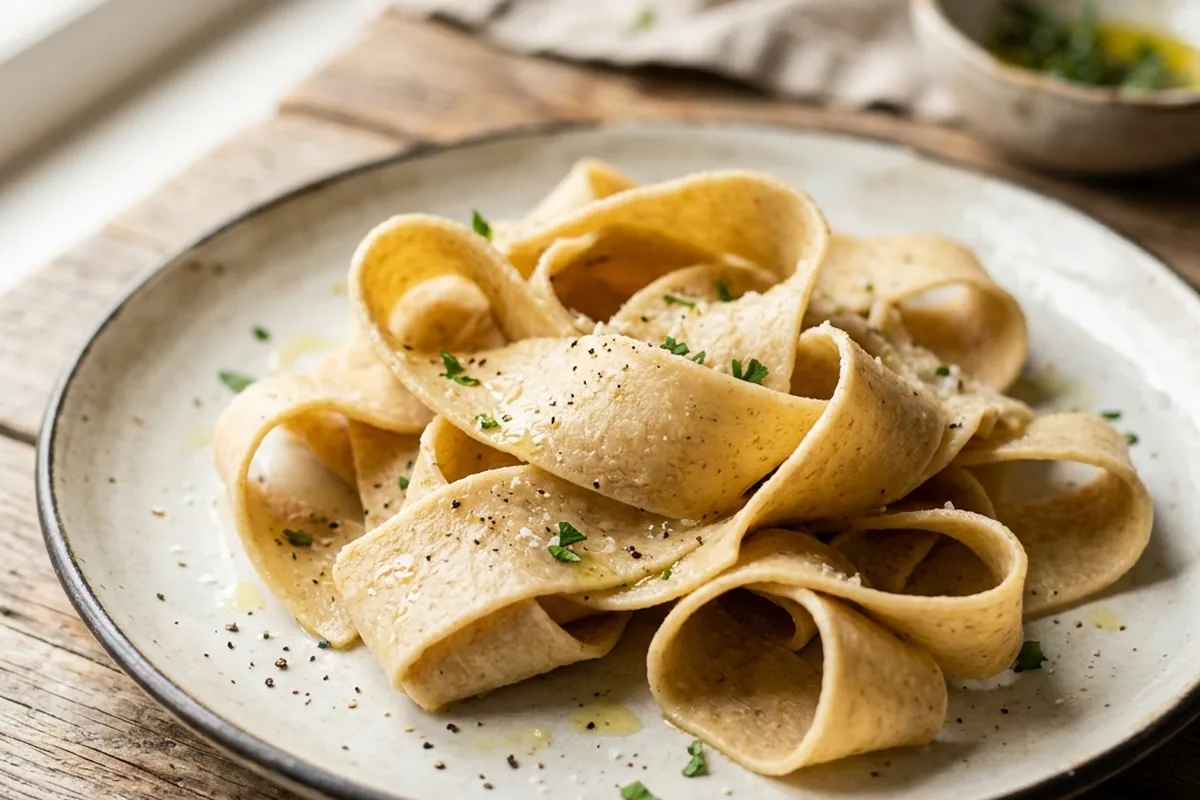
Commercial gluten-free pappardelle splits into two camps, egg and egg-free, and the difference is bigger than the label suggests. Here is how the common options compare.
| Type / base | Texture and durability | Flavor | Best for |
|---|---|---|---|
| Corn and rice with egg | Richer, more pliable, holds shape better | Golden, closest to classic egg pasta | Rich meat and cream sauces |
| Corn and rice, egg-free | More brittle dry, can get gummy if overcooked | Cleaner, slightly corn-forward | Vegan and egg-free households |
| Bronze-cut imported (corn/rice) | Rougher surface grips sauce well | More wheat-like, hearty | Chunky ragus that need grip |
| Fresh / refrigerated GF | Tender but fragile, very short cook | Best eating texture | Delicate butter and herb sauces |
If one default is needed, it is an egg-based corn-and-rice pappardelle, ideally bronze-cut. The egg adds pliability that fights tearing, and the rough bronze-cut surface grabs sauce, which matters enormously for a ribbon this wide. Egg-free versions are perfectly good but demand more vigilance on cook time, because they slide into gumminess faster.
The Anti-Stick, Anti-Tear Cooking Protocol
This is where gluten-free pappardelle lives or dies, and it is the part the recipe pages gloss over. The wide ribbons want to weld together and shred, so the whole game is keeping them separated and undercooked.
Start with a genuinely large pot and a lot of water, more than you think, because crowded ribbons stick instantly. Salt it well, about a tablespoon per gallon. Do not add oil to the water, even though plenty of recipes say to. Oil floats on top and barely touches the pasta while it boils, and worse, it coats the surface when you drain, so the sauce slides off the very noodle that most needs to hold it. The right way to prevent sticking is movement and space, not oil.
Bring the water to a gentle boil, not a violent one that batters the fragile ribbons. Add the pappardelle and stir gently and often, especially in the first minute, lifting and separating the ribbons with tongs so they do not fuse. Cook to about a minute or two under the package time, until just shy of al dente, because gluten-free pasta keeps softening off the heat. Taste early and often. The window is narrow.
Here is the most important move: do not dump it in a colander. Lift the pappardelle out with tongs or a spider straight into your warm sauce, and toss immediately. Draining wide gluten-free ribbons in a colander piles them up to stick and cool into a brittle clump, and they tear when you try to separate them. Going straight from pot to sauce keeps them moving, coats them while they are hot and pliable, and saves the whole batch. Reserve a cup of the starchy cooking water first to loosen the sauce as you toss.
The Sauces Pappardelle Was Built For
Pappardelle is not a neutral noodle you can sauce however you like. The wide ribbon exists to carry big, hearty, chunky sauces, and matching it correctly is the difference between a great plate and a slippery mess.
What works: rich meat ragus (beef, pork, short rib, wild boar), mushroom ragu, braised meats, and anything with body and chunks that the broad surface can grab and drape around. A creamy mushroom sauce is a classic for good reason. The name pappardelle comes from the Italian for “to gobble,” and it is meant for sauces substantial enough to gobble.
What fails: thin, watery, or delicate sauces. A light tomato or a fine seafood broth just slides off a wide ribbon and pools at the bottom of the bowl. If you want a lighter, brothier dish, a smaller shape carries it far better. The same matching logic that makes a tiny grain pasta perfect for a brothy bake, explained in the brown butter orzo recipe, is exactly why those thin sauces belong on small shapes, not on pappardelle.
Making Fresh Gluten-Free Pappardelle That Holds Together
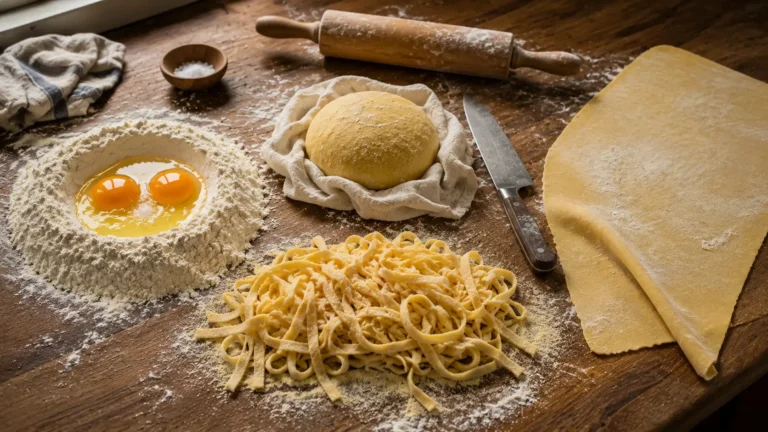
Fresh is the best eating, and it is doable, but gluten-free dough has no elastic protein to hold it, so you have to engineer that structure back in. The two tools that do it are a binder and the right hydration.
The binder matters most
Without gluten, the dough needs xanthan gum or psyllium husk to give it stretch and stop it shredding. A common ratio is about 1 teaspoon of xanthan gum per cup of gluten-free flour blend if your blend does not already contain it (check the label, many do). Psyllium husk gives an even more pliable, foldable dough and is the better choice for ribbons specifically, because it makes the sheet flexible enough to handle. This binder is not optional, it is the entire reason the dough holds.
Eggs, hydration, and rest
Use a blend with eggs and egg yolks for richness and structure, plus a little olive oil for pliability. Gluten-free dough often needs slightly more moisture than it looks like, so add water a teaspoon at a time until it comes together into a smooth, non-crumbly ball. Then rest it, wrapped, for at least 15 to 30 minutes. The rest lets the flours and binder fully hydrate, which dramatically reduces tearing when you roll.
Rolling and cutting
Roll on a well-floured surface or pasta machine, but stop one or two settings thicker than you would for wheat pasta, because too thin and a gluten-free sheet tears. Dust generously with flour to prevent sticking, then cut into wide 3/4-inch to 1-inch ribbons with a knife or pizza cutter. Let them dry on a floured surface or hang them for up to an hour, which firms them up and makes them easier to handle. Fresh gluten-free pappardelle cooks fast, often just 2 to 4 minutes, so watch it closely. If you want to understand the dough-and-hydration logic in more depth, the broader fresh-pasta principles in the homemade pasta guide map directly onto the gluten-free version, you are just swapping the gluten for a binder.
Egg vs Egg-Free: Which to Choose
The single biggest decision when buying gluten-free pappardelle is whether to get an egg-based or egg-free version, and it changes how the noodle behaves more than the flour blend does. Eggs do for gluten-free pasta a little of what gluten does for wheat: they add protein structure, richness, and pliability. An egg-based ribbon is more forgiving, less likely to snap dry, and it browns and tastes closer to classic Italian egg pasta. If you can eat eggs, this is the easier path to a good plate.
Egg-free versions, usually built on corn and rice flour, exist for vegan and allergy households, and they have improved a lot. The trade-off is that they are more brittle in the box and slide into gumminess faster in the pot, so they demand a closer eye on cook time and a gentler hand. They also tend to have a cleaner, slightly corn-forward flavor that some people prefer and others find a touch one-note. If you are cooking egg-free, lean even harder on the anti-stick protocol below, because you have less structural margin to work with.
One more note on ingredients: read the label for what else is in there. Some gluten-free pastas add mono- and diglycerides or extra starches to improve texture, which is fine, but if you are also avoiding corn, soy, or specific gums, the blends vary widely. Farabella-style egg-free corn-rice pasta, for instance, is nut-free and soy-free, while egg versions obviously are not egg-free. Match the box to your actual restrictions, not just the gluten-free claim on the front.
Nutrition and Serving Size
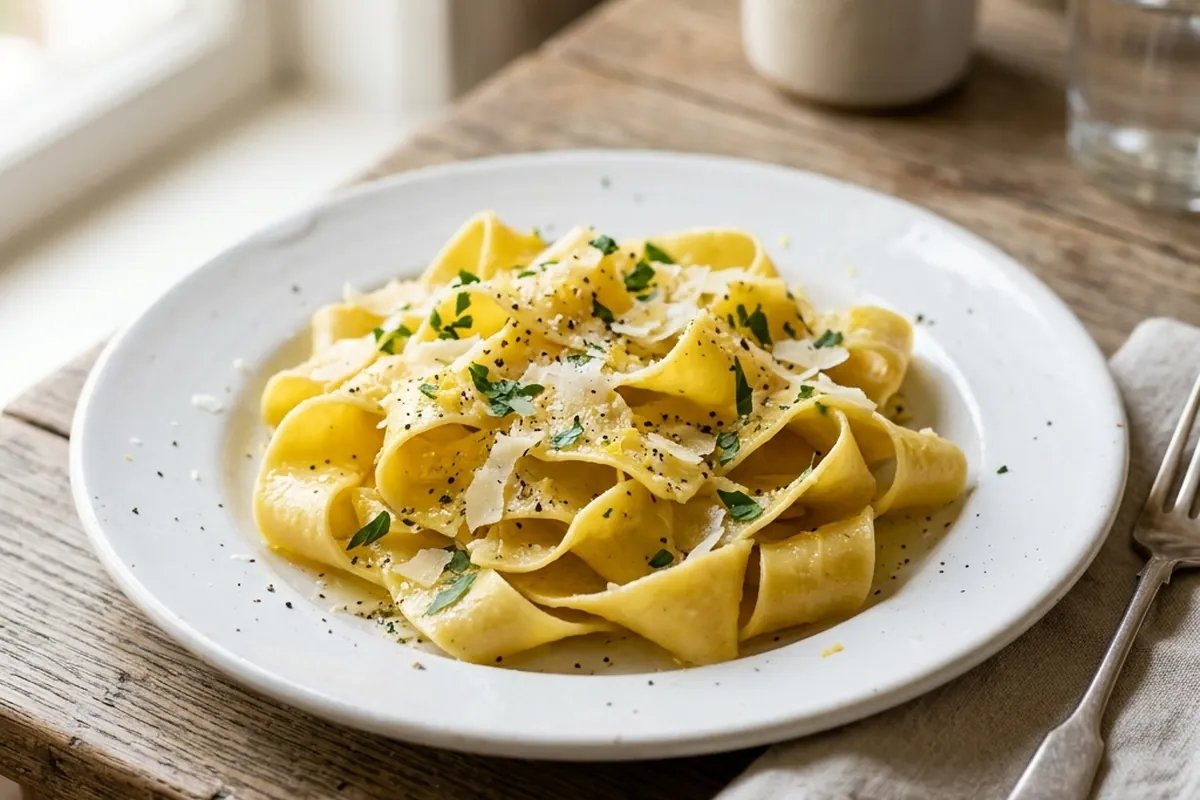
Gluten-free pappardelle is nutritionally similar to other corn-and-rice gluten-free pastas: a 2-ounce dry serving runs roughly 200 to 210 calories, around 44 grams of carbohydrate, and only about 3 to 4 grams of protein, less than wheat pasta unless eggs are added, which bump it up a little. Fiber is usually low, in the 1 to 3 gram range, because corn and rice flour are not high-fiber bases. If fiber and protein matter to you, the egg versions edge ahead, and pairing the pasta with a protein-rich sauce (a meat ragu, for example) balances the plate.
Serving size is the same as any pasta, 2 ounces dry per person, which cooks up to a moderate nest. Because pappardelle ribbons are wide and visually impressive, a proper portion can look generous even when it is a standard serving, which is a small bonus. Weigh it dry if you are tracking, since cooked gluten-free pasta absorbs a lot of water and the cooked volume is an unreliable guide.
Troubleshooting Common Pappardelle Problems
The ribbons stuck together in one clump
Too little water, not enough stirring, or you drained them in a colander and let them sit. Use more water, stir gently and often with tongs in the first minute, and lift them straight into the sauce instead of draining. Once stuck, a brief dunk in warm water can sometimes loosen them, but prevention is the only reliable fix.
They tore apart in the pot
Either you boiled too hard or cooked too long. Drop to a gentle boil and pull the pasta a minute or two early. For homemade, this usually means too little binder or too thin a sheet, so add xanthan or psyllium and roll a touch thicker.
The sauce slides right off
You probably added oil to the water, or you matched a thin sauce to this wide ribbon. Skip the oil, choose a bronze-cut or rougher pasta, and use a thicker, chunkier sauce. Toss with a splash of reserved pasta water to help it cling.
It went mushy
Overcooked, the most common gluten-free failure. Cook under the package time, taste early, and finish in the sauce. Egg-free and legume versions are especially fast to overcook.
Using Gluten-Free Lasagna Sheets as a Shortcut
If you cannot find gluten-free pappardelle anywhere, there is a legitimate workaround that more than one recipe relies on: buy gluten-free lasagna sheets and cut them into 3/4-inch to 1-inch ribbons with a pizza cutter. It works because lasagna sheets and pappardelle are essentially the same flat shape at different widths, so the eating experience is close. Gluten-free lasagna sheets are far easier to find than pappardelle in most stores, which makes this a handy fallback.
The catch is that the same fragility rules apply, only more so, because you are handling cut sheets that want to stick and break the instant they cool. Cook the sheets a touch under the time, work fast once they are drained, and get them into the warm sauce immediately, tossing constantly so they do not dry out and clump. If anything, cut ribbons from sheets are even more prone to sticking than purpose-made pappardelle, so reserve plenty of pasta water and keep everything moving. It is not quite as refined as the real thing, but on a weeknight when the specialty box is sold out, it gets you a wide-ribbon dish that satisfies the same craving.
Storing and Reheating
Dry boxed pappardelle keeps for months in the pantry. Fresh homemade gluten-free pappardelle is best cooked the day you make it, but you can dry it fully and store the dried ribbons in an airtight container for a couple of weeks, or freeze them in nests. Cooked, sauced leftovers keep in the fridge for two to three days, though gluten-free pasta softens further on reheating, so warm it gently with a splash of water or extra sauce and stop as soon as it is hot. Do not microwave it to death, the texture suffers fast.
For trustworthy technique baselines beyond brand instructions, the recipe testers at America’s Test Kitchen have tested gluten-free pastas for cooking behavior and texture, and the editors at Bon Appetit have good practical writing on matching wide ribbons to the hearty ragus they were designed for.
Frequently Asked Questions
Is there a good store-bought gluten-free pappardelle?
Yes. Egg-based corn-and-rice pappardelle, ideally bronze-cut, tends to be the most pliable and sauce-grabbing, which suits this wide ribbon. Egg-free corn-and-rice versions are good for vegan households but need closer attention to cook time. Fresh refrigerated gluten-free pappardelle has the best texture but is the most fragile.
Why does my gluten-free pappardelle stick together and tear?
The wide ribbon has a lot of surface area and no gluten to hold it, so it welds to itself and shreds. Use a large pot with plenty of water, stir gently and often with tongs, do not add oil to the water, undercook by a minute or two, and lift the pasta straight into the sauce instead of draining it in a colander.
What sauce goes best with pappardelle?
Thick, hearty, chunky sauces: meat and mushroom ragus, braised meats, creamy mushroom sauces. The wide ribbon is built to carry substantial sauces. Thin, watery, or delicate sauces slide off and belong on smaller shapes instead.
Can you make fresh gluten-free pappardelle at home?
Yes. The key is adding a binder, xanthan gum or psyllium husk, to replace the missing gluten, plus eggs and enough hydration. Rest the dough so the flours fully absorb moisture, roll it a touch thicker than wheat pasta so it does not tear, cut wide ribbons, and cook them just 2 to 4 minutes.
Should I add oil to the water when boiling gluten-free pappardelle?
No. Oil floats on the water and barely touches the pasta while it cooks, then coats the surface when you drain, which makes sauce slide off. Prevent sticking with plenty of water, gentle stirring, and moving the pasta straight into the sauce, not with oil.
How long does gluten-free pappardelle take to cook?
Dried boxed pappardelle usually runs about 7 to 9 minutes, but cook it a minute or two under the package time and finish it in the sauce. Fresh homemade gluten-free pappardelle cooks much faster, often just 2 to 4 minutes, so watch it closely because the window before it overcooks is short.
Bottom Line
Gluten free pappardelle pasta rewards a little technique and punishes carelessness, because the wide ribbon plus the missing gluten makes it the most tear-prone shape in the gluten-free aisle. Buy an egg-based, bronze-cut box for reliability, or make a fresh dough with xanthan or psyllium for the best texture. Either way, cook it in a big pot of well-salted water with no oil, stir gently, undercook it by a minute or two, and lift it straight into a thick, hearty sauce rather than draining it. Match it to a ragu or a mushroom sauce that the broad ribbon can actually carry, and reheat it gently. Respect how fragile it is and gluten-free pappardelle delivers exactly what the shape promises: a wide, sauce-draped ribbon worth gobbling.