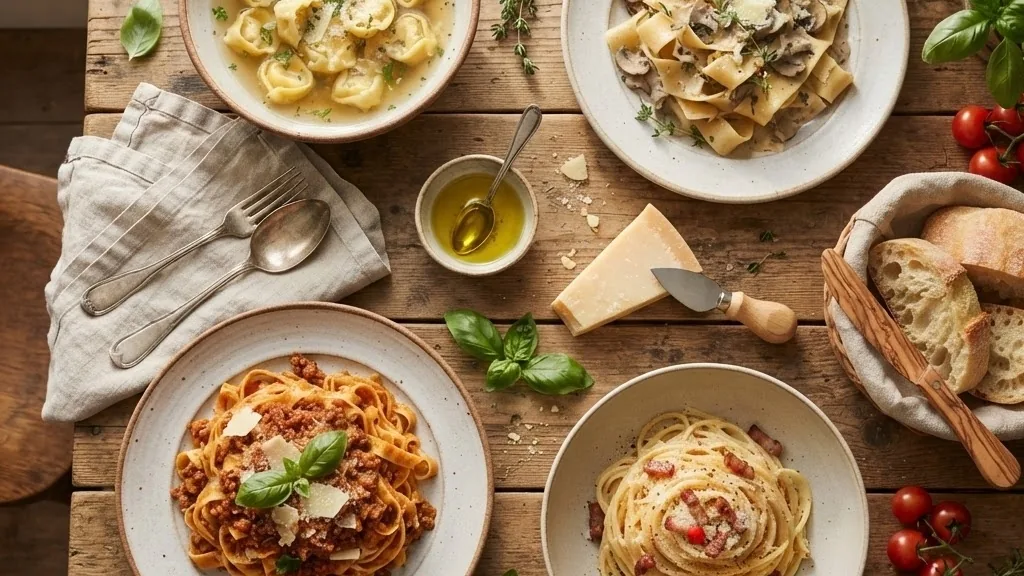
Best pasta dishes fall into two piles that almost every list quietly blends together, and the confusion is why so many roundups feel useless the moment you stand at a stove. One pile is the canon: named dishes with a home region, a defining set of ingredients, and a documented history. The other pile is weeknight cooking: what you actually make on a Tuesday. This guide keeps them separate, on purpose, and it does one thing the big galleries refuse to do, which is cite a primary source for every claim that can be checked. You will find the deposited Bolognese recipe, the Gragnano production rules, and the trial data on glycemic index, each attached to the dish it belongs to. If you want a no-machine version of fresh sheets before you start, the homemade pasta without a machine walkthrough pairs well with everything below.
Quick answer: The best pasta dishes worth knowing are the Roman quartet (cacio e pepe, gricia, amatriciana, carbonara), the Emilian trio (tagliatelle al ragu, tortellini in brodo, lasagne), Ligurian trofie al pesto, and Campanian classics like spaghetti alle vongole. TasteAtlas’s audience ranking, built on 17,675 accepted ratings, puts pappardelle al cinghiale and tagliatelle al ragu alla bolognese at the top. Cook them with the right salt-to-water ratio and finish the sauce in the pan, not on the plate.
How this ranking was actually built
This ranking uses a stated, checkable method rather than a private editorial hunch. Dishes qualify for the canon tier when they carry a documented region of origin and a set of defining ingredients that a primary source or a large public dataset confirms. For popularity, the reference point is TasteAtlas, whose pasta-dish ranking as of 17 July 2026 rested on 22,344 recorded ratings, of which 17,675 survived its anti-manipulation filters. That dataset is a popularity poll, not an authority on what belongs in a dish, so it decides order, never correctness. Correctness comes from deposited recipes and law. The Italian-American entries are labeled as such, never smuggled in as Italian, and the scope is Italian and Italian-descended pasta.
Two tiers structure the whole piece. The canon tier answers “what should I know or order.” The kitchen tier answers “what do I cook tonight.” Popularity breaks ties within a tier; it never promotes a dish across the correctness line.
- Canon inclusion: documented region plus defining ingredients confirmed by a primary source or a large public dataset.
- Order: TasteAtlas accepted-rating counts, treated as a popularity signal only.
- Correctness: deposited recipes, IGP specifications, and national law override votes.
The Roman quartet and why they fail
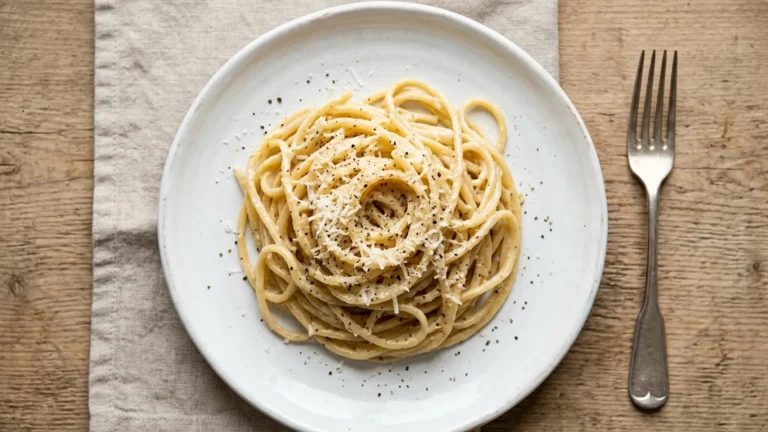
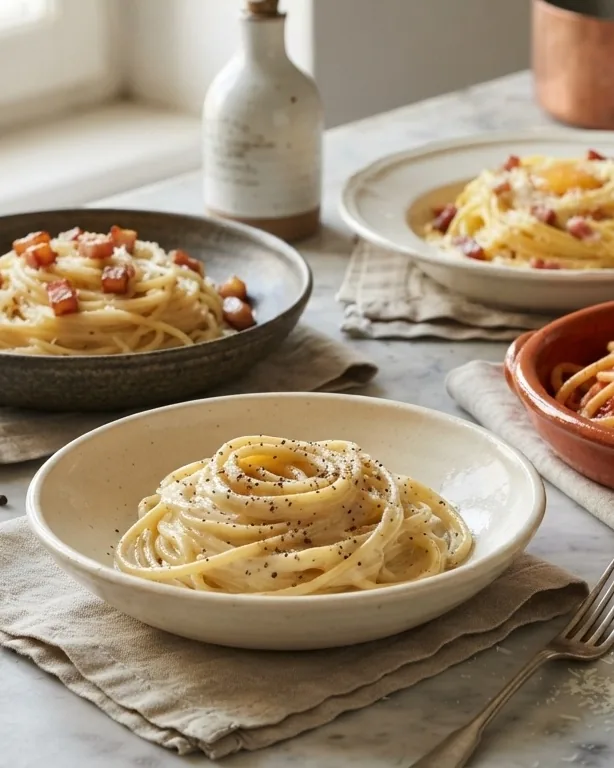
The four Roman pasta dishes share a spine and diverge by one ingredient each, which is exactly why home cooks mix them up and break them. Cacio e pepe is Pecorino Romano, black pepper, and pasta water. Add cured pork and it becomes gricia. Add tomato to gricia and you get amatriciana. Swap the cheese-and-pepper base for egg yolk and you approach carbonara. None uses cream in its traditional form, and the most common failures come from heat, not talent. The single most useful number here is the cacio e pepe starch threshold: below roughly 1 percent starch relative to cheese mass, the sauce collapses into what the researchers who studied it named the Mozzarella Phase, a clumped, separated mess.
That finding comes from a peer-reviewed paper in Physics of Fluids, published by AIP Publishing, which won a 2025 Ig Nobel Prize. The Institute of Science and Technology Austria, where the authors work, gives the practical version: dissolve starch at 2 to 3 percent of the cheese mass in water, and keep the mixture below 65 degrees Celsius, because above that the cheese proteins denature and aggregate. That aggregation is the breakage.
Carbonara scrambles for a related reason: egg cooked too hot sets into curds. Amatriciana turns thin when guanciale renders into a puddle no one emulsifies. The fix for all four is temperature control and finishing off the direct flame.
Common failure modes, quickly:
- Clumped cacio e pepe: not enough starch, or cheese hit water hotter than 65 degrees Celsius.
- Scrambled carbonara: egg yolks added to a pan still on high heat.
- Split amatriciana: rendered guanciale fat never emulsified with pasta water.
For a milder, family-table cousin of these pork-and-pasta dishes, the creamy pasta with peas and ham leans into comfort rather than austerity.
The Emilian trio and the deposited recipes
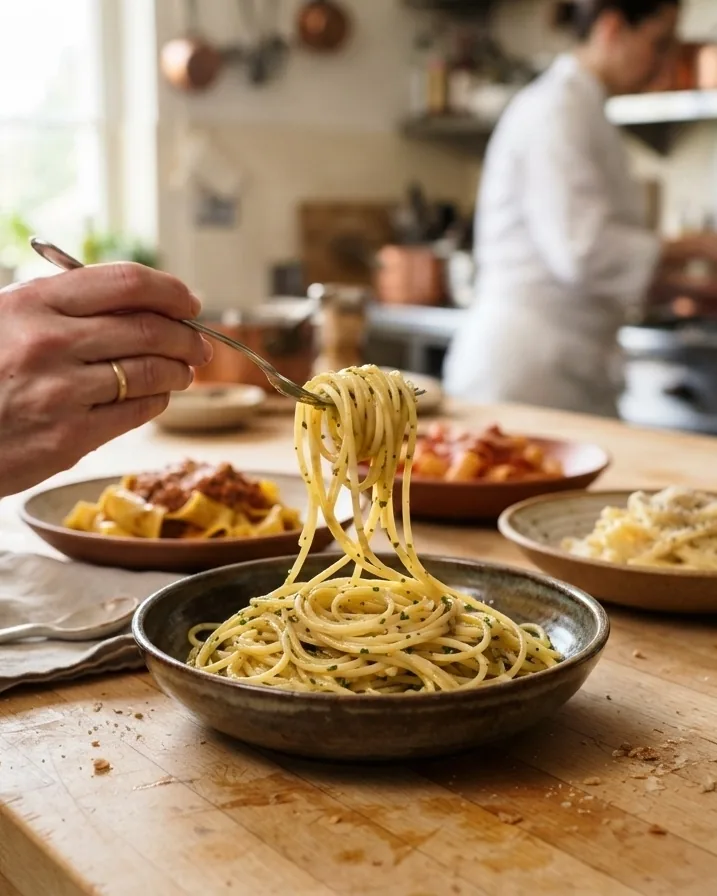
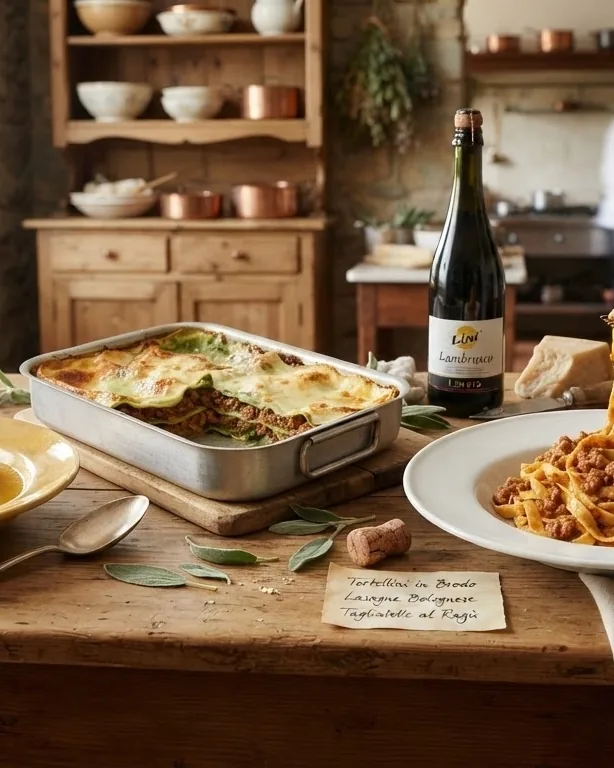
Emilia-Romagna gives the canon its most documented dishes, because the region’s academics literally filed the recipes with a chamber of commerce. Tagliatelle al ragu alla bolognese, tortellini in brodo, and lasagne alla bolognese are the trio, and the ragu is codified to the gram. The Accademia Italiana della Cucina deposited an updated ragu text on 20 April 2023, replacing the version filed on 17 October 1982. For six servings it specifies 400 grams of coarsely minced beef, 150 grams of fresh sliced pork pancetta, about 60 grams each of onion, carrot, and celery, a glass of wine, 200 grams of tomato passata, a tablespoon of double concentrate, an optional glass of whole milk, and three tablespoons of extra virgin olive oil. That is a real specification, not folklore.
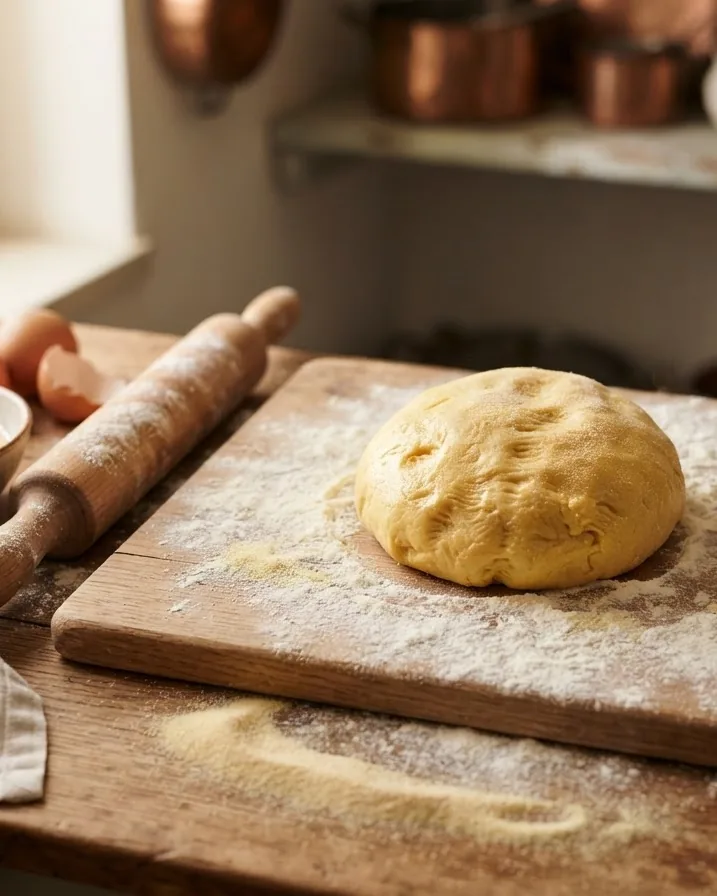
The pasta under it is codified too. On 16 April 1972, Francesco Majani and Alcino Cesari deposited the official Bolognese tagliatella at the Bologna Chamber of Commerce for the Accademia: 8 millimeters wide cooked, about 7 millimeters raw, described as 1/12,270th of the height of the Asinelli tower. A gold sample sits at the Palazzo della Mercanzia.
You can read the institutional confirmation of the updated true ragu alla bolognese directly from the Accademia. The lesson buried in the 2023 revision is that tradition is not frozen; the guardians of the canon changed it themselves after four decades.
The permits, inspections, and food-safety layer operators forget
Anyone selling pasta, not just cooking it, runs into a stack of governing bodies whose rules cost real money and time, and the requirements differ sharply between the United States and the European Union. In the US, the Food and Drug Administration sets labeling and standard-of-identity rules for pasta, the United States Department of Agriculture houses the nutrient reference data, and the Food Safety and Inspection Service governs any product carrying meat, which sweeps in a Bolognese sauce sold at retail. Public guidance from FoodSafety.gov and nutrition.gov, both federal, rounds out what a small producer must actually know before a single box ships.
The European framework is stricter about what a name means. Under Italian law, D.P.R. 9 febbraio 2001, n. 187, pasta all’uovo sold in Italy must contain at least four whole hen’s eggs per kilogram of semolina, which is no less than 200 grams of egg per kilogram, and the same decree bans soft-wheat flour in dried pasta except for limited cases such as export. The full text is hosted by the FAOLEX legal database run by FAO.
Geographical protection adds another cost layer. Pasta di Gragnano carries an EU protected geographical indication entered on 11 October 2013 under Commission Implementing Regulation (EU) No 969/2013, recorded in the European Commission’s eAmbrosia register. The Gragnano IGP production specification is unforgiving: dough is durum semolina plus local groundwater at no more than 30 percent, extrusion through bronze dies only, drying between 40 and 85 degrees Celsius for 4 to 60 hours depending on shape, and packaging at the production site within 24 hours. UK-facing sellers meet a mirror version through the GB register administered by DEFRA.
Two more institutions matter for context rather than compliance. UNESCO’s Intergovernmental Committee inscribed “Italian cooking, between sustainability and biocultural diversity” on 10 December 2025. And the sector’s numbers come from bodies like UN.A.F.P.A., the EU manufacturers’ union, and the International Pasta Organisation, which track production and consumption globally.
What it costs the operator, in short:
- Naming a product “egg pasta” in Italy: a minimum of 200 grams of egg per kilogram of semolina, verifiable and enforced.
- Selling under the Gragnano IGP name: bronze dies, a 40 to 85 degrees Celsius drying window, and on-site packaging within 24 hours.
- Selling meat sauce at retail in the US: Food Safety and Inspection Service oversight on top of Food and Drug Administration labeling.
Technique: salt, water, and finishing in the pan
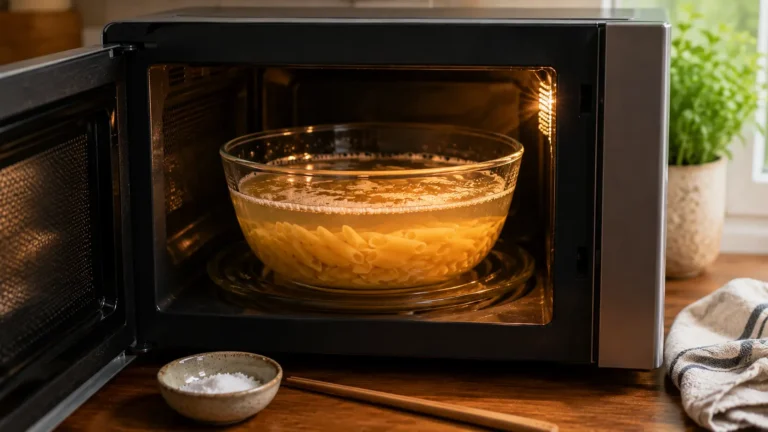
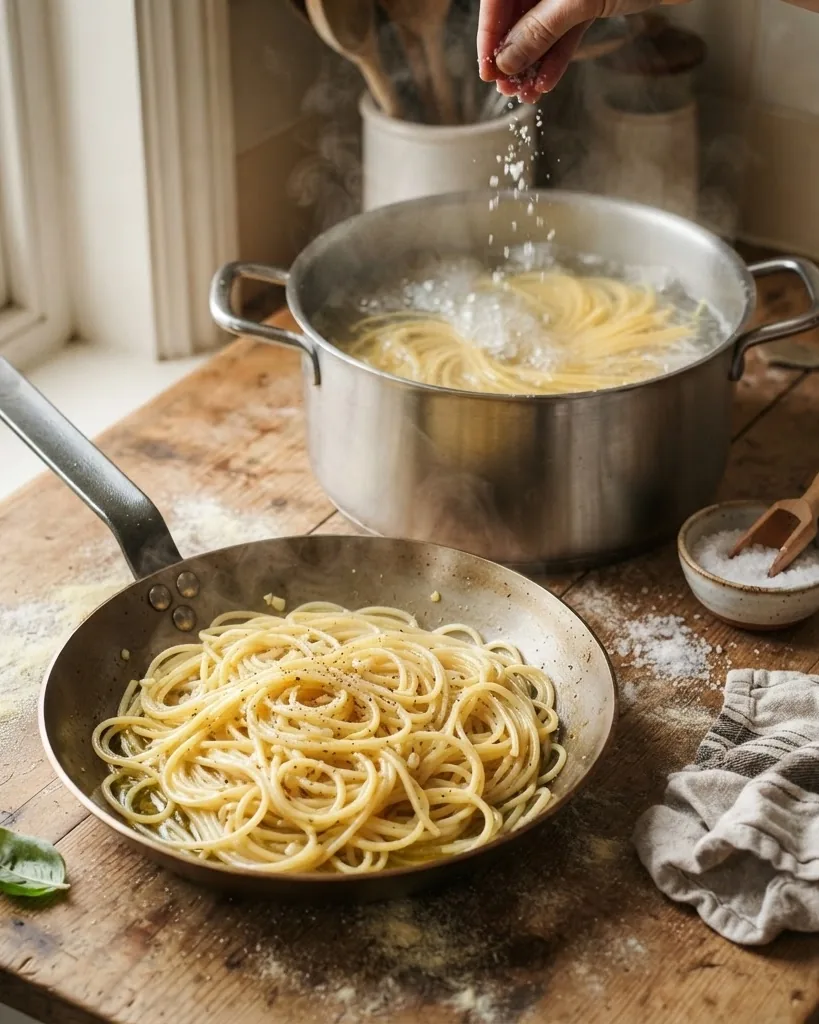
Two habits separate restaurant pasta from home pasta, and both are measurable rather than mystical. The first is the cooking medium. The consortium behind Pasta di Gragnano recommends 1 to 1.1 liters of boiling water and 10 to 12 grams of coarse salt per 100 grams of pasta. That salt figure is higher than most home cooks guess, and it seasons the dough from the inside, since the surface can only absorb what the water carries. The second habit is finishing the pasta in the pan with its sauce and a ladle of starchy water, so the starch emulsifies the fat instead of the sauce sliding off noodles that were saucing on the plate.
Shape choice is not decoration. Bronze-die pasta has a rough, porous surface that grips sauce, which is the entire point of the Gragnano bronze-die rule. Hollow and ridged shapes hold chunky ragus; long strands suit oil and cheese emulsions; delicate cuts want light dressings.
The America’s Test Kitchen and Serious Eats teams have long argued the same emulsification logic, and it holds: mantecatura, the vigorous off-heat swirl, is what turns fat, water, and starch into a glossy coat. Skip it and even correct ingredients give you a broken plate.
Quick pairing rules
- Long strands: oil, garlic, cheese emulsions, seafood.
- Ridged tubes: meat ragus and thick tomato sauces.
- Small shapes: soups and legume dishes like pasta e ceci.
The al dente health myth, corrected with trial data
The claim that cooking pasta al dente meaningfully lowers its glycemic index is repeated across the food internet and is not supported by the foundational trial. In the 1986 study of 13 diabetic patients published in Diabetes Care, cooking spaghetti for 5 minutes versus 15 minutes produced no significant difference: 45 plus or minus 6 against 46 plus or minus 5. What did move the number was shape. Macaroni scored 68 plus or minus 8, star pastina 54 plus or minus 6, and spaghetti 45 plus or minus 6. Surface area and thickness drove the response; the clock did not. Al dente is defensible on texture and on shape effects, not on cooking-time-driven glycemic index.
The wider evidence is kinder to pasta than diet culture suggests. A meta-analysis in BMJ Open pooled 30 randomised controlled trials across 32 comparisons and 2,448 participants, with a median follow-up of 12 weeks and an average of 3.3 servings of pasta per week substituted for other carbohydrates. Pasta inside a low-glycemic-index pattern did not increase adiposity and produced a small reduction in body weight and BMI versus higher-GI patterns.
Other trials keep pasta low on the scale. A randomised crossover study found regular, whole-wheat, and high-soluble-fibre spaghetti at 33, 38, and 41. A separate trial put semolina spaghetti at GI 53 and wholegrain at 54, against 74 for wheat mee pok noodles and 80 for white rice. The USDA maintains reference nutrient data for cooked enriched pasta in its FoodData Central record 169737 if you want to build a plate by the numbers.
If calorie math is your goal, the sourced ranking in pasta with the least calories under 400 extends this section with real per-serving figures.
Weeknight tier: what to actually cook tonight
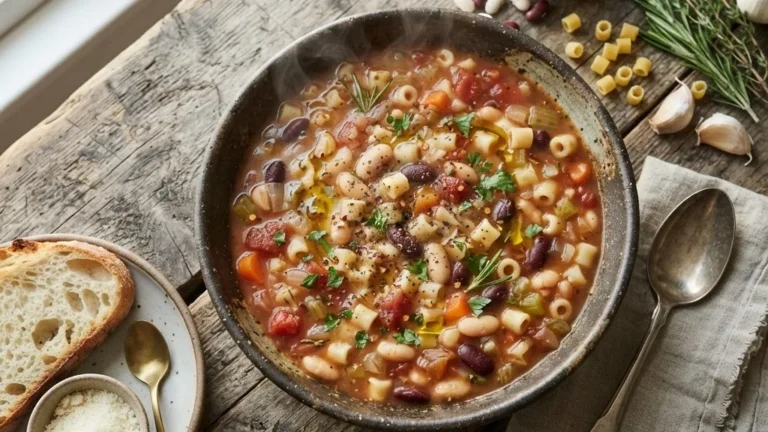
The kitchen tier is where the canon meets a real schedule, and the honest split is a 20-minute tier against a Sunday tier. Aglio e olio, cacio e pepe, and a fast pasta al pomodoro land in the quick lane; a proper ragu or lasagne belongs to the slow one. Pantry dishes carry this tier: pasta e ceci and pasta e fagioli turn a can of legumes into dinner, and they answer the highest-volume adjacent question, which is whether pasta can be both cheap and good. Modern viral entries such as baked feta pasta earn a place for ease, not for heritage, and they should be labeled that way.
Budget cooks have more range than the canon implies. A high-protein recipes hub shows how legume and lean-protein pastas hit macros without specialty shopping, while a genuinely creamy plant option like this creamy white bean Alfredo pasta proves dairy is optional. Snackers can even repurpose sheets into this crispy air fryer pasta chips obsession.
- 20-minute tier: aglio e olio, cacio e pepe, quick pomodoro.
- Sunday tier: ragu alla bolognese, lasagne, tortellini in brodo.
- Pantry tier: pasta e ceci, pasta e fagioli.
Dietary swaps that hold up
Gluten-free and legume pastas work best in short shapes and robust sauces, where texture matters less than grip. For filled shapes, the gluten free tortellini buying and cooking guide covers where they succeed and where they fall apart. A dedicated gluten-free pasta resource and a plant-forward vegan pasta collection extend the options further.
Global scale: the numbers behind the plate
Pasta is one of the most-eaten foods on the planet, and the trade figures put the canon in perspective. World production sits at about 17.6 million tonnes, according to UN.A.F.P.A. Per-capita consumption is led by Italy at 23.3 kilograms per year, followed by Tunisia at 17 kilograms, Venezuela at 13.6 kilograms, Greece at 12.2 kilograms, and Peru at 9.9 kilograms. The International Pasta Organisation notes that 52 countries now eat at least 1 kilogram per capita per year, up from 30. Italy alone exported over 2.4 million tonnes in 2024, which was 58 percent of national production, worth 4.02 billion euros, up 9.1 percent in volume and 4.8 percent in value year on year, reaching close to 200 countries.
Those figures explain why the argument over what counts among the best pasta dishes never ends: it is a global food with local law wrapped around a handful of names. TasteAtlas’s own top entries reflect the split, mixing regional specialties like pappardelle al cinghiale with universal favorites like carbonara and lasagne alla bolognese.
For a taste of how far the dish travels once it leaves Italy, the Louisiana-Cajun irresistible pastalaya shows the diaspora at work.
What is codified versus what is folklore
Most authenticity arguments online rest on votes and vibes, so it helps to separate what is genuinely written down from what is merely repeated. Codified means deposited, registered, or written into law: the 2023 ragu text, the 1972 tagliatella measurement, the D.P.R. 187/2001 egg threshold, and the Gragnano IGP specification all qualify. Folklore is everything asserted with confidence but never filed, which covers most of the endless fights about carbonara’s origin, whether cream ever belongs in it, whether garlic is allowed in amatriciana, and whether pesto genovese should carry potato and green bean. Those are live debates precisely because no primary source settles them.
Holding both categories honestly is the point. A dish can be delicious and contested at once.
- Codified: ragu 2023, tagliatella 1972, egg-pasta law, Gragnano IGP.
- Contested folklore: carbonara’s origin, cream in carbonara, garlic in amatriciana, potato in pesto.
Frequently asked questions
How much salt should go in pasta water?
The consortium behind Pasta di Gragnano recommends 10 to 12 grams of coarse salt and 1 to 1.1 liters of boiling water per 100 grams of pasta. That is more salt than most home cooks use, and it seasons the dough from within rather than sitting on the surface. Scale it linearly with the batch size for consistent results.
Does cooking pasta al dente lower the glycemic index?
Not meaningfully. The 1986 Diabetes Care trial found no significant difference between 5-minute and 15-minute spaghetti, at 45 plus or minus 6 versus 46 plus or minus 5. Shape moved the number instead: macaroni scored 68 and spaghetti 45. Al dente is worth defending for texture, not for a cooking-time effect on blood sugar.
What legally defines Italian egg pasta?
Under D.P.R. 187/2001, pasta all’uovo sold in Italy must contain at least four whole hen’s eggs per kilogram of semolina, meaning no less than 200 grams of egg per kilogram. The same decree bans soft-wheat flour in dried pasta, with narrow exemptions such as product made for export. The full text sits in the FAOLEX legal database.
Why does my cacio e pepe clump?
Too little starch or too much heat. The Physics of Fluids study found that below roughly 1 percent starch relative to cheese mass, the sauce collapses into clumps the authors called the Mozzarella Phase. Above 65 degrees Celsius the cheese proteins denature and aggregate. Dissolve starch at 2 to 3 percent of the cheese mass and keep the mixture cooler.
What are the top-rated pasta dishes by audience vote?
As of 17 July 2026, TasteAtlas ranked dishes using 17,675 accepted ratings out of 22,344 recorded. Its top entries include pappardelle al cinghiale, tagliatelle al ragu alla bolognese, linguine allo scoglio, carbonara, and lasagne alla bolognese. Treat this as a popularity signal, since the methodology is a poll rather than an authority on correctness.
Is pasta bad for weight?
The evidence says no when eaten sensibly. A BMJ Open meta-analysis of 30 randomised trials with 2,448 participants and a median 12-week follow-up found pasta in a low-glycemic-index pattern did not increase body fat and slightly reduced weight and BMI versus higher-GI patterns, at an average 3.3 servings per week substituted for other carbohydrates.
Two dishes worth bookmarking as you build a repertoire: the Marry Me chicken soup for cold nights, and the correct spelling and history in how do you spell pasta fazool. The best pasta dishes reward cooks who treat measurement as part of the craft, and every number above is there so you can repeat a result instead of hoping for one.
Note: the glycemic and weight figures here describe population trials, not personal medical advice; anyone managing diabetes should confirm targets with a clinician.