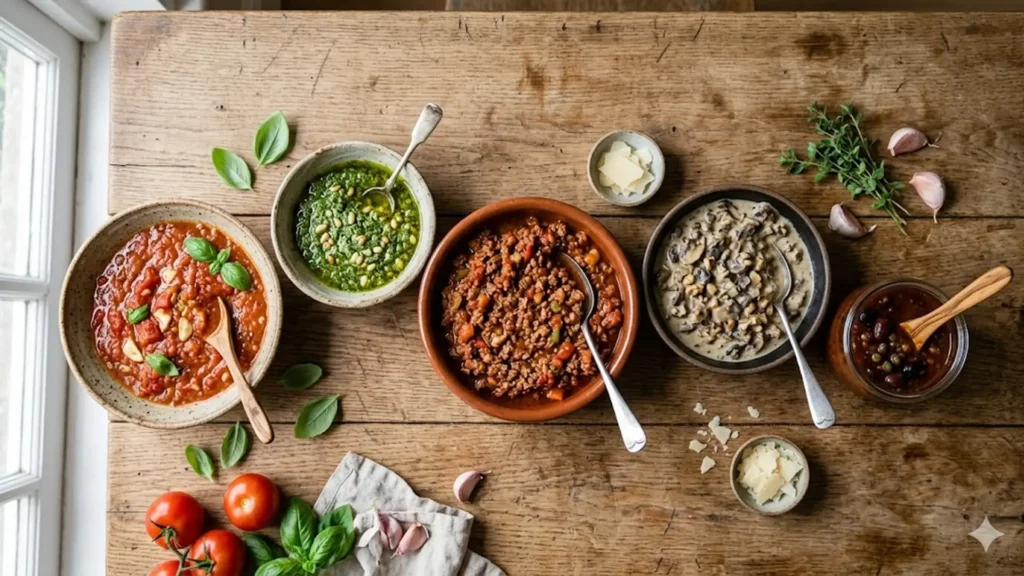
Homemade pasta sauces fall into a small number of families, and once you understand the engineering behind each one, you can build dozens of variations without ever opening a jar. I think of sauce the way a chemist thinks of solutions: you have a base liquid, a fat, an acid, an aromatic, and a thickener, and the ratios between them decide whether you get a clinging cream, a bright marinara, or a glossy butter emulsion. This guide walks through the five sauce families I make most, the exact ratios I use, the science that makes them cling to noodles, and the fixes for the problems that send most cooks reaching for store-bought.
The single biggest difference between a homemade sauce that tastes flat and one that tastes professional is not the recipe. It is whether you finish the sauce with the pasta and its starchy cooking water rather than ladling sauce over drained noodles. I will keep coming back to that point, because it is the technique that ties every family together.
The Five Sauce Families and How They Differ
Almost every pasta sauce you will ever make belongs to one of five families: oil-and-garlic sauces, tomato sauces, cream and cheese sauces, butter emulsions, and pesto-style raw or nut sauces. Each one is defined by its primary fat and its primary liquid.
Oil-based sauces use olive oil as both fat and body, with pasta water doing the emulsifying. Tomato sauces use crushed or whole tomatoes as the liquid and olive oil as the fat. Cream sauces use dairy fat and dairy liquid together. Butter emulsions use butter and a small amount of water whipped into a sauce that is thicker than its parts. Pesto and nut sauces are uncooked or barely warmed, relying on raw oil and ground solids for body.
Knowing which family you are in tells you everything about timing. Oil and butter sauces come together in the time it takes pasta to boil. Tomato sauces want twenty to forty minutes of reduction. Cream sauces are fast but fragile and can break with too much heat. Pesto never sees direct heat at all. If you have ever wondered why a recipe felt rushed or dragged, it was usually because the writer ignored the natural clock of the sauce family.
The family also tells you what to keep in the pantry. If you can stock good olive oil, canned whole tomatoes, garlic, a block of parmesan, and a tube of tomato paste, you can build four of the five families on any weeknight without a shopping trip. The fifth family, pesto, only needs fresh herbs or greens plus nuts, both of which keep well. I treat these as the non-negotiable backbone of the lab pantry, and everything else is a flavor variation layered on top of one of these five structures.
One more framing point: the amount of sauce you need is smaller than most people think. A pound of pasta wants roughly two to three cups of finished sauce, not a flood. Italian-style plating coats the noodle in a thin glossy layer rather than drowning it. Drowning pasta in sauce is the surest sign of a home kitchen, and it usually happens because the sauce was never reduced or finished in the pan with the pasta.
Marinara and Tomato Sauces: Ratios That Actually Work
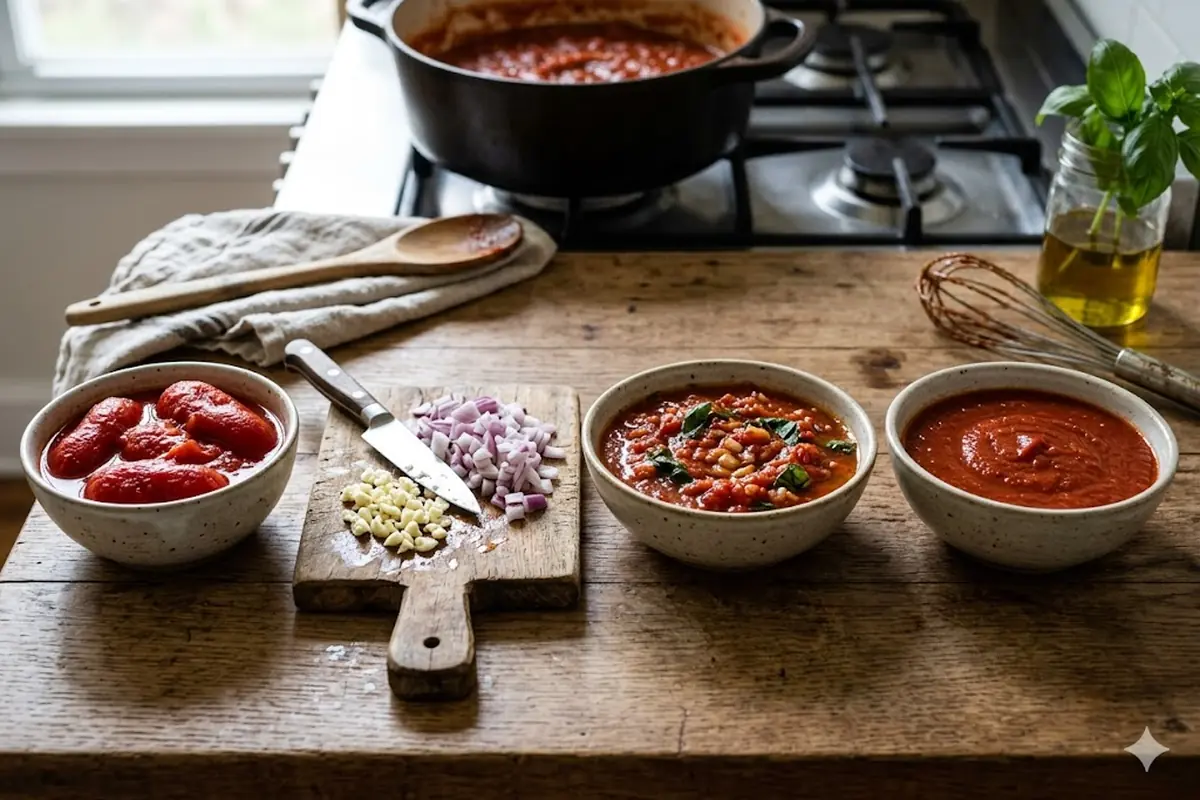
A good tomato sauce starts with one 28-ounce can of whole peeled tomatoes, ideally San Marzano or another DOP-style plum tomato, three tablespoons of olive oil, four cloves of garlic, and a generous pinch of salt. That ratio feeds four with about a pound of pasta. I prefer whole canned tomatoes crushed by hand over pre-crushed cans because crushed cans are often padded with tomato puree that tastes tinny and cooks down to a duller flavor.
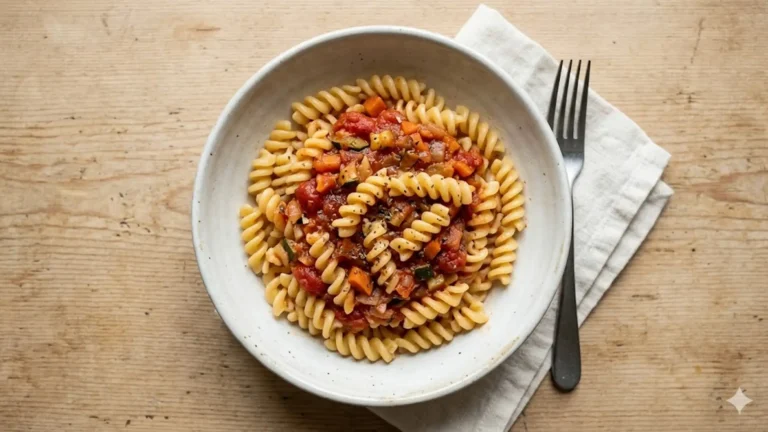
The method matters more than the brand. Warm the oil over medium-low heat, add thinly sliced garlic, and cook it only until it smells sweet and turns pale gold. Burnt garlic turns the whole pot bitter, so pull it off the heat the moment it colors. Add the tomatoes, crush them, season, and simmer uncovered for twenty-five to thirty-five minutes until the sauce has reduced by about a third and the oil has separated and risen to the edges. That oil separation is your visual cue that the sauce is done; it means the water has cooked off and the fat is carrying the flavor.
For a richer red sauce, cook two tablespoons of tomato paste in the oil for about ninety seconds before the tomatoes go in. This caramelizes the paste sugars and adds a deep savory note. A parmesan rind dropped in during simmering melts slowly and adds glutamates that make the sauce taste meaty without any meat. Tear in fresh basil only in the last minute, because long cooking turns basil muddy and dark.
If your sauce tastes sharp or sour, the fix is not always sugar. A small pinch of baking soda neutralizes acid more cleanly than sugar and will not make the sauce taste candied. Add it a few grains at a time and taste. For a deeper look at tomato-and-cream hybrids, my creamy pasta with sun-dried tomatoes recipe shows how to fold concentrated tomato into a cream base without curdling.
Garlic and Oil: The Sauce That Teaches Emulsification
Aglio e olio, garlic and oil, is the simplest sauce and the best teacher. You need a quarter cup of good olive oil, four to six cloves of thinly sliced garlic, a pinch of red pepper flakes, and roughly half a cup of starchy pasta water per pound of spaghetti. There is no other liquid. The magic is entirely in how the oil and water combine.
Oil and water do not mix on their own. What lets them form a creamy sauce is the dissolved starch in the pasta cooking water, which acts as an emulsifier, plus vigorous agitation. Cook the garlic gently in the oil until pale gold, kill the heat, and add a ladle of pasta water. It will sputter and look broken. Then add the nearly cooked pasta and toss hard over medium heat. The mechanical action plus the starch pulls the fat into suspension, and within thirty seconds the loose oil becomes a glossy sauce that coats every strand.
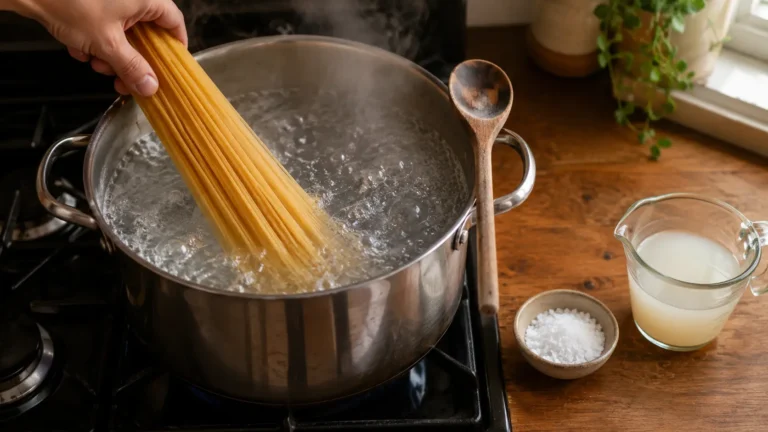
The lesson transfers everywhere. Almost any thin, greasy-looking sauce can be tightened by adding starchy water and tossing aggressively over heat. This is why I salt my pasta water well and never pour it all down the drain before the sauce is finished.
Garlic and oil also rewards small upgrades that cost nothing. Toasting a handful of breadcrumbs in a little oil until golden and showering them over the finished plate adds crunch and a savory depth that southern Italian cooks have used for centuries to stretch a cheap dish. A little grated lemon zest, a few chopped anchovies melted into the oil, or a spoon of chopped parsley each push the sauce in a different direction while keeping the same three-ingredient backbone. Because the sauce takes only as long as the pasta boils, it is the dish I make when I have nothing planned and ten minutes to spare.
Butter Emulsion Sauces and Why They Feel Luxurious
Butter sauces, including the brown butter and sage sauce that suits filled pasta, work on the same emulsion principle as garlic and oil, but with dairy fat. The classic ratio is four tablespoons of butter to about a third of a cup of pasta water per two servings. Cold butter whisked into hot starchy water forms a sauce called a beurre monte, which stays creamy as long as you do not boil it hard enough to break the emulsion.
For a nutty version, cook the butter until the milk solids turn golden brown and smell like toasted hazelnut, then add the pasta water off the heat to stop the browning. The browned solids add a flavor you cannot get any other way. Butter sauces are unforgiving of high heat once the water is in, so finish them gently and serve immediately, since they firm up as they cool.
Cream and Cheese Sauces Without the Curdle
Cream sauces fail for two reasons: the heat is too high and the cheese is the wrong kind. Heavy cream is stable because its high fat content resists separating, so an Alfredo built on cream, butter, and parmesan is hard to break. The trouble starts with milk-based sauces or with grated pre-packaged cheese, which contains anti-caking starches that turn gritty.
Always grate your own parmesan or pecorino from a block, and add it off the heat or over very low heat while tossing with pasta water. The starchy water lowers the effective concentration of fat and protein, which keeps the cheese from clumping into a rubbery ball, the same failure that ruins a rushed cacio e pepe. For a true Roman cacio e pepe, make a paste of grated pecorino and a little cool pasta water first, then toss it with the hot pasta off the heat so the cheese never hits scorching metal.
If a cream sauce does break and turns oily, take it off the heat and whisk in a tablespoon of cold cream or a splash of cool pasta water. The sudden temperature drop and added liquid can often pull a lightly broken sauce back together.
Pesto and Raw Nut Sauces
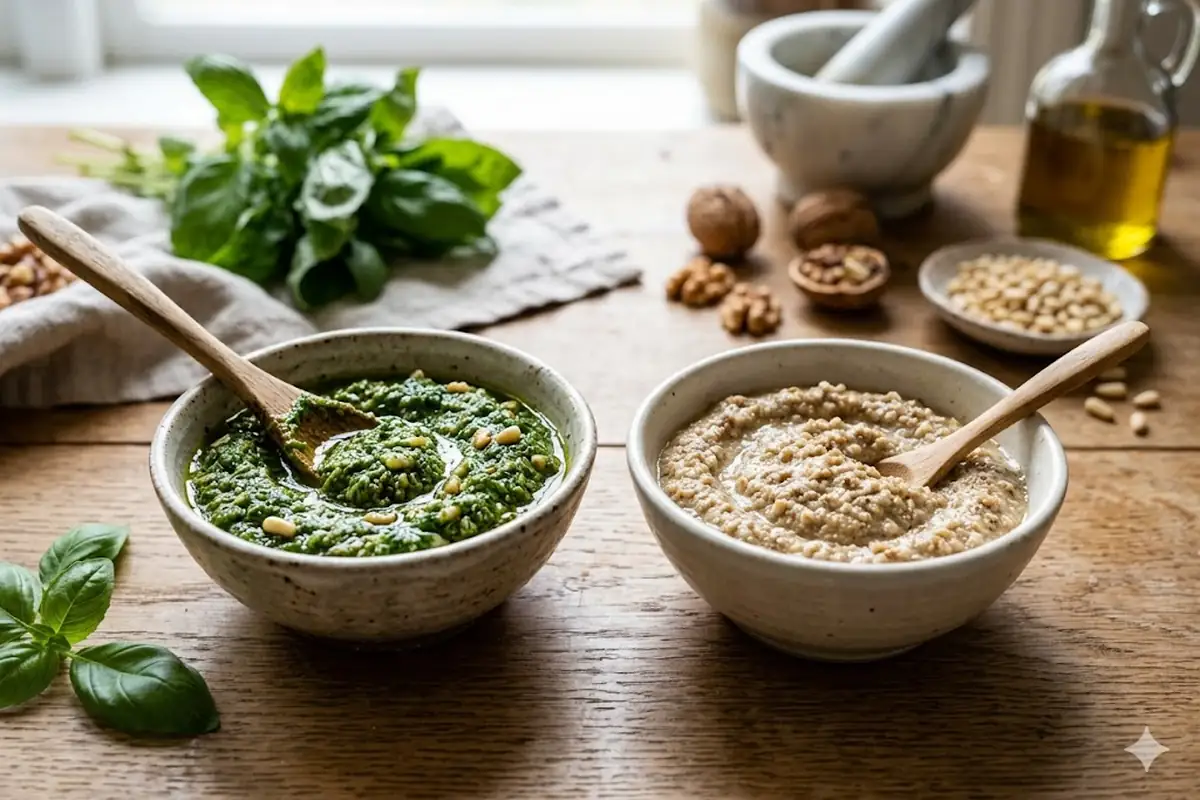
Pesto is a cold sauce, and heat is its enemy. Traditional Genovese pesto is basil, pine nuts, garlic, parmesan, pecorino, and olive oil, pounded in a mortar or pulsed in a food processor. The flavor stays bright green and fresh only if the basil never cooks. That means you toss pesto with hot pasta off the heat, loosening it with a few tablespoons of pasta water to make it spreadable.
Pine nuts are expensive, so I often swap in toasted walnuts or sunflower seeds, which give similar body at a fraction of the cost. A squeeze of lemon or a quarter teaspoon of citric acid helps the basil hold its color if you are making a batch ahead. Beyond basil, you can build the same kind of raw sauce from roasted red peppers, sun-dried tomatoes, or arugula, all blended with nuts, cheese, and oil.
Finishing: The Step That Separates Cooks From Pros
No matter which family you are working in, the finish is identical in spirit. Pull the pasta from the water about a minute before the package says it is done, while it still has a firm center. Move it directly into the pan with the sauce along with a half cup of pasta water. Then raise the heat and toss constantly for thirty to sixty seconds.
During that final minute the pasta releases more starch, the sauce reduces and thickens around it, and the noodle absorbs flavored liquid instead of plain water. The starch in the water binds the fat and the liquid into a single glossy coating. This is why restaurant pasta clings while home pasta often sits in a watery puddle. The sauce was finished separately from the pasta instead of married to it in the pan.
Storing and Scaling Your Sauces
Tomato sauces keep four to five days refrigerated and freeze beautifully for three months; freeze them in flat zip bags so they thaw fast. Cream and butter emulsions do not store or freeze well because the fat separates on reheating, so make those to order. Pesto keeps about a week under a film of oil in the fridge, or freeze it in ice cube trays for single servings.
When you reheat a stored tomato sauce, do it gently and expect to add a splash of water, because the sauce will have thickened in the fridge. Reheat it in the pan you plan to finish the pasta in so you can adjust the texture with pasta water at the end. A batch of tomato sauce made on Sunday becomes three or four fast dinners across the week, which is the real payoff of cooking sauce from scratch instead of buying it.
When scaling tomato sauce up, do not just multiply the simmer time. A larger pot has the same surface area relative to volume only if you use a wide pan, so use your widest pot to keep evaporation efficient, or the sauce will take far longer to reduce. If you want sauces matched to lower-carb noodles, my guide to low carb pasta alternatives covers which sauces cling best to chickpea and lentil shapes, and the broader different types of pasta guide explains which shapes suit thin versus chunky sauces.
Frequently Asked Questions
What is the easiest homemade pasta sauce for beginners?
Garlic and oil is the easiest to start with because it has only three ingredients and teaches the emulsification technique you will use in every other sauce. A simple canned-tomato marinara is the next step, since it forgives timing errors and only asks that you avoid burning the garlic.
Why does my homemade pasta sauce taste flat compared to restaurant sauce?
The two most common causes are under-salting and finishing the sauce away from the pasta. Salt the pasta water until it tastes like mild seawater, and always toss the noodles in the sauce pan with a splash of starchy water so the flavors marry instead of sitting on top of each other.
Can I make pasta sauce without fresh tomatoes?
Yes, and canned tomatoes usually make a better sauce than out-of-season fresh ones. Whole peeled San Marzano-style tomatoes are picked ripe and packed quickly, so they deliver more consistent flavor than supermarket fresh tomatoes for most of the year.
How do I thicken a watery homemade sauce?
For tomato sauce, simmer it uncovered longer to evaporate water, or stir in a spoonful of tomato paste. For oil, butter, and cream sauces, add starchy pasta water and toss hard over heat so the starch binds the fat and tightens the sauce into a glossy coating.
How long should I simmer a tomato sauce?
Twenty-five to thirty-five minutes is the sweet spot for a bright, fresh-tasting tomato sauce. You will know it is ready when the volume has dropped by about a third and a ring of orange oil rises to the edges of the pan. Longer simmers give a deeper, jammier sauce but lose brightness.
What kind of cheese works best in a cream sauce?
Hard aged cheeses grated fresh from a block, such as parmesan or pecorino romano, melt cleanly into a cream base. Avoid pre-grated bagged cheese, which contains anti-caking starch that makes the sauce gritty, and add the cheese off the heat to prevent clumping.
Should I add sugar to homemade tomato sauce?
Only if it tastes sharp after cooking, and even then a tiny pinch of baking soda is a cleaner fix than sugar because it neutralizes acid without adding sweetness. A carrot grated into the sauce while it simmers also adds gentle natural sweetness and rounds out the acidity without making the sauce taste like dessert.
Pasta sauce rewards understanding over memorization. Learn the five families, salt your water, keep a cup of it back, and finish every sauce in the pan with the noodles. Master those habits and you can build a great sauce from whatever is in the pantry, with techniques borrowed from the test kitchens at America’s Test Kitchen and the cooks at Bon Appetit.