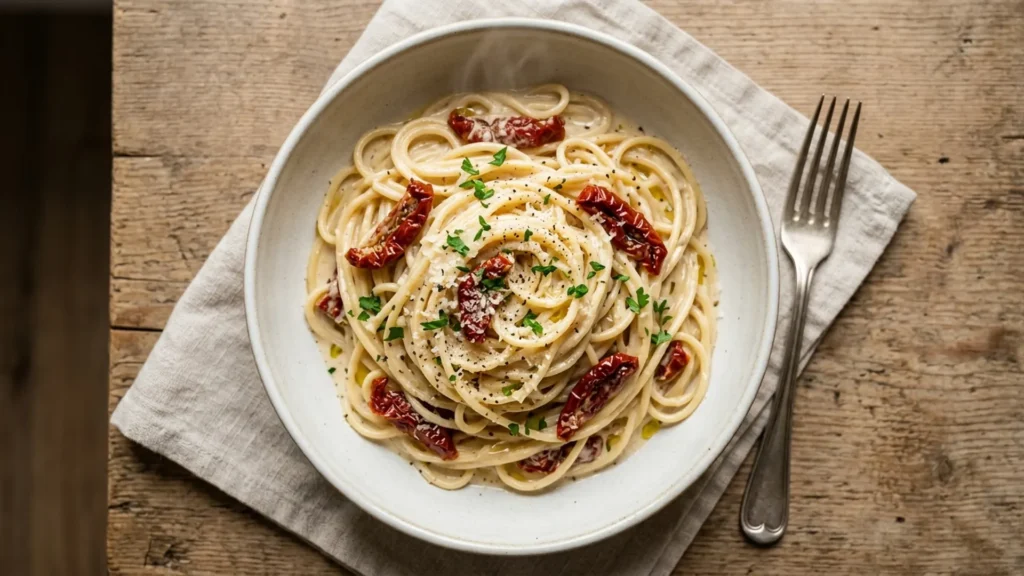
Creamy pasta with sun dried tomatoes comes down to balancing two forces that fight each other: the acidity and intense flavor of the tomatoes against the richness of a cream sauce that can curdle when it meets that acid and heat. Get the balance right and you get a glossy, tangy, deeply savory sauce that clings to every strand; get it wrong and you get a broken, grainy sauce or a flat one that tastes only of cream. The dish is fast, usually 20 to 30 minutes, and forgiving once you understand the few moves that matter: which tomatoes to buy, how to build the sauce so it does not split, and how to use the starchy pasta water and the tomato oil to bind everything into a silky coat. In this lab guide I break down the sauce science, the difference between oil-packed and dry tomatoes, the best cream and cheese choices, the protein and vegetable add-ins, and exactly how to fix a sauce that breaks, thins, or tastes flat.
The Two Types of Sun Dried Tomatoes
Your first decision is at the store, and it changes how you cook. Oil-packed sun dried tomatoes come in a jar, already soft and pliable, swimming in seasoned olive oil. They are the better choice for this dish for two reasons: they need no rehydrating, and the oil they sit in is liquid gold for the sauce. Scoop a tablespoon of that oil into the pan to saute the garlic and aromatics, and you carry the concentrated tomato-and-herb flavor straight into the base. The tradeoff is that an opened jar must be refrigerated and used within a few weeks.
Dry-packed sun dried tomatoes come in a bag, leathery and shelf-stable, and they keep for months without refrigeration. They are cheaper and easier to store, but they need rehydrating before they soften into the sauce: soak them in warm water (or the hot pasta water) for 10 to 15 minutes until pliable, then chop. They lack the flavored oil, so you lose that flavor shortcut, but you can compensate with a good olive oil and a little extra garlic and herbs. Either type works; oil-packed is the faster, more flavorful path, and dry-packed is the budget and pantry-friendly one. Whichever you choose, chop them small so the flavor spreads through every bite rather than landing in occasional chewy chunks.
How the Cream Sauce Is Built
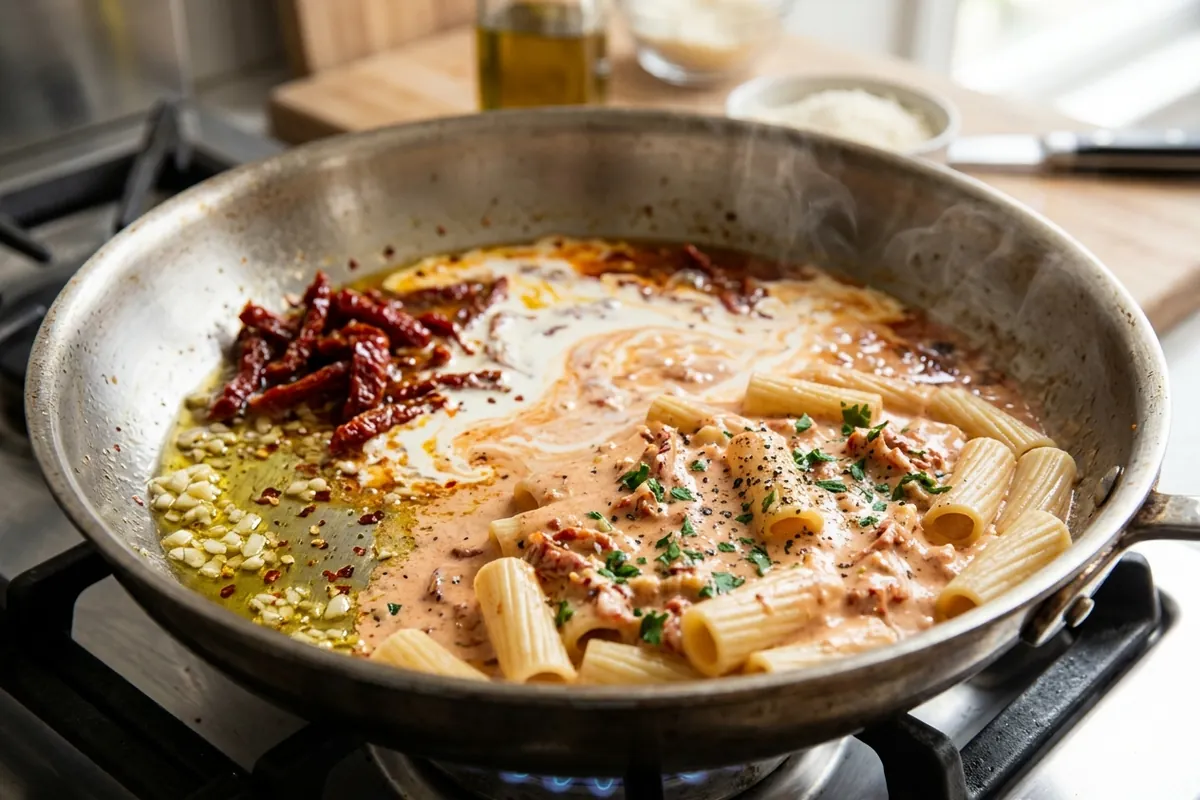
The sauce is a simple cream reduction flavored by the tomatoes, but the order of operations is what keeps it smooth. Start by sauteing minced garlic (and onion or shallot if you like) in butter or the tomato oil over medium heat, just until fragrant, never browned, because burnt garlic turns the whole sauce bitter. Add the chopped sun dried tomatoes and let them warm and release flavor for a minute. A small spoon of tomato paste here deepens the color and savory depth. Then comes the dairy, and this is the step that makes or breaks the dish.
Choose the Right Dairy for Stability
Heavy cream is the most reliable base, because its high fat content resists curdling when it meets the acid of the tomatoes. Half-and-half and milk work but are more prone to splitting, so they need extra care. A clever stabilizer used by many cooks is a couple of ounces of cream cheese melted into the pan before adding any thinner milk; the cream cheese emulsifies the sauce and holds the Parmesan in suspension, which keeps the sauce from going grainy. Add grated Parmesan off direct high heat and stir it in gradually so it melts into the sauce rather than clumping. The finished sauce should coat the back of a spoon; if it is too thick, loosen it with pasta water, not more cream.
Use the Acid and Heat in the Right Order
Acid plus high heat is what curdles a cream sauce, so manage both. If you are building a one-pot version where the pasta simmers in broth, add the milk or cream after the pasta has cooked and the pan has come off a hard boil, so the dairy meets a lower, gentler heat. Keep the sauce at a bare simmer once the dairy is in, never a rolling boil. A pinch of baking soda can neutralize excess acidity if the tomatoes are very sharp, though a good heavy cream usually makes this unnecessary. These are the same emulsion principles behind any silky pasta sauce, and Cook’s Illustrated has detailed how starch and fat combine to make a sauce glossy at Cook’s Illustrated.
The Pasta Water Trick That Ties It Together
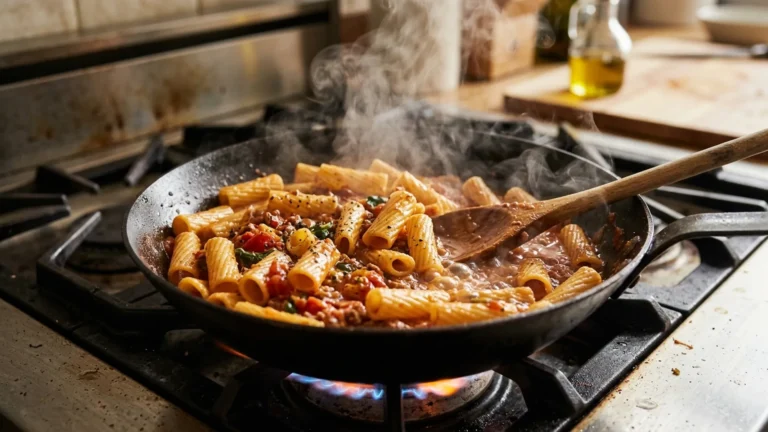
The single most underused tool in this dish is the starchy cooking water. Before you drain the pasta, save a full cup of the water it cooked in. That water is loaded with dissolved starch, and when you add it to the cream and oil in the pan, the starch helps emulsify the fat and water into a single glossy sauce that clings to the pasta instead of sliding off. Finish the cooked pasta directly in the sauce over low heat, tossing, and add splashes of the reserved water until the sauce loosens into a silky coat that just clings to every strand. This finishing step, called mantecatura, is what separates a restaurant-quality plate from a bowl of pasta with sauce poured on top. Salt the pasta water well too, since it is your main chance to season the noodle itself. For the broader rules on cooking the pasta to the right point first, our guide to overcooked pasta covers how to nail al dente so the noodle holds up in the sauce.
Choosing the Pasta Shape
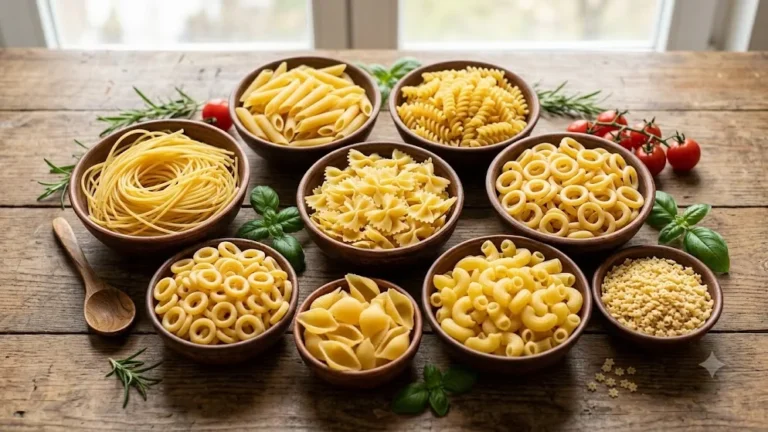
This creamy sauce wants a shape that gives it surface to cling to. Broad ribbons like fettuccine and pappardelle are the classic match, because the wide flat noodle carries a coat of the rich sauce on every forkful. Short shapes with ridges and curves, like penne rigate, rigatoni, fusilli, and cavatappi, also work beautifully, trapping the sauce and the bits of tomato in their hollows. Smooth thin strands like angel hair are the weakest choice, because the heavy sauce drags them into a clump. If you want a higher-protein plate, a chickpea or lentil pasta holds this sauce well and adds protein; our guide to high protein pasta covers how those cook differently and why their rougher surface actually grips a cream sauce nicely. Match the shape to the sauce and the dish eats the way it should.
Protein and Vegetable Add-Ins
The base sauce is a blank canvas, and the most common upgrades turn it into a full meal. Chicken is the classic addition: season and sear sliced or diced chicken breast or thigh first, remove it, build the sauce in the same pan to capture the browned bits, then return the chicken at the end. Shrimp works the same way and cooks in just a couple of minutes. Italian sausage, crumbled and browned, adds a savory, spiced depth. For vegetables, fresh spinach stirred in at the end wilts into the sauce and adds color and nutrition; mushrooms sauteed with the garlic add an earthy note; sun-dried tomato pairs especially well with a handful of fresh basil torn in at the finish. A squeeze of lemon or a pinch of red pepper flakes brightens and balances the richness. Add proteins and vegetables in a way that respects their cook time: sear meats first, add quick-cooking items like spinach and shrimp at the end, and never crowd the pan.
Make-Ahead, Storing, and Reheating
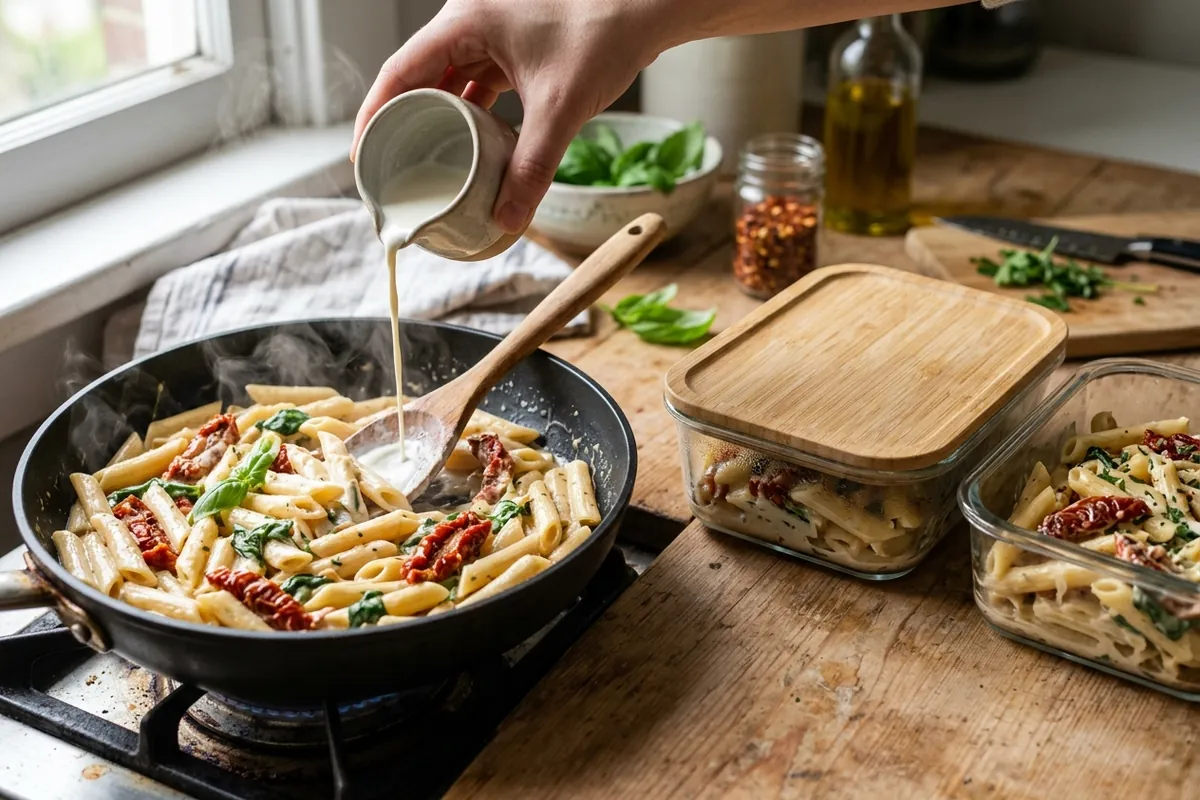
Cream sauces are best fresh, but you can manage leftovers and some prep ahead. The sauce can be made a day ahead and refrigerated, then gently reheated and tossed with freshly cooked pasta; reheat it slowly over low heat and whisk in a splash of milk or cream to bring it back together, since it thickens and can look broken when cold. Store fully assembled leftovers in an airtight container in the refrigerator for three to four days. Reheat gently on the stovetop or in the microwave at reduced power, adding a splash of milk or water and stirring, because cream sauces tighten and can separate when reheated too hot or too fast.
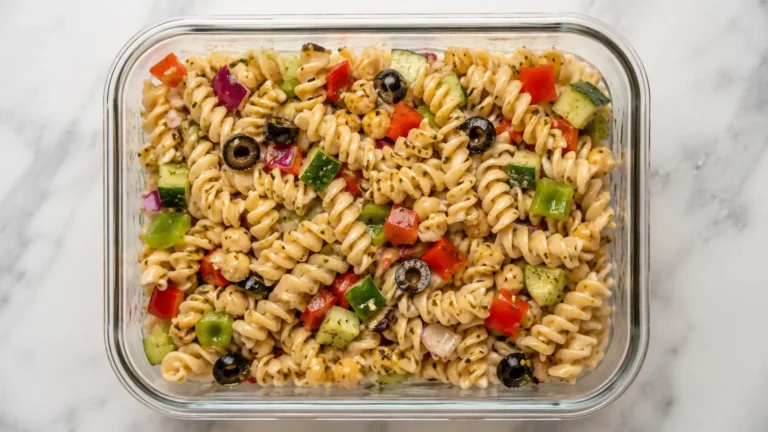
Freezing is the weak point: cream-based sauces often separate and turn grainy after thawing because the fat and water split in the freezer. If you must freeze, expect to whisk the thawed sauce hard over low heat with a little fresh cream to re-emulsify it, and accept a slightly less silky result. A better make-ahead plan is to prep the components (chop the tomatoes, sear the protein, grate the cheese) and assemble fresh, which takes only a few minutes once the pieces are ready. If you want to repurpose leftovers into a cold dish, our guide on what goes into a pasta salad covers how to build one that holds.
Troubleshooting the Sauce
Most problems with this dish have quick fixes once you know the cause. A broken or grainy sauce means the dairy met too much heat or acid; pull the pan off the heat, add a splash of cold cream or a little pasta water, and whisk hard to bring it back together, and next time use heavy cream and keep the heat low. A thin, watery sauce means it did not reduce enough or you added too much liquid; simmer it a little longer to thicken, or stir in a small amount of grated Parmesan or a spoon of cream cheese to thicken and stabilize. A sauce that tastes flat needs salt, acid, or depth: add salt, a squeeze of lemon, a little more sun dried tomato, or a spoon of the tomato paste. A bitter sauce usually means burnt garlic, which cannot be undone, so start over with the garlic and cook it gently next time. Bon Appetit keeps practical notes on rescuing broken cream sauces at Bon Appetit, and the core move is always the same: lower the heat and reintroduce fat or starch to bring the emulsion back.
A Dairy-Free Version That Still Tastes Rich
You can make a convincing creamy sun dried tomato pasta without any dairy. Full-fat canned coconut milk is the most reliable base, giving body and richness, and its mild sweetness actually balances the tangy tomatoes; use the thick part of the can for the creamiest result. Nutritional yeast stirred in adds a savory, cheese-like depth that stands in for the Parmesan. Blended raw cashews soaked and pureed with a little water make an even more neutral, ultra-creamy base if you prefer no coconut flavor. The cooking principles are the same: saute the garlic and tomatoes, add the dairy-free cream off high heat, finish with starchy pasta water for gloss, and season aggressively with salt and a squeeze of lemon. The dairy-free version benefits from a little extra salt and acid, since it lacks the savory punch of cheese. Done well, it is rich enough that dairy eaters rarely notice the difference.
Balancing the Flavor So It Is Not Flat or Too Rich
The most common complaint about this dish is that it tastes either flat or one-note rich, and both come down to balance. Sun dried tomatoes bring concentrated sweetness, savory depth, and acidity, while the cream brings fat and softness; a good plate needs the two to play against each other rather than letting the cream smother the tomato. Salt is the first lever, and most home versions are underseasoned, so taste and add salt until the flavors snap into focus. Acid is the second lever: a small squeeze of lemon or a splash of the brine from the tomato jar cuts through the cream and makes the whole dish taste brighter. Heat is the third: a pinch of red pepper flakes adds a low warmth that keeps the richness from feeling heavy.
Fresh herbs are the finishing touch that lifts the dish from good to memorable. Torn fresh basil stirred in at the end is the classic pairing, its sweet aroma echoing the tomato, while a little fresh parsley adds freshness and a handful of grated Parmesan deepens the savory base. Add these at the very end so their aromas stay bright rather than cooking away. Taste the sauce before you toss in the pasta and adjust salt, acid, and heat then, because it is far easier to balance the sauce on its own than after it has coated the noodles.
FAQ
Should I use oil-packed or dry sun dried tomatoes?
Oil-packed tomatoes are the better choice for creamy pasta, because they are already soft and the seasoned oil they sit in adds flavor when you saute the garlic in it. Dry-packed tomatoes are cheaper and shelf-stable but need rehydrating in warm water for 10 to 15 minutes first and lack the flavored oil. Either works; chop them small so the flavor spreads.
How do I keep the cream sauce from curdling?
Acid plus high heat curdles cream, so use heavy cream for its high fat, keep the sauce at a bare simmer rather than a boil, and add the dairy after the pan comes off any hard boil. Melting in a little cream cheese before thinner milk helps stabilize and emulsify the sauce, and a pinch of baking soda can tame very sharp tomatoes.
What pasta shape is best for creamy sun dried tomato sauce?
Broad ribbons like fettuccine and pappardelle are the classic match because they carry a coat of the rich sauce on every forkful. Ridged short shapes like penne rigate, rigatoni, fusilli, and cavatappi also work well, trapping sauce and bits of tomato. Avoid thin smooth strands like angel hair, which the heavy sauce drags into a clump.
How do I make the sauce silky instead of thin or thick?
Reserve a cup of starchy pasta water before draining and finish the pasta in the sauce over low heat, adding splashes of that water until it loosens into a glossy coat. The starch emulsifies the fat and water into one silky sauce. If it is too thin, simmer longer or stir in Parmesan; if too thick, loosen with pasta water, not more cream.
Can I make creamy sun dried tomato pasta ahead and freeze it?
You can refrigerate it three to four days and reheat gently with a splash of milk, but freezing is the weak point because cream sauces separate and turn grainy when thawed. If you must freeze, whisk the thawed sauce hard over low heat with a little fresh cream. A better plan is to prep the components ahead and assemble fresh in a few minutes.
How can I make it dairy-free?
Use full-fat canned coconut milk as the cream base, which is rich and balances the tangy tomatoes, and stir in nutritional yeast for a savory, cheese-like depth. Soaked blended cashews are an even more neutral option. Follow the same steps, finish with starchy pasta water for gloss, and season with extra salt and a squeeze of lemon to make up for the missing cheese.
Bottom Line
Creamy pasta with sun dried tomatoes is a balancing act between rich cream and sharp, savory tomatoes, and the wins come from a few clear moves. Buy oil-packed tomatoes and use their oil, build the sauce with heavy cream over gentle heat so it does not split, and finish the pasta in the pan with starchy water for a glossy coat. Pick a shape that holds the sauce, add seared protein and quick vegetables in the right order, and season with salt and acid until it sings. When the sauce breaks or thins, lower the heat and bring back the emulsion with fat or starch. Master those, and a 20-minute weeknight dish plates like something from a good Italian kitchen.