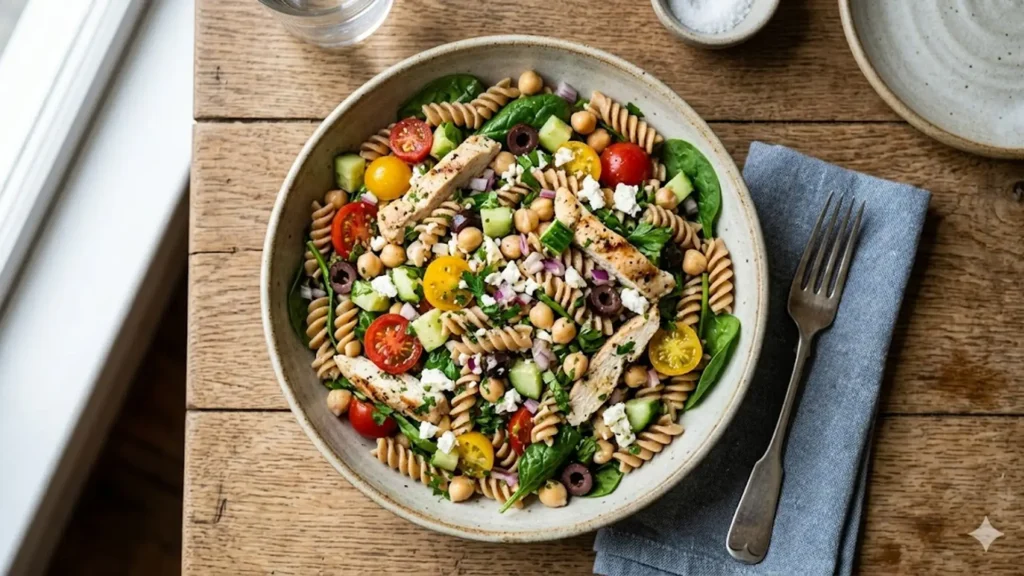
High protein pasta salad is a cold pasta dish built to deliver 25 to 45 grams of protein per serving by stacking a protein-rich pasta base with lean proteins, dairy, and legumes instead of leaning on oil and starch alone. The simplest path to a real protein number is to start with a chickpea or lentil pasta, fold in grilled chicken or a Greek yogurt and cottage cheese dressing, and finish with feta and beans. Done right, you get 40 grams of protein in a bowl that still tastes like a treat, not a punishment.
Most recipes online hand you one fixed combination and one macro number, take it or leave it. That is fine until you want to swap the chicken for shrimp or push the protein higher, and suddenly you are guessing. I build these in batches for the week, so I think about them as a formula rather than a recipe. This guide gives you the protein math, a brand comparison so you pick the right pasta, the stacking framework to hit any target you want, and the one make-ahead trick that keeps the dressing from turning to soup.
How Much Protein Can You Actually Get?
The honest answer depends almost entirely on the pasta you start with, because that base sets your floor before you add a single topping. Regular semolina pasta gives you about 7 grams of protein per 2 ounce dry serving. Swap to a legume pasta and that number can nearly triple before you add anything else. That single choice does more for your macros than any topping.
| Pasta base (2 oz dry) | Protein | Notes |
|---|---|---|
| Banza (chickpea) | ~20g | Highest, firm, rinse after cooking |
| Barilla Protein+ | ~17g | Closest to wheat texture |
| Red lentil pasta | ~14g | Earthy, can get soft |
| Regular semolina | ~7g | Best texture, lowest protein |
I default to chickpea pasta for these salads. It carries the most protein, and unlike a lot of legume pastas it holds its shape in dressing instead of slumping into mush. The one quirk: rinse it under cool water after cooking to wash off the chalky starch film, and cook it about a minute under the box time so it stays firm in a cold salad.
The Protein Stacking Framework
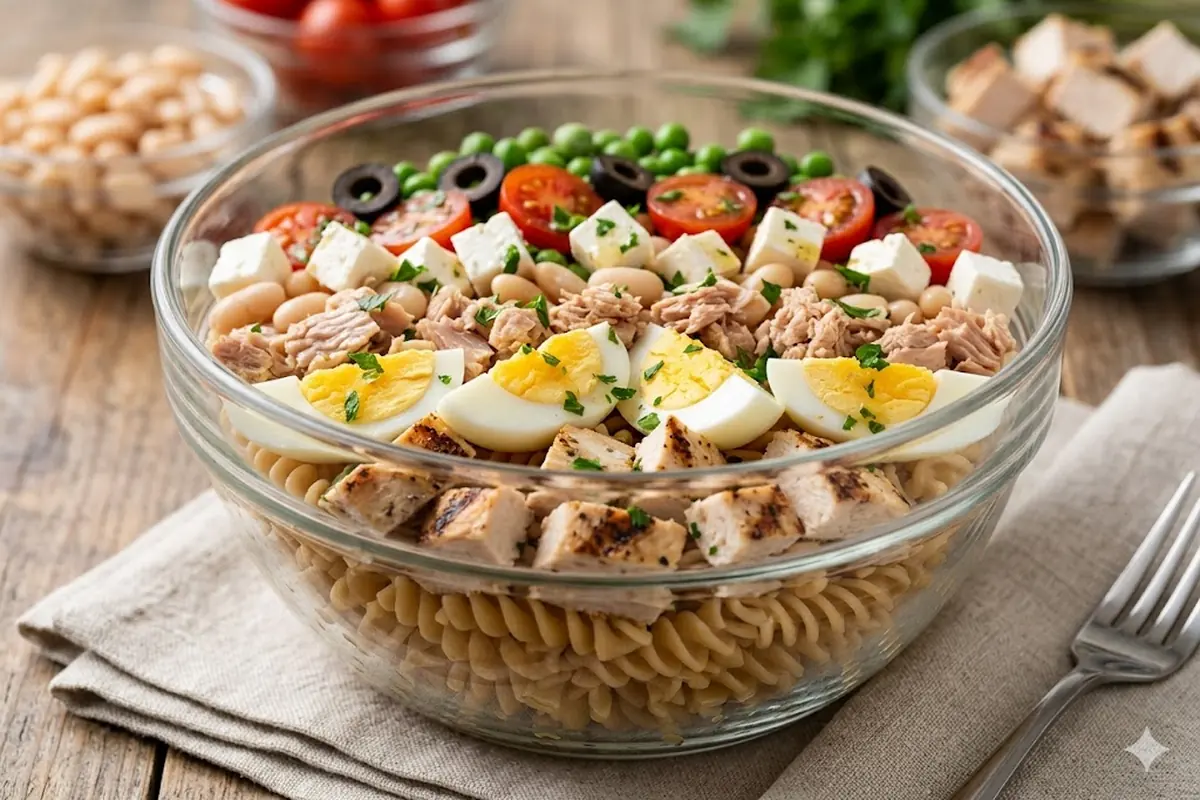
Stop following one recipe and start building to a target. Pick your protein goal, then layer until you hit it. Each of these adds roughly the protein listed, per serving in a six-serving batch.
- Chickpea pasta base: about 18 to 20 grams.
- 6 oz grilled chicken split across the batch: about 8 grams per serving.
- 1 cup cottage cheese blended into the dressing: about 4 grams per serving.
- 1 cup Greek yogurt in the dressing: about 3 grams per serving.
- 3 oz crumbled feta: about 2 grams per serving.
- 1 can rinsed white beans or chickpeas: about 3 grams per serving.
Stack the base plus chicken and you are already near 28 grams. Add the yogurt-cottage cheese dressing and the feta and you clear 35. Throw in the beans and you are at 40 plus, which is genuinely a lot of protein for a cold pasta bowl. Want it leaner? Drop the chicken and lean on the dairy and legumes. Want it higher? Double the chicken. The point is you are no longer guessing, you are adding known quantities. The same swap-and-recalc logic shows up in our look at low protein pasta for readers heading the other direction.
The Dressing That Adds Protein Instead of Just Fat
Most pasta salad dressings are oil, vinegar, and seasoning, which tastes great and adds zero protein. The move that separates a high protein salad from a regular one is building the dressing on dairy. Blend 1 cup of cottage cheese with half a cup of Greek yogurt, a clove of garlic, lemon juice, dill, salt, and a tablespoon of olive oil until completely smooth. The cottage cheese disappears into a creamy, tangy base, and you have just added a dozen grams of protein to the bowl through the sauce alone.
If you want a vinaigrette instead, you can, but keep it as an accent and get your protein from the solids. The blended dairy dressing is what lets these salads hit 40 grams without a mountain of chicken. For a creamier, more indulgent direction, the cream sauces guide has ideas you can lighten with yogurt, and our notes on how to thicken pasta sauce explain why a dairy-based dressing clings the way it does.
A Worked Example: Building a 42 Gram Bowl
Numbers in a list are abstract, so here is one full batch the way I actually make it, with the math laid out. Start with a 14 ounce box of chickpea pasta, which cooks up to about six servings. That base contributes roughly 18 grams of protein per serving on its own. Grill 1 pound of chicken breast, slice it, and divide it across the six portions, adding about 11 grams each.
For the dressing, blend 1 cup of cottage cheese with three quarters of a cup of Greek yogurt, lemon, garlic, and dill. Spread across six servings, the dairy adds close to 6 grams of protein each. Crumble in 3 ounces of feta for another 2 grams per serving, and stir in a rinsed can of chickpeas for roughly 3 more. Add it up: 18 plus 11 plus 6 plus 2 plus 3 lands you at about 42 grams of protein per serving, in a bowl that comes in near 450 calories. That is restaurant-protein-shake territory in a normal lunch, and it took one box of pasta and one pound of chicken.
The reason I walk through the math is that once you have seen it work once, you can rebuild it with whatever is on hand. Out of chicken? Double the beans and add a hard-boiled egg or two per portion. Want it leaner? Use chicken breast and skip the feta. The framework holds, only the inputs change.
The Make-Ahead Trick Nobody Explains
Here is the mistake that turns a beautiful pasta salad into a watery mess by hour two. Dressing hot or warm pasta. When pasta is still warm, two things happen: the residual heat thins the dressing, and the pasta keeps weeping starch and moisture that dilutes everything. Within an hour your creamy salad is a puddle.
The fix is simple and exact. Cool the cooked pasta to room temperature, around 70 degrees F, before it ever touches the dressing. Spread it on a sheet pan to cool fast if you are in a hurry. Then, when meal prepping for the week, reserve about a third of the dressing and stir it in just before serving each day, because the pasta will keep absorbing dressing in the fridge and a batch that was perfect on Monday goes dry by Wednesday. That reserved splash brings it right back. I built a 45 gram batch this way that held up for four full days, and the Thursday serving tasted as good as the Monday one.
Building the Salad, Start to Finish
Cook the chickpea pasta one minute under the box time, drain, and rinse under cool water until it stops steaming. While it cools, blend the dairy dressing and grill or shred your chicken. Chop crunchy vegetables that hold up cold: cucumber, bell pepper, red onion, cherry tomatoes, and a handful of fresh herbs. Drain and rinse a can of beans for an extra protein and fiber bump.
Once the pasta is at room temperature, fold everything together with most of the dressing, taste, and adjust salt and lemon. Cold dulls seasoning, so a salad that tastes right warm will taste flat cold. Season a touch more aggressively than feels natural. Chill at least 30 minutes so the flavors marry, then add the reserved dressing right before serving. If you want to vary the base entirely, our guide to different types of pasta covers which short shapes hold dressing best. America’s Test Kitchen has solid testing on pasta salad ratios and dressing cling, and their work at americastestkitchen.com is a good reference, while Bon Appetit at bonappetit.com has strong ideas for cold pasta flavor.
Flavor Directions That Hold Their Macros
The protein framework stays the same no matter the flavor, so you can rotate through styles all week without eating the same bowl twice. A Greek direction leans on feta, cucumber, red onion, kalamata olives, and a lemon-dill dairy dressing, which is my most-repeated version because it tastes bright even cold. An Italian grinder style folds in chopped deli turkey, provolone, banana peppers, and shredded lettuce added at the last minute, with a light red wine vinegar accent over the dairy base.
A southwest version brings black beans, corn, bell pepper, and a cilantro-lime yogurt dressing, and the beans push the protein and fiber up without any extra meat. A buffalo chicken direction stirs hot sauce into the dairy dressing and tops shredded chicken with a little blue cheese, which sounds heavy but stays reasonable because the dressing is yogurt-based, not ranch out of a bottle. Each of these starts from the same chickpea pasta and the same dairy dressing, so the protein numbers barely move while the flavor changes completely.
The lesson I keep relearning is that flavor variety, not protein content, is what makes a meal-prep habit stick. A high protein salad you are sick of by Wednesday gets abandoned. Rotating the seasoning while keeping the macro engine identical is how you actually eat the food you prepped.
Vegetables and Add-Ins That Survive the Fridge
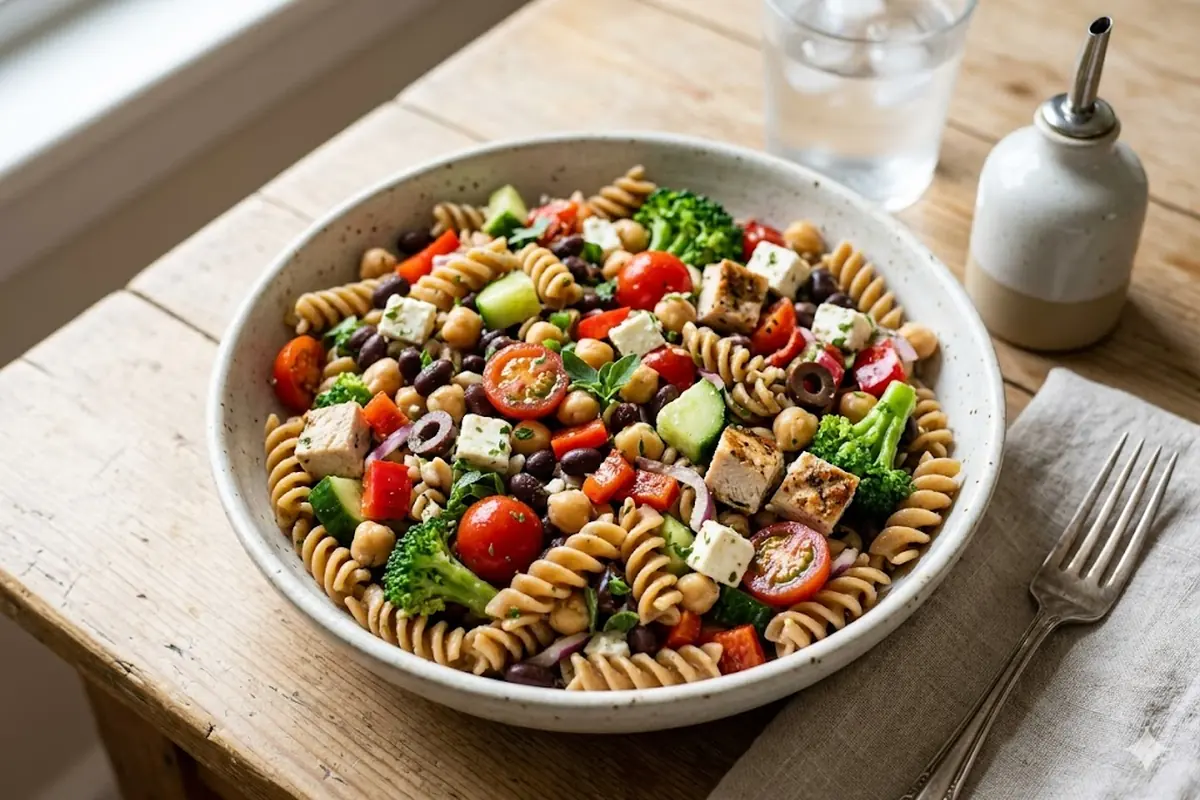
Not every vegetable belongs in a make-ahead salad. The ones that hold up over several days are the sturdy, low-moisture ones: cucumber, bell pepper, red onion, shredded carrot, celery, and cherry tomatoes left whole so they do not bleed. Crunchy chickpeas or roasted edamame add texture and a little more protein.
The ones to add only at serving time are the delicate or watery ones. Leafy greens wilt, avocado browns, and chopped tomatoes weep juice that thins the dressing. If you want them, keep them separate and fold them in per portion. Edamame deserves a special mention here: a half cup of shelled edamame adds about 8 grams of protein and stays firm and bright for days, making it one of the best high-protein add-ins for a salad you plan to eat all week. Toasted nuts and seeds add crunch and a little protein too, though they soften over time, so add them closer to serving if you want maximum crunch.
Portioning for the Week
If you are eating this for meal prep, divide the batch into clearly portioned containers right after mixing, holding back that reserved dressing in a small separate jar. A six-serving batch built on a full 12 to 16 ounce box of chickpea pasta gives lunch-sized portions of roughly 400 to 460 calories with 35 to 45 grams of protein each, depending on how heavy you went on the chicken and beans. That is a genuinely filling lunch that keeps you full for hours, which is the whole point of front-loading the protein.
Weigh your portions if you are tracking closely, because eyeballing pasta is where macro counts drift. A kitchen scale costs little and turns this from a rough estimate into a reliable number you can log. I keep one on the counter and weigh the cooked pasta into containers, then top each with its share of protein. It takes thirty extra seconds and makes the macros honest.
Common Mistakes
The biggest one is starting from regular pasta and calling it high protein because you added a little chicken. The base flour is where the protein lives or dies. Skip the legume pasta and you cap your ceiling low.
Second is over-saucing at the start, which leaves nothing to revive the salad later in the week. Third is under-seasoning, since cold food needs a heavier hand. And fourth is overcooking the legume pasta, which turns to paste in dressing. Pull it early, rinse it, and let it firm up cold. Get those four right and the salad holds its texture for days.
Cost and Whether It Is Worth It
High protein pasta is not cheap. A box of chickpea pasta runs roughly two to three times the price of regular semolina, and that is the main cost driver in this dish. Whether it is worth the premium depends on what you are after. If your goal is simply more protein, you can get there for less by keeping a regular pasta base and loading on chicken, beans, and dairy, accepting a bigger portion of meat to make up the difference.
But the legume pasta earns its price in two ways. It pushes the protein up without adding more chicken to cook, and it brings fiber that regular pasta lacks, which helps the meal keep you full. For meal prep, where you are making six servings at once, the per-serving premium is small, often well under a dollar. I think of it as cheap insurance that the food actually fits my macros, rather than a number I hoped was close. For occasional salads, regular pasta with extra toppings is perfectly fine. For weekly prep aimed at a real protein target, the legume base pays for itself in convenience.
FAQ
What pasta has the most protein for a salad?
Chickpea pasta like Banza leads with about 20 grams of protein per 2 ounce dry serving, followed by Barilla Protein+ at around 17 grams and red lentil pasta near 14. Regular semolina pasta has only about 7 grams, so the base you choose sets your protein floor.
How do I get 40 grams of protein in a pasta salad?
Start with chickpea pasta, add grilled chicken, build the dressing on cottage cheese and Greek yogurt, and finish with feta and a can of rinsed beans. Each layer adds known protein, and together they reach 40 grams per serving in a six-serving batch.
Can I make high protein pasta salad ahead of time?
Yes, it is ideal for meal prep. Cool the pasta to room temperature before dressing, reserve about a third of the dressing, and stir it in fresh each day. The pasta keeps absorbing dressing in the fridge, so the reserved splash brings a dried-out batch back to life.
Why does my pasta salad get watery?
You likely dressed the pasta while it was still warm. Residual heat thins the dressing and the pasta weeps starch and moisture as it cools. Cool the pasta to about 70 degrees F before dressing it and the problem disappears.
Is cottage cheese good in pasta salad?
Blended cottage cheese makes an excellent high protein dressing base. Puree it with Greek yogurt, garlic, lemon, and herbs until smooth and the texture disappears into a creamy, tangy sauce that adds protein without extra oil.
How long does high protein pasta salad last?
Stored in an airtight container in the fridge, it keeps 3 to 4 days. Legume-based pasta can soften over time, so reserve some dressing to refresh it and expect the texture to be best in the first two days.
Do I need to rinse chickpea pasta?
For cold salads, yes. Rinsing washes off the chalky starch film, stops the cooking, and keeps the grains firm and separate. Cook it about a minute under the box time first so it does not go soft in the dressing.
Bottom Line
High protein pasta salad is less about a single recipe and more about a formula you can run in your sleep. Start from a chickpea or other legume pasta to set a high protein floor, build the dressing on cottage cheese and yogurt so the sauce works for you, and stack proteins to whatever target you want. Cool the pasta before dressing, reserve a little to refresh leftovers, and season for cold. That is how you hit 40 grams in a bowl that you actually look forward to eating. Once the formula is second nature, you can walk into any kitchen, scan what is in the fridge, and build a protein-packed salad on the fly without a recipe in front of you, which is exactly the kind of cooking that sticks for the long haul.