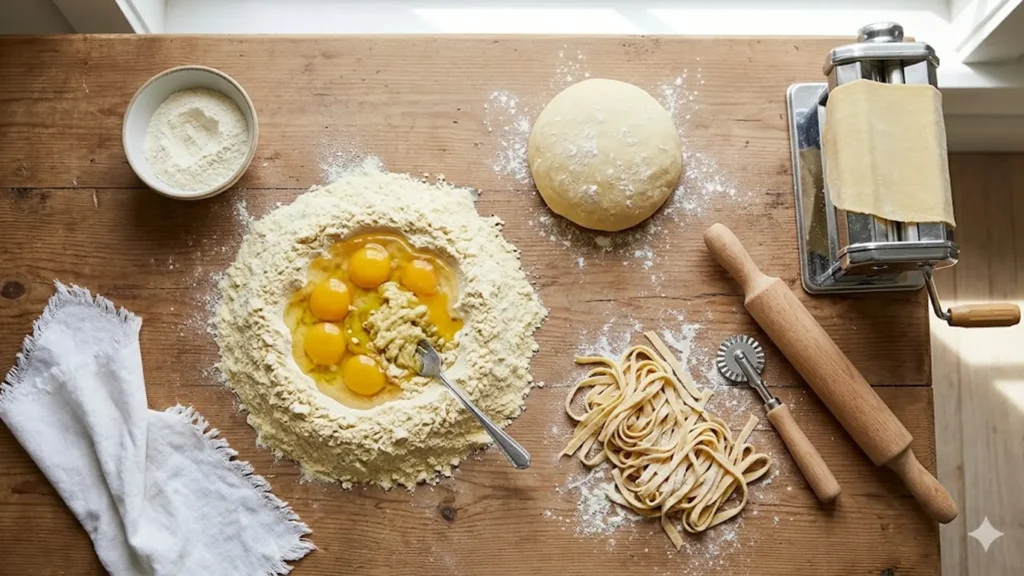
How to make pasta from scratch is one of those kitchen skills that looks intimidating and turns out to be mostly about getting two things right: the flour-to-egg ratio and the feel of the dough. I have rolled out more sheets than I can count, and the truth is that fresh pasta needs no special talent, only the right proportions, a willingness to knead, and patience while the dough rests. This guide walks through the exact weights I use, the difference between flour types, how to knead and rest dough so it rolls without tearing, how to roll and cut both with a machine and with nothing but a rolling pin, and how to fix the dough when it goes sticky, dry, or stubborn. By the end you will be able to make fresh pasta from memory.
The single biggest reason home pasta fails is guessing the ratio instead of weighing it. Eggs vary in size, flour varies in how much moisture it holds, and a few grams in either direction is the difference between silky dough and a crumbly mess. So the first thing I will ask you to do is dig out a kitchen scale.
The Core Ratio and Why It Works
The classic egg pasta ratio is one hundred grams of flour to one large egg, which serves roughly one person. For four servings you want about four hundred grams of flour and four eggs, often with one extra yolk for richness and a more tender bite. That works out to roughly sixty percent hydration, which is the sweet spot where the dough is soft enough to knead by hand but firm enough to hold a shape.
Weighing matters because eggs are not a fixed size. A large egg is around fifty grams of liquid, but a jumbo egg can throw off the balance enough to leave your dough wet and sticky. If you weigh both the flour and the cracked eggs, you can correct on the spot: too wet, add a spoonful of flour; too dry, add a teaspoon of water or another yolk. This is also why I crack eggs into a measuring cup and weigh them rather than just counting, especially when scaling a batch up.
Yolks and whites do different jobs in the dough, which is worth knowing when you want to adjust the texture. Egg yolks are rich in fat and emulsifiers and make the pasta more tender, golden, and silky, while egg whites add protein and structure that firm the dough up. A dough made with extra yolks rolls out beautifully and tastes luxurious, which is why many filled-pasta recipes lean yolk-heavy. A dough with more whole eggs or whites is sturdier and holds a bite, which suits everyday cut noodles. Once you understand that lever, you can dial a recipe toward tender or toward chewy just by shifting the ratio of yolks to whole eggs without changing anything else.
Choosing the Right Flour
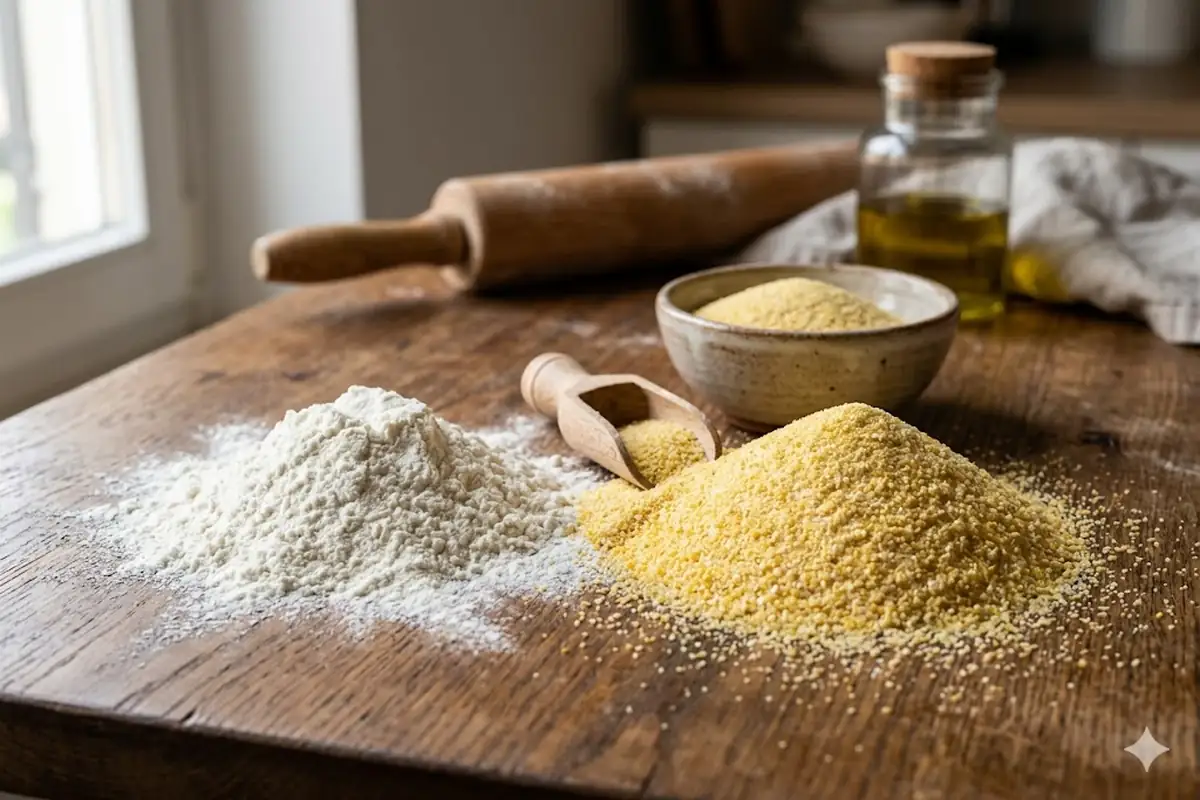
The flour you choose changes the texture more than any other decision. Tipo 00 is a finely milled soft Italian wheat flour that makes light, tender, silky pasta and is the traditional choice for egg pasta and filled shapes. All-purpose flour is a perfectly good substitute and gives a slightly more rustic, chewier noodle, which many people prefer for everyday cooking.
Semolina, the coarse golden flour milled from durum wheat, is used two ways. A blend of semolina and 00 or all-purpose gives a sturdier dough with more bite, which is ideal for extruded and eggless shapes. Pure semolina and water, with no egg at all, is the basis for southern Italian pasta like orecchiette and cavatelli. Semolina also absorbs less moisture than soft flour, which makes it the perfect dusting flour to keep sheets and cut noodles from sticking without being absorbed into the dough. For a no-egg, semolina-and-water dough, the ratio shifts toward about a hundred grams of semolina to roughly fifty-five grams of warm water, adjusted by feel.
Mixing and Kneading the Dough
Mound the flour on a clean counter and make a wide well in the center. Crack the eggs into the well, add a pinch of salt and a small drizzle of olive oil if you like, and beat the eggs with a fork while slowly pulling in flour from the inner wall of the well. When the mixture is too thick to stir, switch to your hands and bring it together into a shaggy ball.
Now knead. Push the heel of your hand into the dough, fold it back over itself, turn it a quarter turn, and repeat for a solid seven to ten minutes. The dough will start rough and floury and gradually become smooth, elastic, and almost satiny, with a fine talcum-like surface. You are developing gluten, the protein network that gives pasta its bite, and there is no shortcut: under-kneaded dough tears when you roll it. A stand mixer with a dough hook does the work in four to five minutes on low if you would rather not knead by hand.
There is a simple way to tell when the dough is kneaded enough. Press a finger into it; well-developed dough springs back slowly and feels alive and elastic rather than slack or sticky. You can also stretch a small piece gently between your fingers, and if it stretches thin enough to let light through before tearing, the gluten is well developed. If it tears immediately into a ragged hole, keep kneading. Do not add too much extra flour while kneading just because the dough feels tacky at the start, because a little tackiness is normal and it firms up as the gluten develops. Trust the time and the feel over the urge to keep dusting.
Resting the Dough
Resting is the step beginners skip and regret. Wrap the kneaded dough tightly in plastic and let it rest at room temperature for at least thirty minutes, or refrigerate it for up to a day. During the rest, the gluten relaxes and the moisture distributes evenly through the dough, which is what lets you roll it thin without it springing back or tearing.
If you try to roll the dough immediately, it will fight you, snapping back to a thicker shape every time you stretch it. After a proper rest, the same dough rolls out smoothly and holds its shape. Do not skip this, and do not let the dough dry out during the rest, since a crust on the surface will streak through your sheets later. A tightly wrapped ball or a covered bowl keeps it supple. If you refrigerate the dough, let it sit at room temperature for fifteen or twenty minutes before rolling, because cold dough is stiffer and more likely to crack at the edges as it thins out.
Rolling: Machine and By Hand
Cut the rested dough into four pieces and keep the ones you are not rolling under a cloth so they do not dry. Flatten a piece into a disk, then run it through a pasta machine starting at the widest setting. Fold the sheet in thirds, rotate it ninety degrees, and pass it through the widest setting several times; this folding step is laminating, and it builds an even, strong sheet. Then step down the settings one notch at a time, dusting with semolina if the sheet gets tacky, until you reach the thickness you want.
The classic feel test is to roll long noodles like tagliatelle to about the thickness of a playing card, and roll filled pasta like ravioli thin enough that you can see the shadow of your hand through the sheet. Without a machine, you can roll by hand with a long rolling pin on a floured surface, working from the center outward and rotating the dough often to keep it even. It takes more effort and a little patience, but generations of cooks made pasta this way long before machines existed.
A few rolling habits save a lot of frustration. Work with one piece of dough at a time and keep the rest wrapped, because a sheet that dries even slightly will crack at the edges as it thins. Dust lightly and only when the dough is actually sticking, since too much flour on the surface makes the laminating folds slide instead of bonding. If a sheet gets too long to handle, cut it in half and roll the pieces separately rather than wrestling a sheet that hangs off the counter and stretches under its own weight. And keep your work surface and hands lightly floured but not caked, because the goal is a smooth even sheet, not a dusty one.
Cutting and Shaping
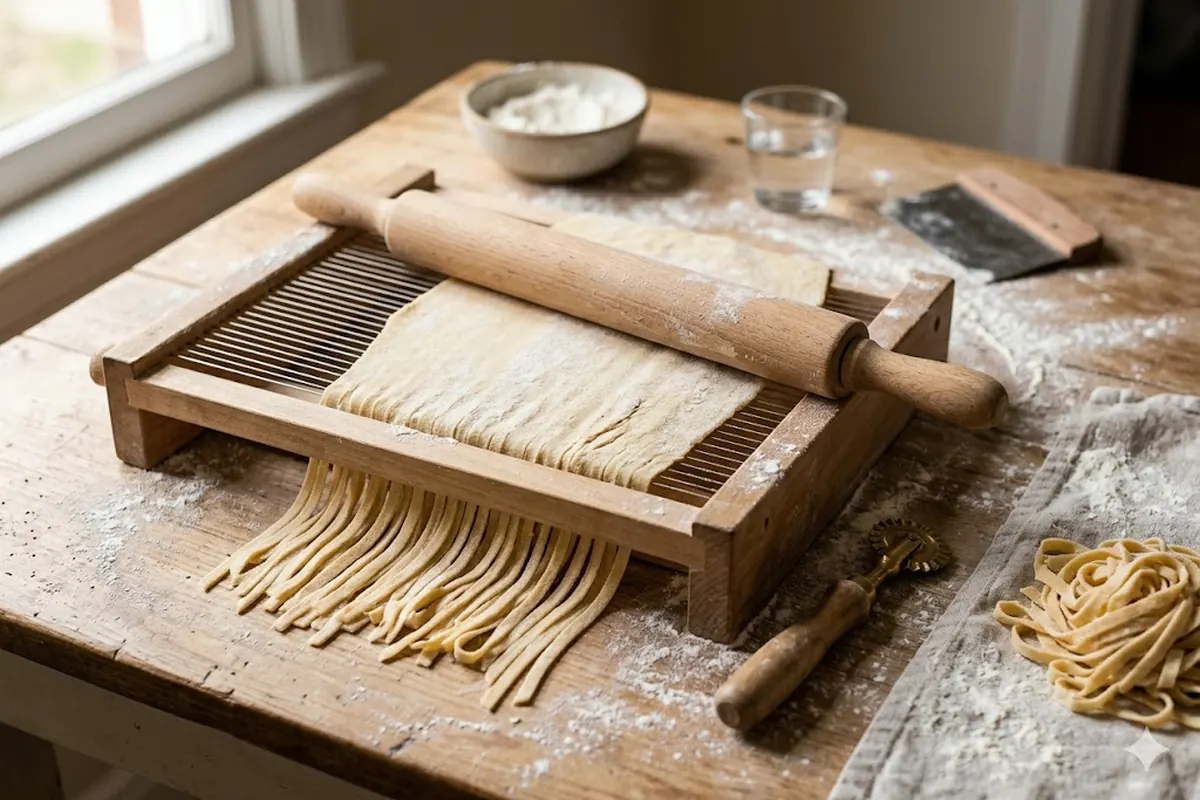
Once your sheet is the right thickness, let it rest on the counter for five to fifteen minutes until it feels slightly leathery but not brittle. This light surface dry keeps the cut noodles from sticking back together. For tagliatelle or fettuccine, flour the sheet, roll it loosely into a flat log, and slice crosswise into ribbons, then unfurl them and toss with semolina. A machine cutter attachment does the same job faster.
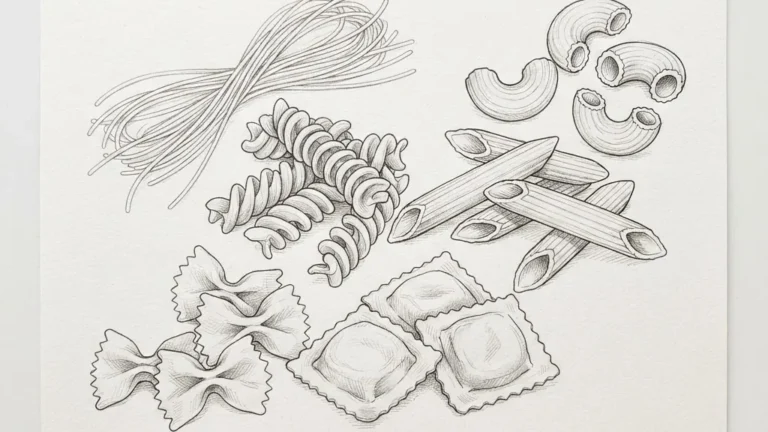
For filled shapes, work with the sheet while it is still fresh and pliable, since dried sheets crack when folded. Pipe or spoon small mounds of filling, brush around them lightly with water, lay a second sheet on top, press out the air, and cut. For hand-shaped pasta like orecchiette, you drag small pieces of semolina dough across the counter with your thumb. My in-depth homemade pasta guide covers shaping in more detail, and the different types of pasta guide explains which shapes suit which sauces.
Cooking, Drying, and Storing Fresh Pasta
Fresh pasta cooks far faster than dried. Drop it into well-salted boiling water and start tasting at the two-minute mark; thin noodles are usually done in two to four minutes, and you are looking for tender with a slight bite, not the firm chew of dried pasta. Because fresh pasta is soft and starchy, it releases plenty of starch into the water, which makes finishing it in the sauce especially effective.
To store, dust cut noodles generously with semolina, form loose nests, and refrigerate for up to a day, or air-dry the nests for fifteen to twenty minutes and freeze them for up to a month, cooking from frozen with no thawing. For long-term dry storage, the pasta must dry completely over a day or two until brittle, which is hard to do reliably at home without humidity control, so freezing is the more practical route. Authoritative technique guidance from America’s Test Kitchen and Bon Appetit is worth reading once you have the basics down.
Troubleshooting Common Problems
If your dough is too sticky, it usually has too much moisture, so knead in flour a tablespoon at a time until it firms up; a humid kitchen makes this more likely. If it is dry and crumbly and will not come together, it needs more liquid, so work in a teaspoon of water or an extra yolk until it forms a cohesive ball. If the dough tears or springs back while rolling, it is either under-kneaded or under-rested, so give it more kneading and a longer rest.
If your sheets keep sticking to the machine or to themselves, you are not dusting enough; use semolina, which resists absorbing into the dough. And if your cooked pasta turns gummy, the sheets were likely too thick or the water was not at a strong enough boil. Pasta making is forgiving once you can read these signals, and every batch teaches you the feel a little better.
Frequently Asked Questions
What flour is best for making pasta from scratch?
Tipo 00 flour makes the most tender, silky egg pasta and is the traditional choice. All-purpose flour is a fine substitute with a slightly chewier result. Semolina is used for sturdier, eggless doughs and as a dusting flour because it resists absorbing into the dough.
What is the ratio of flour to eggs for fresh pasta?
The classic ratio is one hundred grams of flour to one large egg, serving about one person. For four servings, use roughly four hundred grams of flour and four eggs, often with an extra yolk for tenderness. Weighing both flour and eggs is the most reliable way to get it right.
Do I need a pasta machine to make pasta from scratch?
No. A pasta machine makes rolling thin even sheets easier and faster, but you can roll dough by hand with a long rolling pin on a floured surface, working from the center outward and rotating often. Cooks made pasta this way for centuries before machines existed.
Why does my pasta dough keep springing back when I roll it?
Springy, stubborn dough usually has not rested long enough or has not been kneaded enough. Resting lets the gluten relax so the dough stretches without snapping back. Knead for a full seven to ten minutes, then rest the wrapped dough at least thirty minutes before rolling.
How long does fresh pasta take to cook?
Fresh pasta cooks much faster than dried, usually two to four minutes in well-salted boiling water for thin noodles. Start tasting at two minutes and pull it when it is tender with a slight bite. Filled or thicker shapes may need a minute or two longer.
Can I make pasta from scratch without eggs?
Yes. A simple eggless dough of semolina flour and warm water, around one hundred grams of semolina to fifty-five grams of water adjusted by feel, makes a sturdy dough ideal for hand-shaped pasta like orecchiette and cavatelli. It has more bite and is the traditional southern Italian style.
How do I keep fresh pasta from sticking together?
Dust the cut noodles generously with semolina, which resists soaking into the dough, and toss them so every strand is coated. Form loose nests rather than a tight pile, and cook them within a day or freeze them. Do not stack damp sheets without flour between them, or they will fuse.
Do I need to add oil or salt to pasta dough?
Neither is strictly required. A pinch of salt seasons the dough lightly, and a small drizzle of olive oil can make the dough a touch more supple and easier to roll, but traditional egg pasta is often just flour and eggs. Add them if you like, but the flour-to-egg ratio matters far more than either.
Making pasta from scratch rewards practice more than precision, but precision gets you started on the right foot. Weigh your flour and eggs, knead until the dough is silky, rest it properly, and roll it to the right thinness, and you will have fresh noodles that beat anything from a box. After a couple of batches the whole process becomes a relaxing weekend habit rather than a project. Start with a small batch the first time, keep your notes on what the dough felt like, and adjust the hydration next time based on how it rolled, and within a few tries you will have a ratio dialed in to your own kitchen and your own flour.