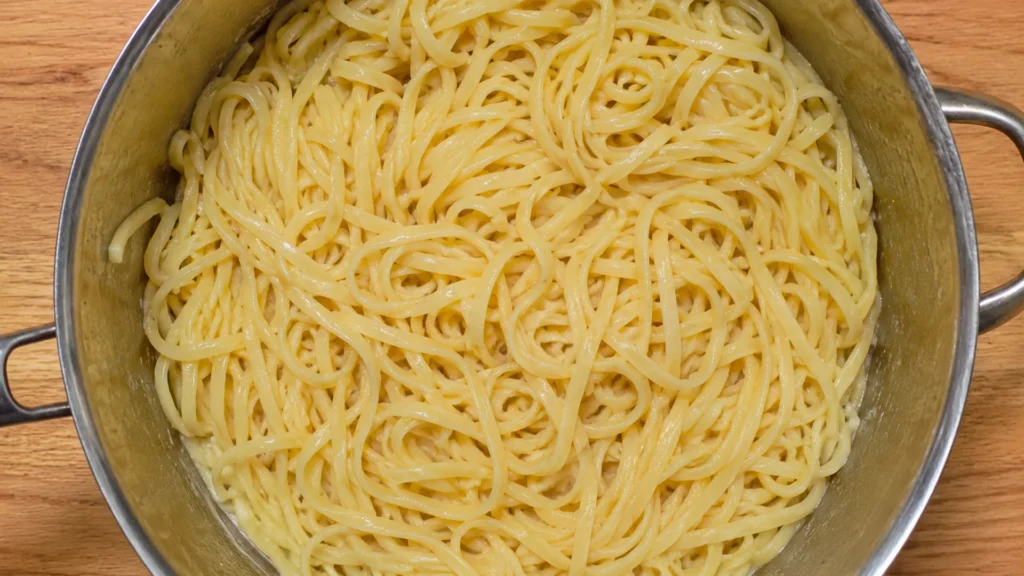
Overcooked pasta is the most common pasta mistake there is, and the good news is that it is both preventable and, when it happens anyway, often rescuable. Overcooking turns the firm, springy bite of al dente pasta into something soft, swollen, and sticky, because the starch granules absorb too much water and burst, releasing the glue that makes mushy pasta clump. That same process also speeds up how fast the pasta digests and washes a little nutrition into the water, though the food is still perfectly safe to eat. Most of the time you can firm up overcooked pasta with a quick rinse and a hot pan, and when it is too far gone for a plated dish you can fold it into bakes, fritters, soups, or a pasta salad where soft noodles are actually an advantage. In this guide I cover exactly why pasta overcooks, how to stop it, how to rescue it, which shapes are most prone to it, and a stack of ways to turn a mushy pot into a good meal that nobody would guess started as a mistake.
What Overcooking Actually Does to Pasta
To fix the problem you have to understand it. Dried pasta is a tight matrix of wheat starch and protein. When it hits boiling water, the starch granules drink up water and swell while the protein sets around them, and at al dente the center still has a thin firm core of barely-hydrated starch that gives the pleasant bite. Cook past that point and the granules keep swelling until they rupture, spilling free starch onto the surface of the noodle. That loose surface starch is what makes overcooked pasta sticky, gummy, and prone to clumping, and the fully hydrated interior is what makes it limp. The texture change is mechanical and mostly irreversible once the granules have burst, which is why prevention beats rescue. It also explains the rescue tricks that do work: they aim to wash away the surface starch and re-firm the outside even though the inside is already soft. For the wider science of how different shapes and flours behave, our breakdown of the category of pasta covers why some pastas forgive more than others.
Why Pasta Overcooks (the Real Causes)
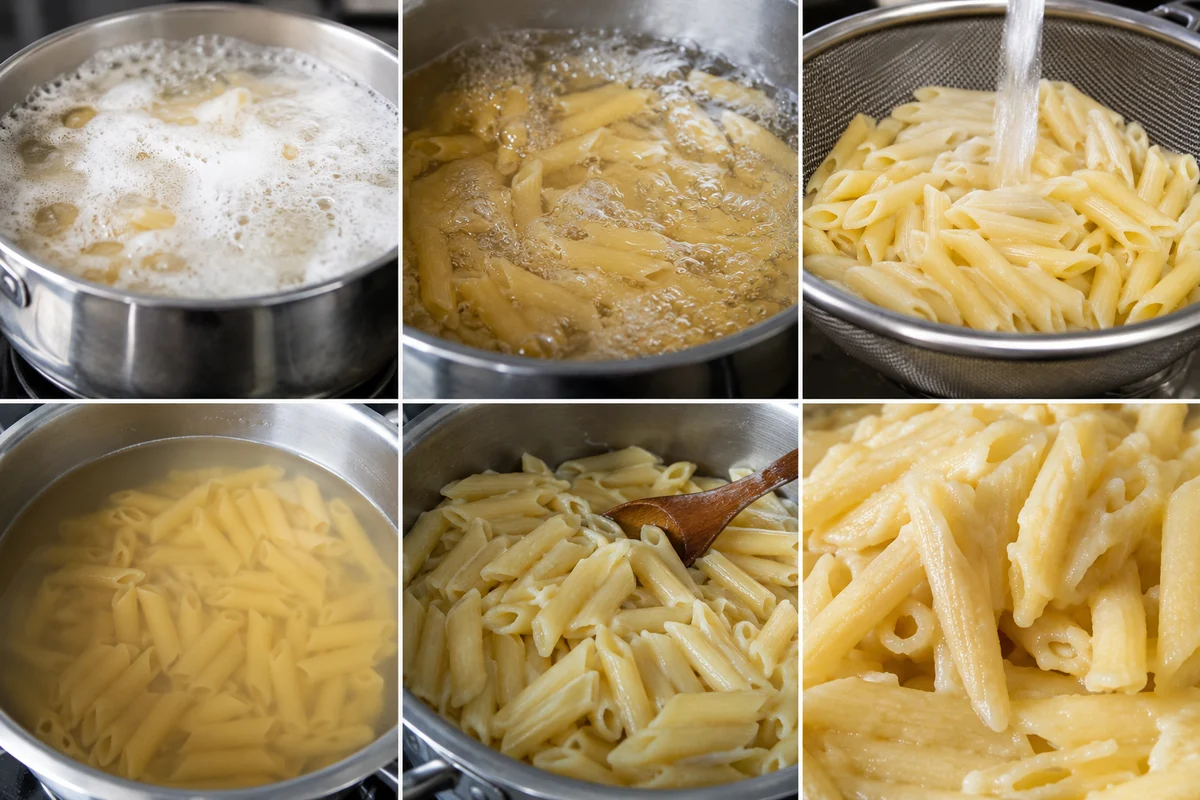
Overcooking is rarely just leaving it in too long. Several quiet factors push pasta past done.
Trusting the Box Time Blindly
The printed time is an estimate for one set of conditions, and your stove, pot, altitude, and water volume all shift it. The fix is to taste 2 minutes before the box time and keep tasting. Your mouth is a better gauge than the clock.
Forgetting Carryover Cooking
Pasta keeps cooking after you drain it, from its own residual heat, and it cooks further if you finish it in a hot sauce or bake it. Drain pasta a minute or two before it reaches your target, especially if a second cook is coming, or it sails past al dente on the plate.
Too Little Water or Heat
A small pot or a weak boil drops the temperature when the pasta goes in, so the noodles sit in barely-simmering water absorbing moisture unevenly and turning gummy before they are done. Use at least 4 quarts of water at a hard rolling boil per pound, and bring it back to a boil quickly after adding the pasta.
Walking Away
The window between al dente and mush can be under two minutes for thin shapes. Set a timer for the early-taste point and stay near the stove. Overcooking usually happens in the last minute, when attention drifts.
How to Prevent Overcooked Pasta
Prevention is a short checklist. Use a big pot with at least 4 quarts of water per pound and salt it well, about a tablespoon of kosher salt per 4 quarts, since seasoning from the start beats trying to fix bland pasta later. Bring it to a true rolling boil before the pasta goes in and get it back to a boil fast. Stir in the first minute so nothing welds together, then stir occasionally. Start tasting 2 minutes before the box time and pull at al dente, a tender bite with a faint firm core. Drain a minute early if the pasta will finish in sauce or the oven. Reserve a cup of pasta water before draining so you can loosen and bind the sauce without overcooking the noodles further. Do not rinse unless you are making a cold salad. These habits handle nearly every case. For more on timing and how firmness ties to nutrition and digestion, our notes on the broader types of pasta are a useful companion.
How to Rescue Overcooked Pasta
If the pot is already soft, do not panic and do not necessarily toss it. The rescue depends on how far gone it is.
Slightly Soft: Rinse and Re-Firm
For pasta that is just past al dente, drain it immediately and rinse under cold water to halt the cooking and wash off the sticky surface starch. Then firm the outside back up with heat: get a skillet hot with a little olive oil or butter and saute the drained pasta for a minute or two. The hot, dry pan crisps and re-firms the surface, which restores a surprising amount of bite. Cook’s Illustrated has shown this rinse-and-sear approach works on flabby pasta, and it is the single best trick for moderately overcooked noodles. Toss with sauce right after and serve quickly.
Quite Soft: Crisp It Hard or Bake It
When the noodles are clearly soft but still holding their shape, push the skillet trick further. Spread the pasta in a hot oiled pan and let it sit undisturbed to brown and crisp on one side, almost frying it, which adds texture that distracts from the softness. Alternatively, turn it into a baked dish: toss with sauce and cheese and bake, where the oven browns the top and the casserole format makes soft noodles read as intentional.
Mush: Repurpose, Do Not Plate
If the pasta has collapsed into paste, it will not return to a noodle, so stop trying to serve it as one. Instead, redirect it into a dish built for soft pasta. The options in the next section turn mush into something genuinely good rather than a sad bowl.
Recipes That Turn Overcooked Pasta Into Dinner
Soft and mushy pasta is the right starting point for several classic dishes, and a few chefs reach for it on purpose.
Pasta frittata: beat eggs with cheese and herbs, fold in the soft pasta, and cook it like a thick omelet in a skillet, finishing under the broiler. The eggs bind everything and the result is a great lunch. Pasta fritters or pancakes: mix the mushy pasta with egg, cheese, and a little flour, then pan-fry spoonfuls into crisp golden cakes. Baked pasta: layer with sauce and cheese and bake until bubbling and browned, the most forgiving home for overcooked noodles. Pasta soup: chop or leave the soft pasta and stir it into a brothy soup, where soft noodles belong and a little added starch thickens the broth pleasantly. Pasta bake croquettes: bind, shape, bread, and fry for an appetizer. Even fully mushed pasta can become a base for a savory bread-pudding-style casserole. The throughline is that soft pasta wants a binder (egg, cheese, sauce) and heat that adds back texture (frying or baking). Treat it as an ingredient rather than a failure and it earns its place. A few more quick directions: blitz very mushy pasta into a creamy soup base, where it thickens the broth and disappears; fold it into a savory bread pudding with custard and cheese; or mash it lightly and use it as a layer in a casserole the way you would a starch base. The dish you pick should match how soft the pasta is, with frittatas and fritters handling the worst cases because the binder and the fry do the heavy lifting. For how long these leftover-pasta dishes keep in the fridge, see our guide on whether pasta can go bad.
Which Pastas Overcook Fastest
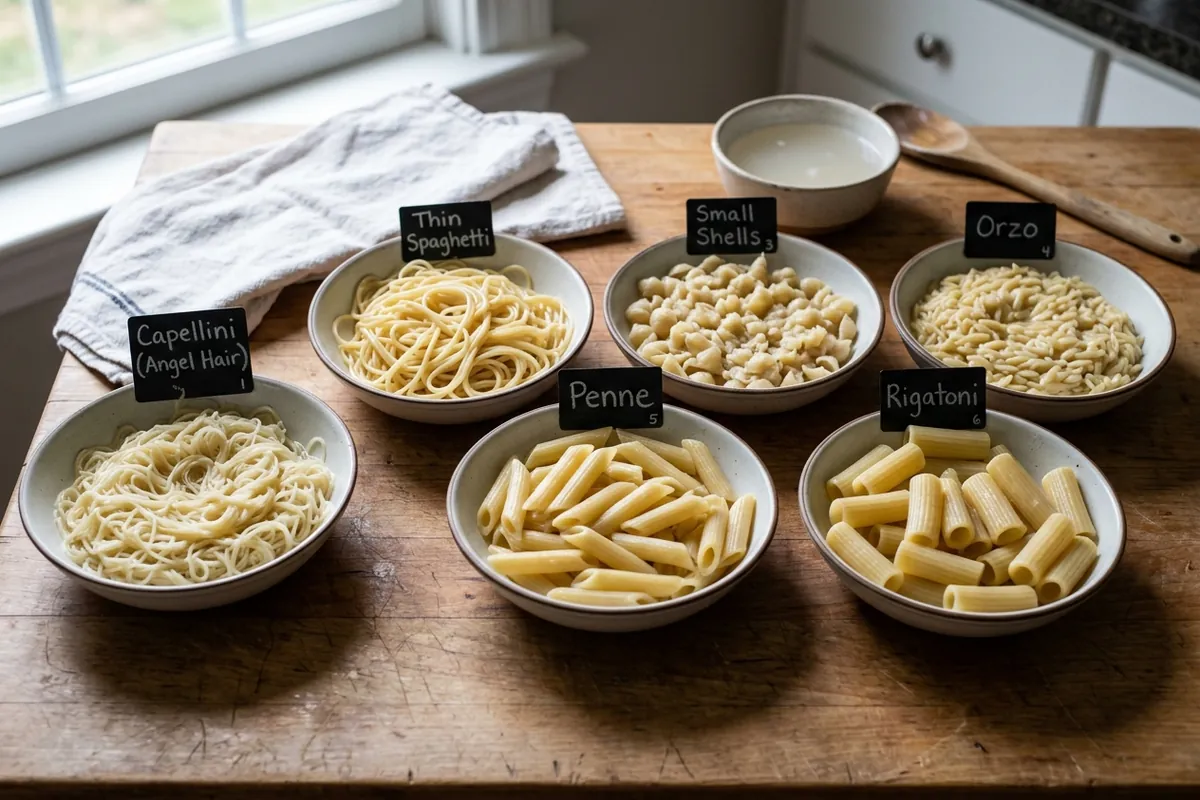
Not all pasta is equally easy to ruin, and knowing the order helps you set your timer with confidence. Thin shapes overcook fastest because they hydrate all the way through in seconds; angel hair, thin spaghetti, and fresh pasta have a window measured in less than a minute, so they demand constant attention. Medium strands like regular spaghetti and linguine are more forgiving but still move quickly. Short, thick shapes such as rigatoni, penne, and shells are the most forgiving, because their thick walls take longer to fully hydrate, which buys you a wider margin before they go soft. Fresh and filled pastas like ravioli are delicate and tip into mush fast, so treat them gently and pull them as soon as they float and firm. Gluten free and legume pastas overcook faster than wheat across the board, since their starches release quickly and the firm-to-mush window is especially short, which is why early tasting matters even more with those. If you are prone to overcooking, lean on the thicker short shapes while you build your timing instincts, then graduate to the thin ones. Bon Appetit has written about how shape and thickness change the doneness window at Bon Appetit, and matching the shape to your attention span is a quietly effective way to avoid mush.
Cooking method shifts the risk too. One-pot pasta dishes, where the noodles cook directly in the sauce, overcook more easily because there is no clean drain point and the residual heat of the sauce keeps working on them. Baked pasta dishes should always start with deliberately undercooked noodles, since they absorb sauce and soften further in the oven. When a recipe involves a second cook of any kind, build in that buffer up front rather than discovering the softness on the plate.
The Pasta Salad Exception
Here is the twist: for cold pasta salad you actually want to cook the pasta slightly past al dente on purpose. Pasta firms up and dries out as it chills in the fridge, so noodles cooked to a firm al dente turn hard and chalky once cold. Cooking them 1 to 2 minutes past al dente leaves them at a pleasant just-right texture after refrigeration. The other rule for pasta salad is the one place you should rinse: drain the cooked pasta and rinse it under cold water to stop the cooking and wash off the surface starch that would otherwise turn the cold salad pasty and gluey. So if your pot came out a touch soft and you were planning a salad, you may have done yourself a favor. Toss the rinsed, slightly-soft pasta with a generous dressing (cold pasta drinks up dressing, so use more than you think) and the vegetables, cheese, and protein of your choice.
Is Overcooked Pasta Bad for You?
Overcooked pasta is completely safe to eat; it is a texture problem, not a food-safety one, as long as the pasta itself is fresh and stored properly. There are two minor nutritional notes. First, overcooking leaches a little more of the water-soluble B vitamins and folate into the cooking water, a small loss you partly recover if you use the pasta water in a sauce. Second, soft, fully-hydrated pasta digests faster than al dente pasta and can raise blood sugar a bit more quickly, because the loose starch is easier for enzymes to reach. Neither effect is large enough to matter for an occasional soft bowl. If steady energy and a gentler blood-sugar curve are a priority, that is one more reason to aim for al dente, but overcooked pasta is wholesome food, not a health hazard. America’s Test Kitchen has covered both the texture science and the nutrition angle of pasta doneness at America’s Test Kitchen, and the safety verdict is clear: eat it without worry.
FAQ
Can you fix overcooked pasta?
Often, yes. For slightly overcooked pasta, rinse it under cold water to wash off the sticky starch, then saute it in a hot oiled skillet for a minute or two to firm the surface back up. Fully mushed pasta will not return to a noodle, but it works well baked, fried into fritters, or stirred into soup.
Why is my pasta mushy and sticky?
Mushy, sticky pasta comes from overcooking. The starch granules swell until they burst and release glue-like surface starch. Too little water, a weak boil, trusting the box time, or forgetting that pasta keeps cooking after draining all cause it. Use plenty of water, taste early, and pull the pasta firm.
Is overcooked pasta safe to eat?
Yes. Overcooking changes texture, not safety. The pasta is fine to eat as long as it was fresh and stored properly. The only downsides are a small loss of water-soluble vitamins into the cooking water and slightly faster digestion, neither of which is a real concern for an occasional soft bowl.
How do I know when pasta is done instead of overcooked?
Taste it. Al dente pasta gives a tender bite with a faint firm core at the center and no chalky raw line. Start tasting 2 minutes before the box time and pull it the moment that firm core nearly disappears. If it feels soft all the way through with no resistance, it has gone past done.
Should I rinse overcooked pasta?
For a hot dish, rinse only when rescuing overcooked pasta, to wash off the sticky starch before re-firming it in a pan; otherwise the starch helps sauce cling. For cold pasta salad, always rinse to stop the cooking and keep the chilled salad from turning pasty.
Can I use overcooked pasta for pasta salad?
Yes, and it is ideal. Pasta firms and dries as it chills, so slightly overcooked noodles end up at a just-right texture cold, while firm al dente turns hard. Rinse the cooked pasta under cold water, then toss it with plenty of dressing, since cold pasta absorbs a lot of it.
Does adding oil or rinsing stop pasta from overcooking?
No. Oil in the boiling water does not prevent overcooking and just coats the noodles so sauce slides off later. Rinsing does not stop overcooking either; it only washes off surface starch after the fact. The real prevention is plenty of water, a hard boil, early tasting, and pulling the pasta firm before carryover heat finishes it.
Bottom Line
Overcooked pasta is a fixable mistake. Prevent it with plenty of water, a hard boil, early tasting, and a firm pull that accounts for carryover cooking. When it happens anyway, rinse and sear slightly soft pasta to bring back the bite, and redirect genuinely mushy pasta into frittatas, fritters, bakes, and soups where soft noodles belong. Remember the salad exception, where a little extra cooking is a feature, not a flaw. Soft pasta is safe, useful, and rarely worth throwing away once you know what to do with it.