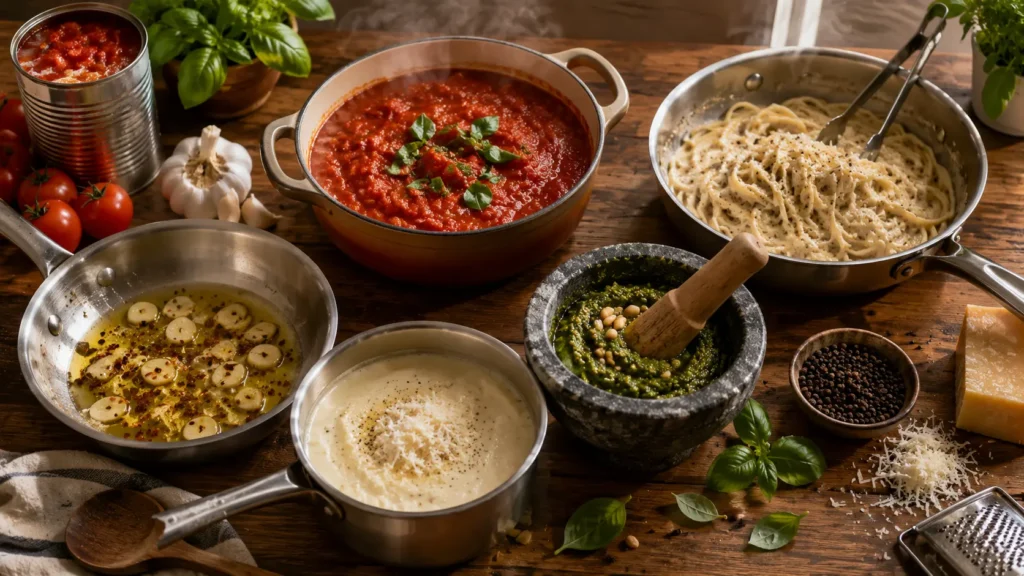
How can I make pasta sauce that tastes like more than a jar, without spending an afternoon at the stove? The honest answer is that “pasta sauce” isn’t one recipe, it’s five easy families, and once you know the shape of each you can make any of them from pantry staples in the time it takes the pasta to boil. A quick tomato sauce is garlic bloomed in olive oil, canned tomatoes, salt, and a short simmer. Garlic and oil is exactly that, nothing more. A cream sauce is butter, cream, and cheese melted together. Pesto is herbs, nuts, cheese, and oil blitzed cold. And a cheese sauce is starchy pasta water whisked into grated cheese until it turns glossy. This guide walks all five, plus the handful of universal moves, seasoning, simmering, and finishing with pasta water, that separate a flat sauce from one that clings and sings. Learn the patterns, not just the recipes, and you’ll never reach for a jar on autopilot again.
The One Technique Behind Every Good Sauce
Before the specific sauces, here’s the thread that runs through all of them. Great pasta sauce is built in layers and finished with the pasta itself. You build a flavor base first, usually garlic, onion, or both softened gently in fat so they sweeten instead of burning. You simmer to let flavors marry and the texture thicken. You season in stages, tasting as you go, because salt added at the end never tastes as integrated as salt built in along the way. And critically, you finish the sauce with the pasta and a splash of its starchy cooking water, tossing them together over heat so the sauce emulsifies and grips every strand. That last move is the one home cooks skip and restaurants never do, and it’s why their pasta looks glossy and coated while a home plate can look like noodles wearing a hat of sauce. Keep those four beats in mind and every sauce below gets easier.
1. Quick Tomato Sauce (Marinara)
This is the workhorse, and a good one takes 20 minutes. Warm a few tablespoons of olive oil over medium heat, add thinly sliced or minced garlic, and cook just until fragrant and pale gold, never browned, because burnt garlic turns bitter. Pour in a can of crushed or whole peeled tomatoes, ideally San Marzano, which are sweeter and less acidic than most. Season with salt, a pinch of red pepper flakes if you like heat, and a few torn basil leaves. Simmer for 15 to 30 minutes until it thickens and the raw tomato edge mellows. A small pat of butter stirred in at the end rounds out the acidity beautifully, and a pinch of sugar can do the same if your tomatoes are sharp. That’s it. From here you’re a step away from a hundred dinners, and the base of a hearty sausage ragù if you brown meat in the pot first.
2. Garlic and Oil (Aglio e Olio)

The fastest real sauce there is, and proof that simple can be spectacular. While the pasta boils, warm 1/3 cup of good olive oil over low heat with several cloves of thinly sliced garlic and a pinch of red pepper flakes, cooking gently until the garlic is just golden and the oil is fragrant. Pull it off the heat before the garlic browns. When the pasta is al dente, toss it straight into the oil with a generous splash of pasta water and a handful of chopped parsley, tossing hard so the starchy water and oil emulsify into a light, clinging sauce. Finish with grated cheese if you like. It has maybe five ingredients and takes the length of one pot of pasta, yet done right it tastes like far more than the sum of its parts. The whole sauce lives or dies on one detail: pulling the garlic off the heat the instant it turns golden, because a few seconds too long tips it from sweet and nutty into harsh and bitter, and there’s no rescuing a scorched clove once it’s there. Keep the heat low and your eyes on the pan, and this five-minute sauce will outshine things that took an hour.
3. Cream Sauce (Alfredo and Beyond)
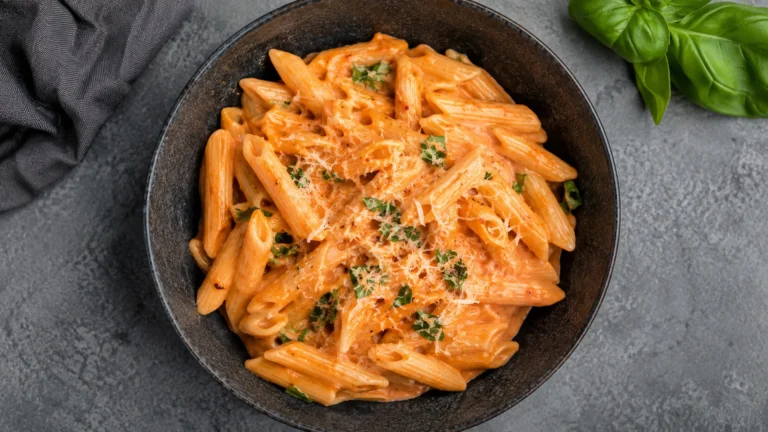
Rich, fast, and endlessly adaptable. Melt butter in a pan, add a little minced garlic if you like, then pour in heavy cream and bring it to a gentle simmer. Whisk in a generous amount of finely grated Parmesan until it melts into a smooth, glossy sauce, then season with salt and plenty of black pepper. Toss the cooked pasta in, loosening with pasta water until it coats every strand. That’s the backbone of a classic chicken alfredo, and it takes well to additions like mushrooms, peas, or a squeeze of lemon to cut the richness. The trick is to keep the heat gentle, because cream sauces can break or turn grainy if they boil hard, and to use real grated cheese rather than the pre-shredded kind, which is coated to prevent clumping and never melts as smoothly. If your sauce ever looks thin, let it simmer a minute longer to reduce before adding more cheese; if it looks tight or oily, a splash of pasta water and a hard toss brings it right back together. Cream sauces forgive almost everything except a hard boil, so keep the flame low and your whisk moving.
4. Pesto (No Cooking Required)
The one sauce you don’t even cook. In a food processor or with a mortar and pestle, combine a big bunch of fresh basil, a handful of pine nuts or walnuts, a clove or two of garlic, a good amount of grated Parmesan, and a pinch of salt, then stream in olive oil until it forms a loose, vivid green paste. That’s traditional basil pesto, but the formula, herb plus nut plus cheese plus garlic plus oil, flexes endlessly: try spinach and walnut, sun-dried tomato, or arugula. Toss it with hot pasta off the heat, never over a flame, since cooking pesto dulls its color and fresh punch, and loosen it with a little pasta water. It’s the move behind a five-minute pesto pasta on a night you have no time and no patience.
5. Cheese Sauce (Cacio e Pepe Style)

The most magical and the most technique-dependent, built from almost nothing. The Roman classic cacio e pepe is just grated Pecorino, black pepper, and starchy pasta water, emulsified into a creamy sauce with no cream at all. Toast cracked pepper in a dry pan, add a ladle of hot pasta water, then off the heat toss in the cooked pasta and a big handful of finely grated cheese, tossing vigorously and adding water a splash at a time until it turns silky. The danger is heat: too hot and the cheese seizes into clumps instead of melting into a sauce, so work off the burner and keep tossing. When it comes together, it’s one of the most impressive things you can do with three ingredients, and a gateway to other cheese-and-water sauces.
The Five Sauces at a Glance
| Sauce | Core ingredients | Time |
|---|---|---|
| Tomato / marinara | Olive oil, garlic, canned tomatoes, basil | 20 to 30 min |
| Garlic & oil | Olive oil, garlic, chili, parsley | 10 min |
| Cream / alfredo | Butter, cream, Parmesan | 10 to 15 min |
| Pesto | Basil, nuts, cheese, garlic, oil | 5 min, no cook |
| Cheese / cacio e pepe | Pecorino, black pepper, pasta water | 10 min |
How Much Sauce per Serving of Pasta
A good ratio keeps the pasta the star and the sauce its partner, not a flood. Aim for about 1/2 cup of sauce per 2-ounce serving of dry pasta for tomato and cream sauces, a little less for oil-based and cheese sauces that are meant to coat thinly rather than pool. The plate should look glossy and evenly dressed, with just a whisper of sauce left at the bottom of the bowl when you’ve tossed it through. If yours looks like soup, the pasta is underdressed in the wrong direction; if the strands look dry and bare, add more sauce or another splash of pasta water and toss again. The goal is a coating that clings, not a puddle the pasta is drowning in.
Building Bigger Flavor
Once the five bases are second nature, a few small habits push them from good to memorable. Toast your aromatics gently, never rushing the garlic to brown, because slow-softened garlic and onion build a sweeter, deeper base. Salt in layers and taste constantly, since a sauce seasoned only at the end always tastes thinner than one seasoned along the way. Add a hit of acid or fat to finish: a knob of butter to round a tomato sauce, a squeeze of lemon to brighten cream, a drizzle of good oil over pesto. And save more pasta water than you think you need, because that starchy liquid is the universal fixer, loosening a tight sauce and helping any of these five emulsify and grip. For a deep dive into Italian sauce traditions and dozens of variations to explore once you’re comfortable, a dedicated hub of Italian sauces is a rabbit hole worth falling into.
Matching Sauces to Pasta Shapes
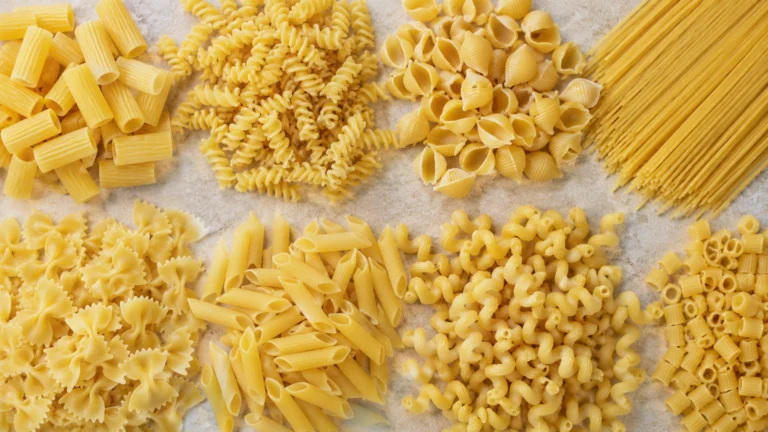
The Italians have a rule worth borrowing: the shape of the pasta should suit the sauce, because they’re designed to catch and carry each other. Long, thin strands like spaghetti and linguine love light, slick sauces, garlic and oil, a simple tomato, or a delicate seafood sauce, that coat without weighing them down. Tubes and ridged shapes like penne, rigatoni, and fusilli are built for chunky, hearty sauces, because the ridges and hollows trap meat, vegetables, and thick tomato. Wide, flat ribbons like pappardelle and tagliatelle are made for rich, clinging sauces such as a meaty ragù or a creamy mushroom. And small shapes and shells shine in soups and bakes, where they hold pockets of sauce in every bite. Filled pasta like butternut squash ravioli wants the lightest touch of all, often just brown butter and sage, so the filling stays the star. Pair thoughtfully and even a simple sauce tastes considered.
Jarred Versus Homemade: When Each Makes Sense
There’s no shame in a jar, and knowing when to use one is its own kind of cooking smarts. A good jarred sauce is a fine weeknight base, and a few minutes of effort lifts it a long way: bloom some fresh garlic in olive oil, pour the jar in, and simmer with a knob of butter, a pinch of chili, and fresh basil, and it tastes half-homemade. Where homemade wins is cost, control, and the sheer flavor of a sauce simmered from whole tomatoes, plus the satisfaction of a pot you made from nothing. The realistic answer for most cooks is both: keep a jar for the nights you have ten minutes, and make a big batch of marinara on a slow Sunday to freeze for the rest. The skill isn’t choosing a side; it’s knowing which the evening calls for.
Storing and Freezing Pasta Sauce
Most sauces keep beautifully, which makes a double batch one of the smartest things you can cook. Tomato-based sauces last about 5 days in the fridge and freeze well for up to 3 months, so a big pot of marinara becomes a month of fast dinners. Cream and cheese sauces are more fragile: they keep 3 to 4 days refrigerated but can separate when frozen and reheated, so make those closer to when you’ll eat them. Pesto keeps about a week in the fridge under a thin film of oil to stop it browning, and freezes excellently, especially portioned in an ice-cube tray for single servings. Cool any sauce before sealing it, leave headroom in freezer containers for expansion, and reheat gently, loosening with a splash of water or stock as needed.
FAQ
How can I make pasta sauce without a recipe?
Pick a family and follow its shape: fat plus aromatics, then a main element (tomatoes, cream, herbs, or cheese), then season and finish with pasta water. Once you know the five patterns, you can improvise any of them from what’s in the pantry.
What is the easiest pasta sauce to make?
Garlic and oil (aglio e olio) is the simplest, with about five ingredients and no real cooking beyond gently warming garlic in olive oil. Pesto is a close second since it needs no cooking at all.
How do I make pasta sauce thicker?
Simmer it longer to reduce the liquid, or stir in a spoonful of tomato paste for red sauces. For cream and cheese sauces, more grated cheese and a careful reduction thicken without flour. Avoid adding too much pasta water, which loosens rather than thickens.
Why is my tomato sauce bitter or acidic?
Usually burnt garlic or sharp tomatoes. Cook garlic only until pale gold, choose San Marzano or another sweet variety, and round the acidity at the end with a pat of butter or a pinch of sugar.
Can I make pasta sauce ahead of time?
Yes. Tomato sauces keep 5 days in the fridge and freeze up to 3 months; pesto keeps about a week under oil and freezes well. Cream and cheese sauces are best made fresh, as they can separate after freezing.
How much sauce do I need per person?
About 1/2 cup of sauce per 2-ounce serving of dry pasta for tomato and cream sauces, a little less for oil and cheese sauces. Aim to coat the pasta evenly rather than drown it.
What can I add to make pasta sauce taste better?
A pat of butter rounds out a tomato sauce, a pinch of sugar tames sharp tomatoes, and a splash of pasta water helps any sauce cling. Fresh herbs at the end, a hit of grated cheese, red pepper flakes for warmth, or a squeeze of lemon to brighten richness all lift a flat sauce fast. Season and taste in stages rather than all at the end.
Can I make pasta sauce without garlic or onion?
Yes. Garlic and onion build a deeper base, but a clean tomato sauce of good canned tomatoes, olive oil, salt, and basil is excellent on its own. Cream, pesto, and cheese sauces can all be made garlic-free without losing their character.
Bottom Line
So, how can I make pasta sauce that’s genuinely worth the pot? Stop thinking in recipes and start thinking in families. Tomato, garlic and oil, cream, pesto, and cheese cover almost everything you’d ever want on pasta, and each is just a base, a simmer, a seasoning, and a final toss with the pasta and its starchy water. Master that last move above all, because it’s what turns five separate ingredients into one glossy, clinging sauce. Cook each family a couple of times and you’ll stop reading recipes entirely, reaching instead for whatever’s in the pantry and building the sauce the night wants. That’s the moment a jar stops being tempting for good.