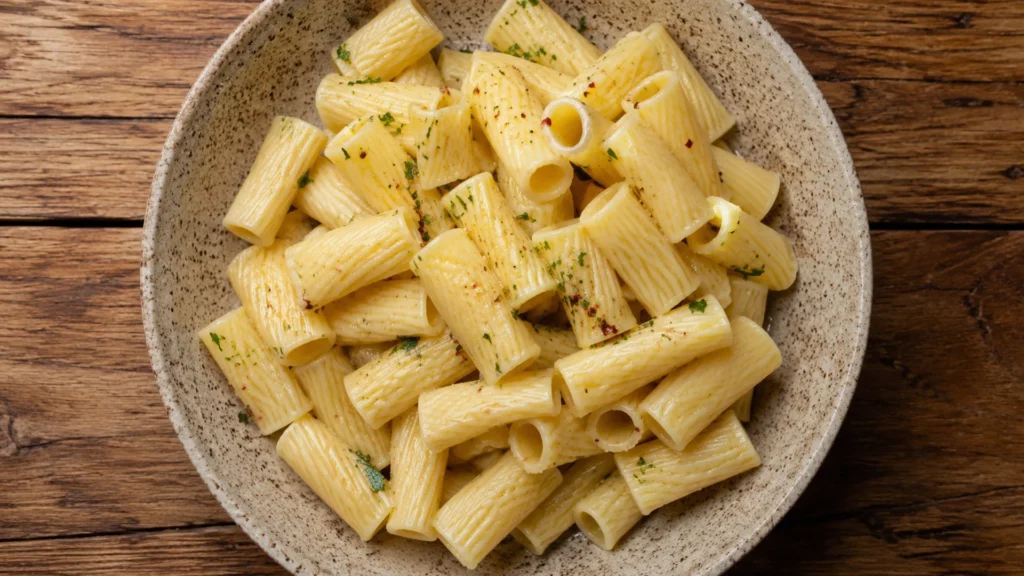
Gluten free rigatoni pasta is one of the smartest shapes to reach for when you cut out wheat, because the wide hollow tube and deep ridges hide most of the texture problems that plague gluten free noodles. Where thin gluten free spaghetti turns to mush the second you look away, rigatoni gives you a thick wall that stays sturdy, a hollow center that catches sauce, and grooves that grip a thick ragu. The catch is that the flour blend inside the box still decides almost everything: flavor, firmness, and how forgiving the pasta is in the pot. Get the base and the cooking method right and gluten free rigatoni can carry a baked ziti or a heavy meat sauce without anyone noticing the swap. Get them wrong and you get a sticky tube that splits at the seam or collapses into paste. In this lab guide I break down what gluten free rigatoni is actually made from, how each base cooks, the exact method that keeps it firm, the sauces that suit the shape, and the brands and fixes that matter.
Why Rigatoni Is the Easy Shape to Go Gluten Free
Rigatoni is a large, ridged tube, usually about an inch and a half long with a wide bore and a straight (not curved) profile. That geometry does real work when you remove gluten. Wheat pasta holds its shape because gluten forms an elastic protein web; pull the wheat and the noodle loses that springy backbone, so thin shapes go limp and fragile. A thick-walled tube like rigatoni starts with far more structure than a strand of spaghetti or a sheet of lasagna, so it tolerates the weaker gluten free dough much better. The ridges (called rigature, which is where the name comes from) add grip for sauce and add a little surface rigidity. The hollow center means heat reaches the pasta from inside and out, so it cooks more evenly than a solid noodle of the same thickness. If you are new to gluten free pasta and want the lowest chance of a mushy dinner, a short ridged tube is the shape I steer people toward first.
What Gluten Free Rigatoni Is Actually Made From
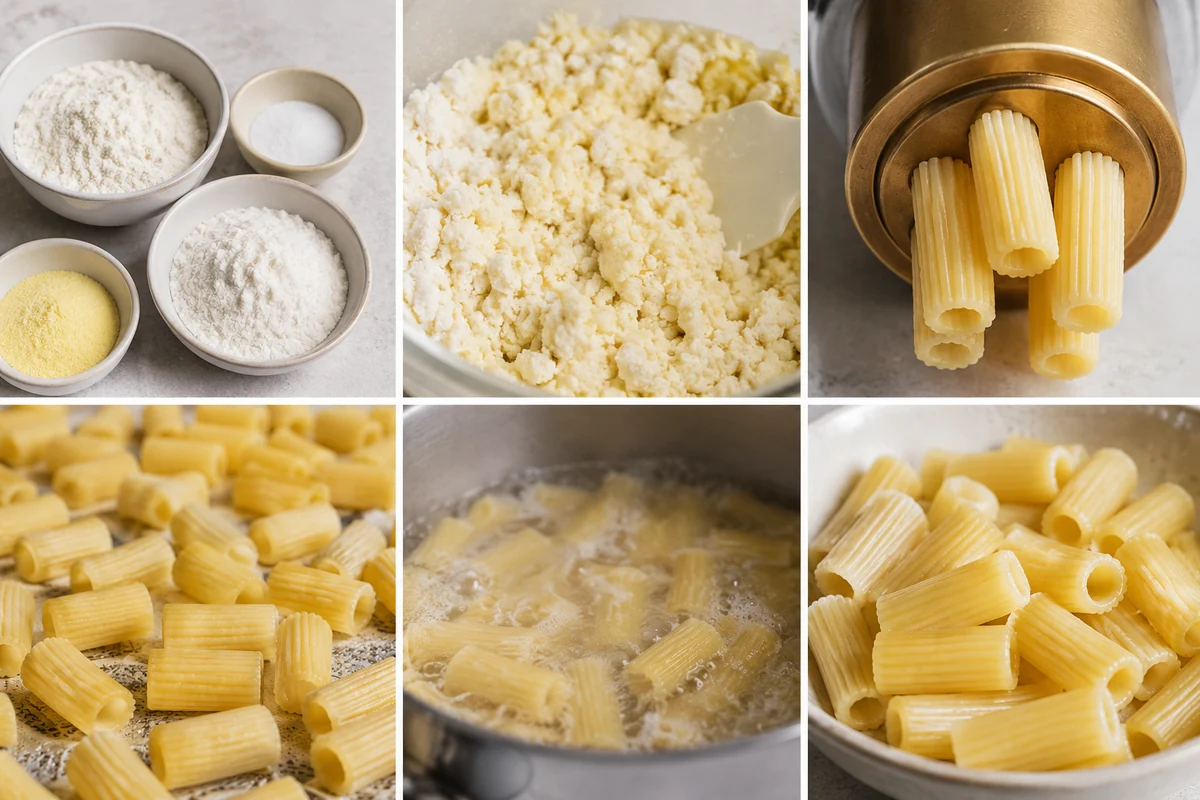
The box may all say rigatoni, but the flour blend underneath splits into a few distinct camps, and the base tells you how the pasta will taste and behave. Knowing which one you bought is the difference between a confident dinner and a guessing game at the stove.
| Base | Taste and texture | Best use |
|---|---|---|
| Rice and corn | Mild, closest to wheat, smooth | Everyday swap, picky eaters |
| Rice and lentil | Firm, faintly earthy, sturdy | Baked dishes, meat sauce |
| Chickpea | Very firm, earthy, high protein | Protein bowls, bold sauces |
| Brown rice | Nutty, slightly grainy, hardy | Heavy sauces, casseroles |
| Corn only | Sweet, golden, springy | Light sauces, fresh tomato |
White rice and corn blends are the Italian-style standard and the closest stand-in for wheat rigatoni. They have the mildest flavor and the smoothest bite, which lets them disappear under a sauce, but they are the most fragile in the pot because rice starch turns sticky fast. Rice and lentil blends, which show up in a lot of the better Italian gluten free rigatoni, cook firmer and hold a sturdier wall, so they are my pick for baked dishes. Chickpea rigatoni is the firmest and most protein-dense of the group, with an earthy flavor that wants a bold tomato or sausage sauce to balance it. Brown rice is hardy and nutty but takes longer to cook and can go grainy if you push it. Corn-only rigatoni is sweet and springy and best with light sauces that do not fight the flavor. For a deeper look at how these flour bases compare across every shape, our guide to gluten free pasta walks through each one in detail.
Bronze-Drawn vs Smooth: Why the Surface Matters
Two boxes of gluten free rigatoni can use the same flour and still cook differently because of how they were extruded. Bronze-drawn pasta is pushed through a rough bronze die that leaves a slightly chalky, porous surface; Teflon-drawn pasta comes out glassy and smooth. On wheat pasta the bronze texture is prized because it grabs sauce. On gluten free rigatoni it matters even more, because that micro-rough surface holds a cream or tomato sauce that would otherwise slide off the slick gluten free starch. A handful of Italian makers now produce bronze-drawn gluten free rigatoni, and it is worth seeking out if you care about sauce cling. The tradeoff is that the porous surface also sheds a little more starch into the water, so you may need a touch more rinsing or a faster cook to keep it from going gummy. If the box says bronze-drawn or trafilata al bronzo, expect better grip and plan to watch the timer closely.
The Cooking Method That Keeps Gluten Free Rigatoni Firm
This is where most gluten free rigatoni dinners are won or lost. The starches in rice and corn release fast and turn sticky, so the wheat-pasta habits of long boils and resting in the pot will wreck the texture. Here is the method I use every time.
Use Plenty of Water and Keep It Moving
Use at least 4 quarts of water for a single box. Gluten free pasta sheds more loose starch than wheat, and a crowded pot lets that starch build into a gluey film that makes the tubes clump and stick. A big rolling boil with room to move keeps the rigatoni separated. Salt the water like you mean it, about 1 tablespoon of kosher salt per 4 quarts, because the pasta itself is blander than wheat and needs the seasoning from the start. Do not add oil to the water; it does nothing useful and coats the pasta so sauce slides off later.
Pull It Early and Taste Often
The box time is a starting point, not a rule. Gluten free rigatoni usually hits al dente 1 to 2 minutes before the printed time, and the window between firm and mushy is short. Start tasting 2 minutes early. You want the tube to give a little resistance with a faintly firm center, because it keeps cooking from residual heat after you drain it. If you plan to finish the pasta in sauce or bake it, pull it a full 2 minutes early so the second cook does not push it past done.
Stir, Drain, and Do Not Rinse (Usually)
Stir within the first minute and every couple of minutes after, since gluten free tubes love to sink and weld to the bottom. Reserve a cup of the starchy cooking water before you drain, because that liquid is your tool for loosening and binding sauce. Do not rinse if you are saucing right away; the surface starch helps sauce cling. The one exception is pasta salad, where you do rinse under cool water to stop the cook and wash off the starch that would otherwise turn the cold salad pasty.
Matching Sauce to the Shape
Rigatoni was built for sauces with body. The wide tube and deep ridges are made to trap chunks and cling to thick coatings, which is exactly why it is a poor match for a thin oil-and-garlic dressing that just pools at the bottom of the bowl. With gluten free rigatoni this pairing logic matters even more, because the right sauce hides the small texture differences and the wrong one exposes them.
Thick meat ragus, sausage and pepper sauces, and chunky vegetable sauces are the natural fit; the chunks lodge in the tubes and the sauce grabs the ridges. Cream and cheese sauces work beautifully too, especially baked, since the hollow tubes fill with sauce and the ridges hold a crust. A robust tomato sauce with a little extra body, finished with a splash of the reserved pasta water and a knob of butter, clings well and reads as classic. Save the delicate, brothy, or thin oil-based sauces for thinner shapes. For more on how pasta shape and sauce go together, our pasta shapes guide maps the whole logic. America’s Test Kitchen has done extensive testing on sauce-to-shape matching at America’s Test Kitchen, and the takeaway holds for gluten free: heavier shapes want heavier sauces.
Baking With Gluten Free Rigatoni
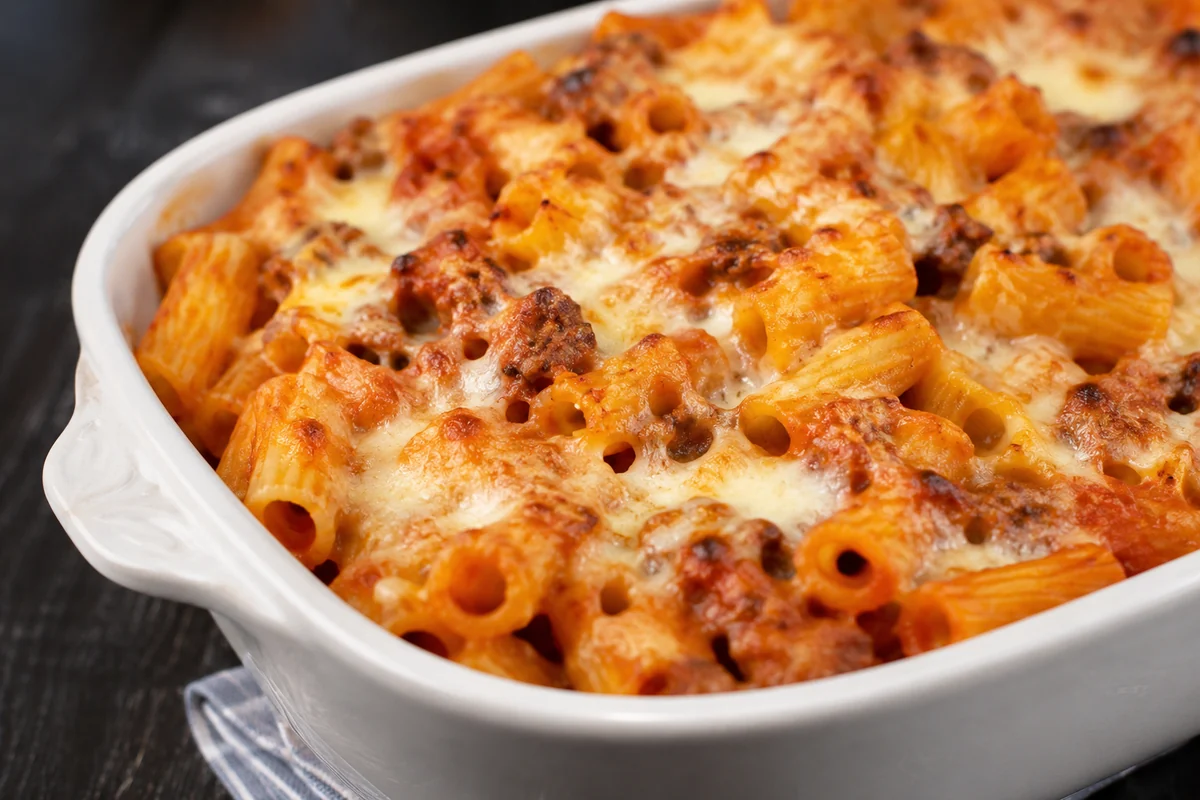
Baked rigatoni, ziti-style, is one of the best uses for the gluten free version because the oven hides minor texture flaws and the tubes stay distinct under a blanket of cheese. The key is to undercook the pasta hard on the stove. Boil it 2 to 3 minutes short of al dente, because it will absorb sauce moisture and keep cooking in the oven; if you boil it to done first, the baked result turns soft. Toss the drained rigatoni with enough sauce to coat generously, since gluten free pasta drinks up liquid and a dry bake goes chalky. Layer with extra sauce on the bottom and top to seal in moisture, cover with foil for the first part of the bake so it does not dry out, then uncover to brown the cheese. A rice-lentil or brown rice base holds up best here because it resists going soft.
Brands and What to Look For
Gluten free rigatoni quality varies wildly by maker, and the label tells you most of what you need. Italian makers using rice and corn or rice and lentil tend to produce the most wheat-like tube with the best wall strength. Rice-and-lentil rigatoni is a strong all-rounder: high in protein, firm, and forgiving, and it usually skips added gums. Chickpea rigatoni delivers the most protein and fiber but reads earthy, so buy it when you want the nutrition and plan a bold sauce. When you read a box, look for a short ingredient list (a flour blend, water, and not much else), a note that it is bronze-drawn if you want sauce grip, and a protein number if nutrition is your goal. Avoid anything with a long list of gums and starches if you can, because those often cook to a gummier finish. Store opened boxes airtight; for how long dried and cooked pasta really keeps, see our notes on whether pasta can go bad. For a broader sense of where these gluten free tubes sit among all the other groups, our breakdown of the category of pasta puts them in context.
How Gluten Free Rigatoni Compares Nutritionally
Beyond texture, the base you choose changes the nutrition meaningfully, and this is one place gluten free rigatoni can actually beat its wheat cousin. A standard 2-ounce dry serving of wheat rigatoni gives you roughly 7 grams of protein and 2 to 3 grams of fiber. Swap to a chickpea or lentil rigatoni and that same serving can climb to 11 to 14 grams of protein and 5 to 8 grams of fiber, because legumes carry far more of both than refined wheat. Rice-based gluten free rigatoni sits lower, closer to or slightly below wheat on protein and fiber, since white rice flour is a refined starch with little of either. Corn rigatoni lands in the middle. The practical upshot is that legume rigatoni does double duty: it survives the pot better and it pushes a bowl toward a more filling, slower-digesting meal. If you are choosing gluten free rigatoni for health reasons rather than a wheat allergy, read the label for protein and fiber numbers rather than assuming all gluten free boxes are equal, because a plain rice box offers little nutritional upgrade over white wheat pasta. Bon Appetit covers the wider legume-pasta trend and how these bases eat at Bon Appetit, and the same logic applies to the rigatoni shape specifically.
One more nutritional note worth knowing: cooking the pasta al dente rather than soft keeps its glycemic impact lower, because firmer starch digests more slowly. With gluten free rigatoni this gives you a second reason to pull it early. The firm pull is better for texture and better for blood sugar, so the discipline pays off twice. Chilling cooked rigatoni and eating it as a pasta salad the next day adds another small benefit, since cooling builds resistant starch that the body digests more gently. That makes a chilled gluten free rigatoni salad a smart use of leftovers as well as a tasty one.
Troubleshooting Common Problems
The Tubes Are Splitting at the Seam
Rigatoni is extruded as a tube, and a weak gluten free dough can split along the seam if it is agitated too hard or boiled too long. Use a gentle rolling boil rather than a violent one, stir with a soft motion, and pull the pasta on the early side. Splitting often means the pasta is overcooked, so shave a minute off your time.
Everything Clumped Together
Clumping is a starch problem. Too little water, not enough stirring in the first minute, or letting drained pasta sit dry will all cause it. Use 4-plus quarts of water, stir early, and either sauce immediately or toss the drained pasta with a little reserved water or oil if it must wait.
It Turned to Mush
Mush is overcooking, plain and simple, and gluten free pasta is far less forgiving than wheat. Start tasting 2 minutes early, pull at firm-tender, and undercook hard if the pasta will see a second cook in sauce or the oven. There is no rescuing fully mushed rigatoni for a plated dish, though you can fold it into a baked casserole and let cheese carry it.
FAQ
Is gluten free rigatoni as good as regular rigatoni?
It gets very close, especially with a rice-corn or rice-lentil base and a thick sauce. The tube shape hides most of the texture gap, and baked or sauced heavily, most people will not notice. Thin shapes are where gluten free struggles; rigatoni is one of the easiest wins.
How long do I cook gluten free rigatoni?
Use the box time as a ceiling, not a target. Most gluten free rigatoni hits al dente 1 to 2 minutes before the printed time. Start tasting 2 minutes early, and pull a full 2 minutes early if it will finish in sauce or bake in the oven.
Should I rinse gluten free rigatoni after cooking?
Not if you are saucing it right away; the surface starch helps the sauce cling. Do rinse under cool water only when you are making a cold pasta salad, to stop the cooking and keep the chilled pasta from turning pasty.
Which base is best for baked rigatoni?
Rice-and-lentil or brown rice holds up best in the oven because both resist going soft. Whatever base you use, undercook it by 2 to 3 minutes on the stove and sauce it generously, since baked gluten free pasta absorbs a lot of moisture.
Why is my gluten free rigatoni gummy?
Gumminess comes from too much loose starch and overcooking. Use plenty of water, stir early, taste often, and pull the pasta firm. Saucing immediately with a splash of reserved pasta water gives a glossy coat rather than a gluey one.
Is gluten free rigatoni higher in protein?
It depends on the base. Chickpea and lentil rigatoni run noticeably higher in protein and fiber than rice or corn versions, often around twice the protein of standard wheat pasta. If protein is the goal, check the label and buy a legume-based box.
Bottom Line
Gluten free rigatoni is the shape to start with when you go wheat-free, because its thick ridged tube forgives the weaker dough that ruins thinner noodles. Pick the base for the job: rice and corn for an everyday swap, rice and lentil or chickpea for firmness and protein, brown rice for hearty bakes. Then cook it with discipline, plenty of water, early tasting, a firm pull, and a thick sauce that grips the ridges. Do that, and gluten free rigatoni carries a meat sauce or a baked casserole with confidence, no apology required.