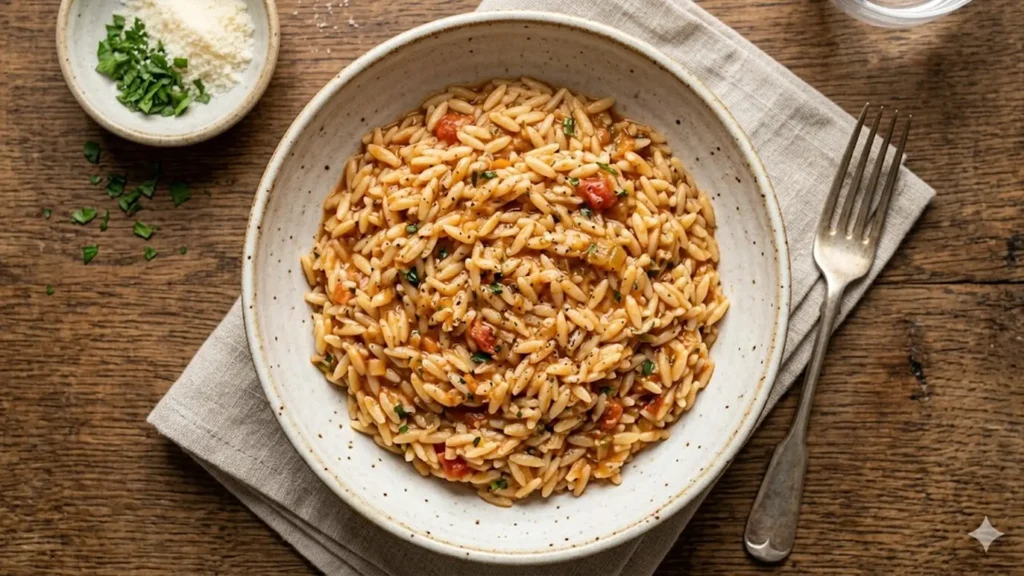
Gluten free orzo pasta is rice-shaped pasta made without wheat, usually from brown rice, a corn-and-rice blend, cassava, or chickpea flour. Standard orzo is semolina wheat, so it is not gluten free, but several certified brands now make a swap that behaves almost like the real thing. The catch is timing: gluten free orzo turns to mush fast, so you cook it 1 to 2 minutes shy of the box time and stop it cold. Get that one move right and the rest is easy.
I tested three gluten free orzos side by side in my kitchen for this guide, cooking each to the package time and again two minutes early, then folding them into a hot lemon salad to see which held its shape. The differences were bigger than I expected. This is the guide I wish those tests had come with: which brand to buy for which dish, the exact cook times, how to keep the grains separate, and the nutrition tradeoffs that nobody puts in a table.
Is Orzo Gluten Free? The Short Answer
Regular orzo is not gluten free. Despite looking like rice, classic orzo is just small, rice-shaped pasta made from durum wheat semolina, the same flour as spaghetti. If a package does not say gluten free, assume it contains wheat. The good news is that a handful of brands make a genuinely gluten free version from alternative flours, and a few are certified to under 20 parts per million of gluten, which is the threshold the FDA uses for a gluten free label.
It helps to picture the scale. Orzo gets its name from the Italian word for barley, because the little grains resemble it, and traditional versions have been semolina for as long as the shape has existed. The gluten free reinvention is recent, which is why the texture and timing are still being worked out brand by brand. You are buying a relatively new product, not a centuries-old staple, and that is worth keeping in mind when one box cooks nothing like another.
That certification matters more than people think. A pasta can be made from naturally gluten free flour and still be processed on shared equipment with wheat, picking up trace contamination. If you have celiac disease rather than a mild sensitivity, look for the certified gluten free seal, not just an ingredient list that happens to skip wheat. The difference is a dedicated facility versus a hopeful guess.
The Brands Worth Buying
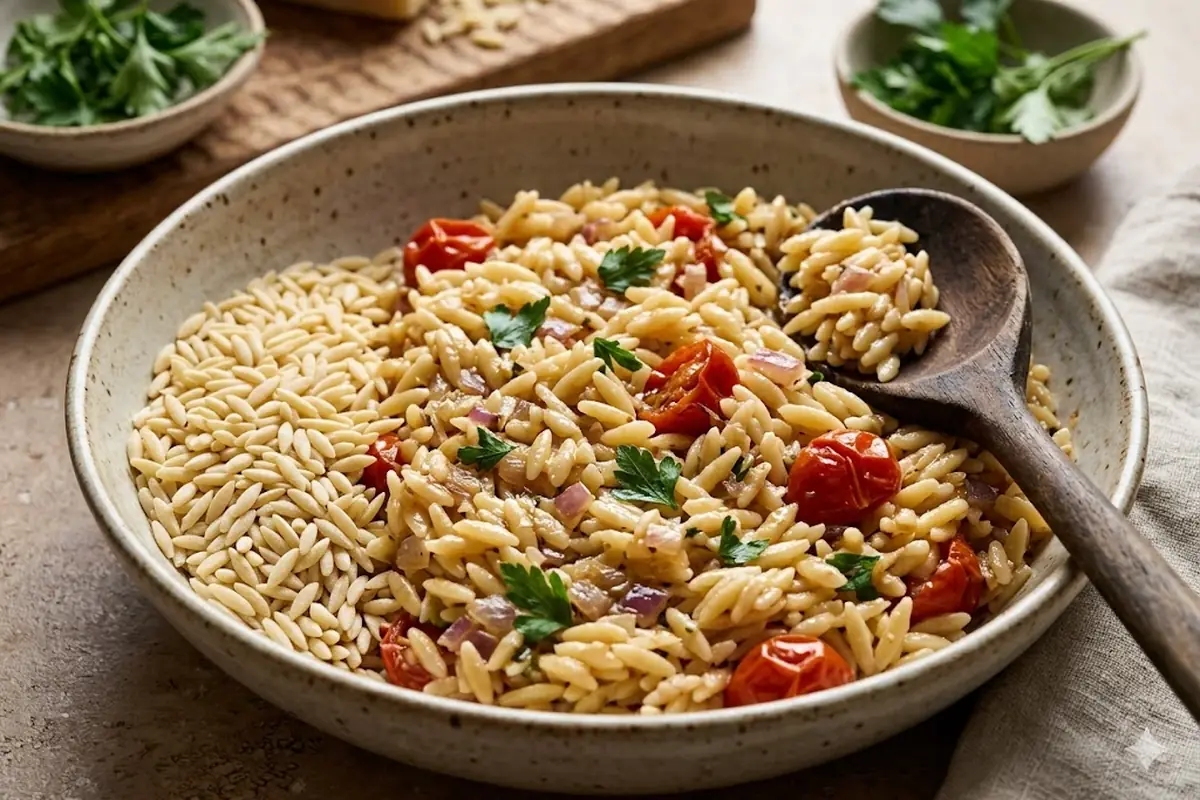
Four brands cover almost the entire gluten free orzo market in the United States, and they are not interchangeable. Each uses a different base flour, which changes the texture, the cook time, and how it holds up in a dish.
| Brand | Made from | Texture notes |
|---|---|---|
| DeLallo | Corn and rice | Sturdy, closest to wheat, holds shape |
| Jovial (brown rice) | Brown rice | Nutty, slightly softer, classic Italian feel |
| Jovial (cassava) | Cassava | Grain-free, tender, delicate |
| Banza | Chickpea | High protein, firm, needs a rinse |
DeLallo’s corn-and-rice blend was the winner in my hot-salad test. It stayed separate and toothsome even after sitting in dressing, where the brown rice version started to soften at the edges. Banza, the chickpea one, brings the most protein but has a faint legume flavor that you either like or you do not, and it benefits from a cold rinse after cooking to wash off the starchy film. If you need grain-free entirely, the cassava version is your only real option, but treat it gently because it goes from firm to soft in seconds.
How to Cook Gluten Free Orzo Without Mush
Here is the rule that fixes the number one complaint about gluten free pasta. Subtract 1 to 2 minutes from the package cook time, taste a grain, and pull it the moment it is just barely tender with a little resistance left. Gluten free starches keep absorbing water and softening after they leave the pot, so a piece that feels perfect in the boil will be overcooked by the time it hits the bowl.
Use plenty of water, at least 4 quarts per cup of orzo, and salt it at a ratio of about 1 tablespoon of salt per quart so the grains season as they cook. Stir in the first minute, because orzo is small and loves to clump and sink. Approximate times by brand: DeLallo’s corn-rice runs about 4 minutes, Jovial brown rice lands around 7 to 9, and Banza chickpea is also in the 7 to 9 range but should be rinsed after. Always set a timer and taste early.
For a cold salad, drain and rinse under cool water to stop the cooking and wash off surface starch, then toss with a little olive oil so the grains stay loose. For a hot side or soup, skip the rinse, drain, and dress immediately while the orzo can still drink up flavor. If you are folding it into a sauce, the same starch-and-water logic from our guide on how to thicken pasta sauce applies, since gluten free orzo sheds a lot of starch and can tighten a dish quickly.
Choosing a Brand for the Dish
The right orzo depends entirely on what you are making. Use this decision tree instead of grabbing whatever the store has.
- Cold pasta salad that sits out: pick DeLallo corn-rice. It resists going soft in dressing longer than the others.
- Soup or brothy dish: pick Jovial brown rice, but add it near the end, since it will keep swelling in hot liquid.
- Protein-forward bowl or a meal you want filling: pick Banza chickpea for roughly double the protein of rice-based orzo.
- Grain-free or AIP eating: pick Jovial cassava, the only grain-free choice, and watch it like a hawk near the end.
I keep two boxes in the pantry at all times now, the corn-rice for salads and the chickpea for quick weeknight dinners where I want the protein. They cook differently enough that I treat them as two separate ingredients, not two versions of the same thing.
Nutrition: What Changes With the Flour
The base flour does more than change texture. It moves the nutrition profile a lot, which matters if you are eating gluten free for reasons beyond celiac. Chickpea orzo carries roughly 20 to 21 grams of protein per serving, two to three times what a rice-based orzo offers, plus more fiber. Corn-and-rice orzo eats closest to traditional wheat pasta in both texture and macros, with most of its calories from starch. Cassava is the most neutral and the lowest in protein.
None of these are inherently healthier in a vacuum. A chickpea orzo is a smart pick if you want a sauce-light dish to still feel like a meal, while a rice-based one is better when you want the orzo to disappear into a sauce and not fight it. If you are watching protein from the other direction, our breakdown of low protein pasta covers the opposite end of the spectrum. America’s Test Kitchen has done useful comparative tasting of gluten free pastas, and their notes at americastestkitchen.com are worth a look before you commit to a brand.
Storing and Reheating Without It Falling Apart
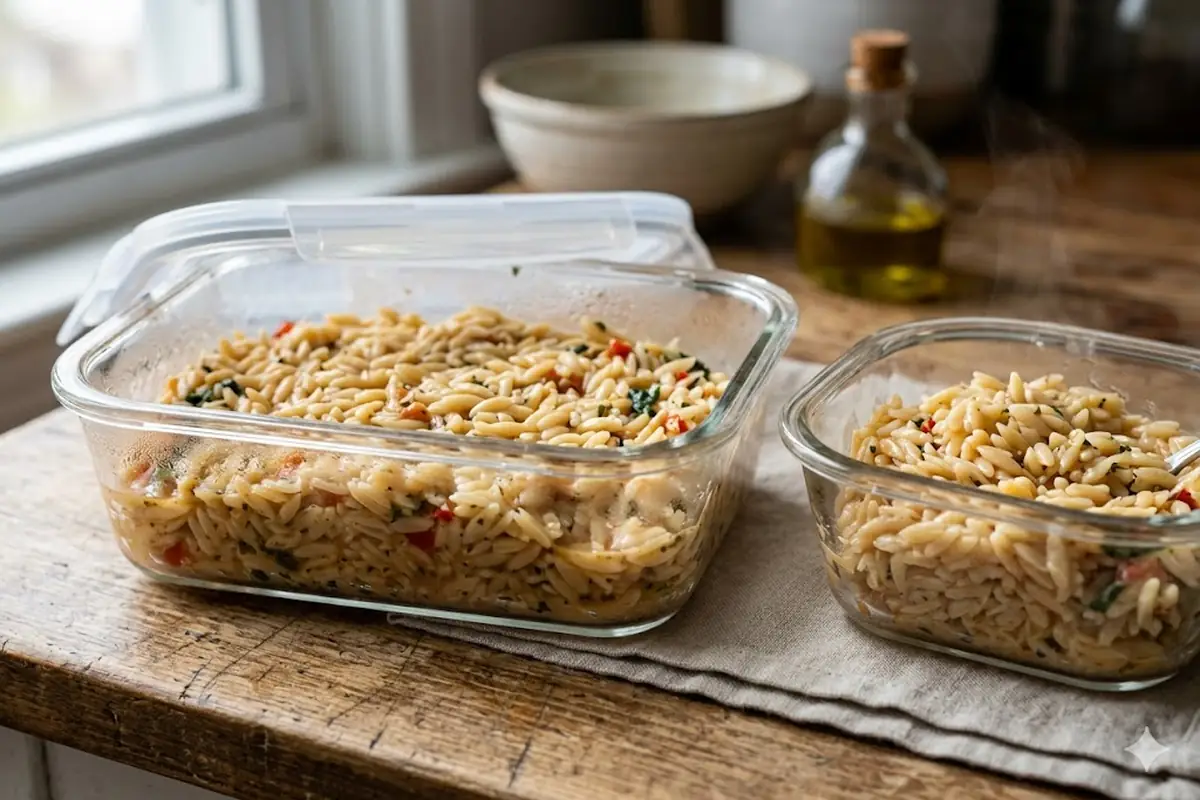
Gluten free orzo is more fragile than wheat pasta once cooked, so storage takes a little care. Cooked orzo keeps in an airtight container in the fridge for 3 to 4 days. Toss it with a teaspoon of olive oil before it goes in, which keeps the grains from fusing into a single starchy clump. Without the oil, rice and corn-based orzo tend to glue together overnight, and you spend the next day prying it apart.
Reheating is where most of the damage happens, because a second round of heat keeps softening starches that were already cooked. The gentlest method is a quick steam or a splash of water in a covered pan over low heat, just until warmed through, maybe 2 to 3 minutes. A microwave works if you add a tablespoon of water and heat in short bursts, stirring between, rather than blasting it. Whatever you do, stop the moment it is hot. Reheated gluten free orzo will never be quite as firm as fresh, so undercook the original batch a hair more than usual if you know there will be leftovers.
For uncooked orzo, store it like any dry pasta: a sealed container in a cool, dry cabinet, away from humidity. Most boxes carry a best-by date well over a year out, and the dry pasta is stable, but cassava and chickpea versions can pick up off flavors if they sit near strong-smelling pantry items, so keep them sealed.
The Mistakes That Ruin Gluten Free Orzo
A few errors come up over and over, and all of them are avoidable. The first is trusting the box time blindly. Package directions are calibrated to leave a safety margin, and for gluten free pasta that margin often lands you in mush territory. Taste, do not trust the timer alone.
The second is under-watering the pot. Orzo is tiny and dense, and when there is not enough water it crowds, drops the temperature, and cooks unevenly while shedding a thick starch sludge that makes everything gummy. Give it room. The third is skipping the stir in the first minute, which lets the grains settle and weld to the bottom of the pot in a scorched mat. A quick stir or two early on prevents it.
The last mistake is treating every brand the same. I did this for a while, cooking my chickpea orzo for the 4 minutes that worked for the corn-rice version, and ending up with chalky, undercooked centers every time. Read the brand’s own time, then adjust down from there. They are genuinely different products that happen to share a shape.
Substitutes When You Cannot Find Orzo
Gluten free orzo is not in every store, so it helps to know what stands in. Arborio rice cooks to a similar plump, tender bite and works in risotto-style dishes. Short broken gluten free spaghetti or small shapes like gluten free ditalini approximate the size. Quinoa or millet give you the grain-like scale with a different chew. None are a perfect match, but in a pinch they fill the same role on the plate. If you want to go fully homemade and skip the search entirely, our walkthrough on how to make pasta from scratch can be adapted with a gluten free flour blend, though shaping tiny orzo by hand is a labor of love. Bon Appetit also has good general guidance on gluten free pasta swaps over at bonappetit.com.
One more option worth naming: a quick chickpea-based sauce can carry a simpler grain. If you lean that way, the cream sauces guide pairs well with a firmer orzo that can stand up to a coating.
Ways to Use It Once You Nail the Cooking
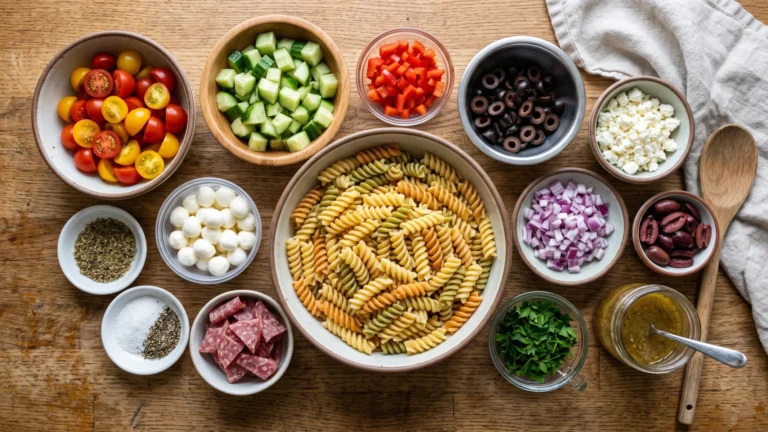
Orzo is one of the most flexible shapes in the pantry, and the gluten free versions slot into the same roles. The cold lemon-and-herb salad is the obvious starter: cooked, rinsed, and tossed with olive oil, lemon, feta, cucumber, and a fistful of parsley. The corn-rice orzo shines here because it holds for hours without going soft. Make it a few hours ahead and the flavors only get better.
For something warm, orzo works as a risotto stand-in. Toast the dry grains in a little olive oil for a minute, then add hot broth a ladle at a time, stirring, until the orzo is creamy and tender. Brown rice orzo gives the nuttiest result this way. It is faster than real risotto and forgiving, since you are not chasing the precise starch release of arborio. A handful of Parmesan and a knob of butter at the end pulls it together.
Orzo also disappears beautifully into soups, where it adds body and a satisfying chew. The trick in soup is to add it in the last 8 to 10 minutes and not before, because gluten free orzo will keep drinking broth and swelling, and a pot that looked soupy at dinner can turn to porridge by the time you reheat the leftovers. If that happens, just thin it with a splash of stock when you warm it up. For a heartier bowl, fold cooked chickpea orzo into a tomato or vegetable base for a protein bump that turns a side into a meal.
One combination I keep returning to is orzo with a quick brown-butter and toasted pine nut toss, finished with lemon zest. It takes ten minutes, leans on the nutty side of brown rice orzo, and tastes far more involved than it is. Simple ingredients, treated with a little attention, beat a complicated recipe made carelessly every time.
FAQ
Is orzo gluten free?
Standard orzo is not gluten free because it is made from durum wheat semolina. Several brands make certified gluten free orzo from brown rice, corn and rice, cassava, or chickpea flour. Always check for a gluten free label rather than assuming.
What is the best gluten free orzo brand?
For texture closest to wheat orzo, DeLallo’s corn-and-rice blend holds up best, especially in salads. Banza chickpea orzo is best for protein, and Jovial offers both a brown rice and a grain-free cassava version. The best one depends on your dish.
How long do you cook gluten free orzo?
Cook times vary by brand, but pull it 1 to 2 minutes before the package time. DeLallo corn-rice runs about 4 minutes, while brown rice and chickpea versions take roughly 7 to 9. Taste early, because gluten free starch keeps softening after draining.
Why does my gluten free orzo turn to mush?
Gluten free starches absorb water faster and keep softening off the heat. The fix is to undercook slightly, taste a grain near the end, and rinse under cool water for cold dishes to stop the cooking immediately.
Is gluten free orzo healthy?
It depends on the flour. Chickpea orzo has the most protein and fiber, around 20 grams of protein per serving. Rice and corn-rice versions are closer to traditional pasta in macros. Pick based on whether you want the orzo to add protein or stay neutral.
Can I substitute rice for orzo?
Yes. Arborio rice gives a similar plump, tender texture, and long-grain rice, quinoa, or millet work as rougher stand-ins. They will not match the pasta chew exactly but fill the same role in salads, soups, and sides.
Does gluten free orzo need to be rinsed?
For cold salads, yes, rinse to stop cooking and remove surface starch so the grains stay loose. Chickpea-based orzo benefits from a rinse even in hot dishes to wash off its starchy film. For hot sides, skip the rinse so it absorbs flavor.
Bottom Line
Gluten free orzo pasta has gotten good enough that you can use it almost anywhere wheat orzo goes, as long as you respect its quirks. Buy certified if you have celiac, match the brand to the dish, and undercook by 1 to 2 minutes to dodge the mush that gives gluten free pasta a bad name. DeLallo for salads, Banza for protein, Jovial cassava for grain-free, and a timer on the counter every single time. Once you stop expecting it to behave like wheat and start treating it as its own ingredient with its own rules, gluten free orzo becomes one of the easiest swaps in the kitchen, and a genuinely good one at that.