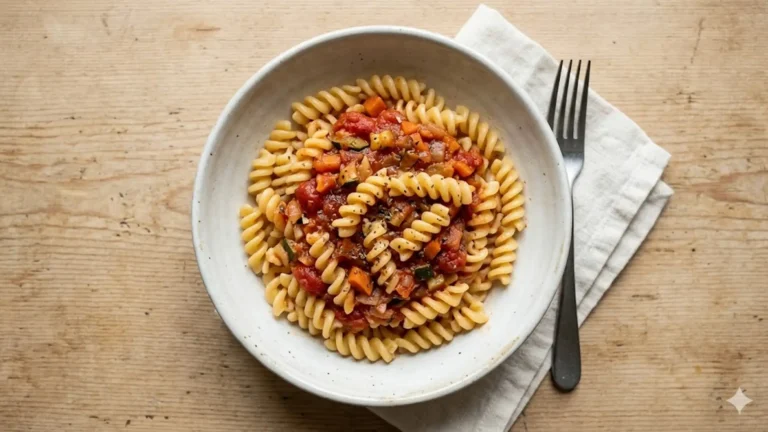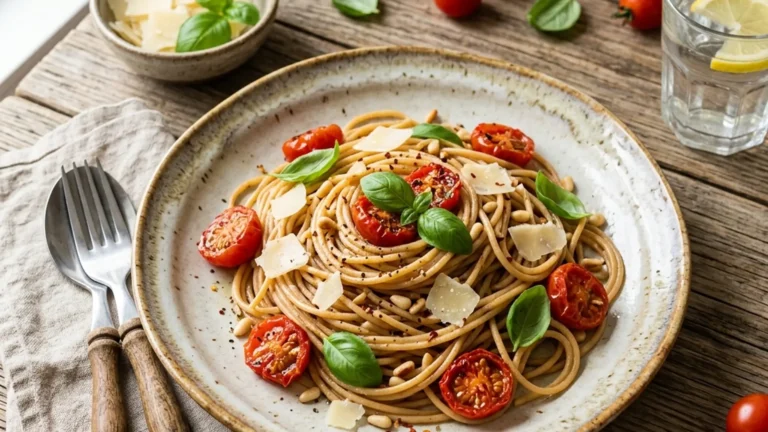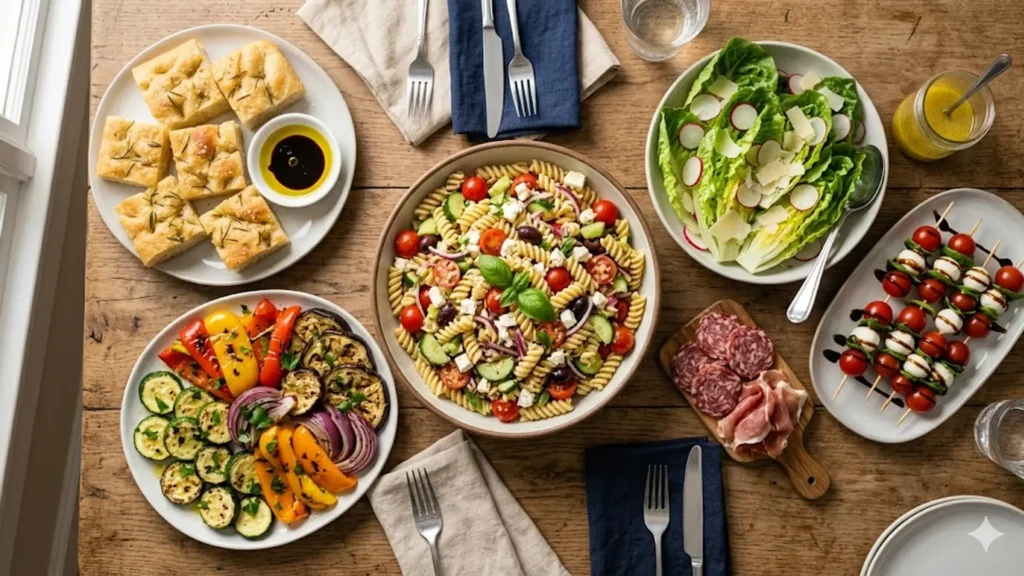
What to serve with pasta salad comes down to one question most lists skip: is the salad creamy or vinaigrette-based? A creamy, mayo-dressed pasta salad wants a smoky, grilled, slightly acidic partner like barbecue chicken or burgers to cut the richness. A light vinaigrette pasta salad wants a richer main like sausages, fried chicken, or salmon to fill it out. Match the contrast, not just the cuisine, and the plate works. That single distinction does more than any list of recipes, because it tells you why a pairing succeeds rather than just handing you another name to look up.
Almost every guide online hands you a list of thirty recipes and walks away. That is not pairing, that is a phone book. The reason a pasta salad plate sometimes feels off is balance, not the absence of options. I once set out a cookout spread that was pasta salad, potato salad, cornbread, and grilled chicken, and the whole table was beige and heavy with nothing bright to break it up. This guide gives you the logic to avoid that: how to pair by dressing type, how much to serve, and four ready-made menus for the situations you actually cook in.
Pair by Dressing, Not by Cuisine
The single most useful idea here is that the dressing on your pasta salad decides its best partner. Pasta salad is a chameleon, and what completes it depends entirely on whether it is rich and creamy or bright and tangy.
| Your pasta salad is… | Serve it with… | Why |
|---|---|---|
| Creamy / mayo-based | Grilled, smoky, acidic mains | Char and acid cut the richness |
| Vinaigrette / Italian | Rich, fatty mains | The acid balances the fat |
| Oil and herb (pesto, lemon) | Simple grilled proteins | Lets the herbs shine, not compete |
| Cheesy / loaded | Light, green, raw sides | Freshness offsets the heaviness |
So a creamy ranch pasta salad next to barbecue ribs works because the smoke and tang of the sauce slice through the mayo. A tangy Italian pasta salad next to fried chicken works because the vinaigrette resets your palate between rich bites. Get the contrast right and you barely need to think about the rest.
The Balance Rule That Saves a Plate
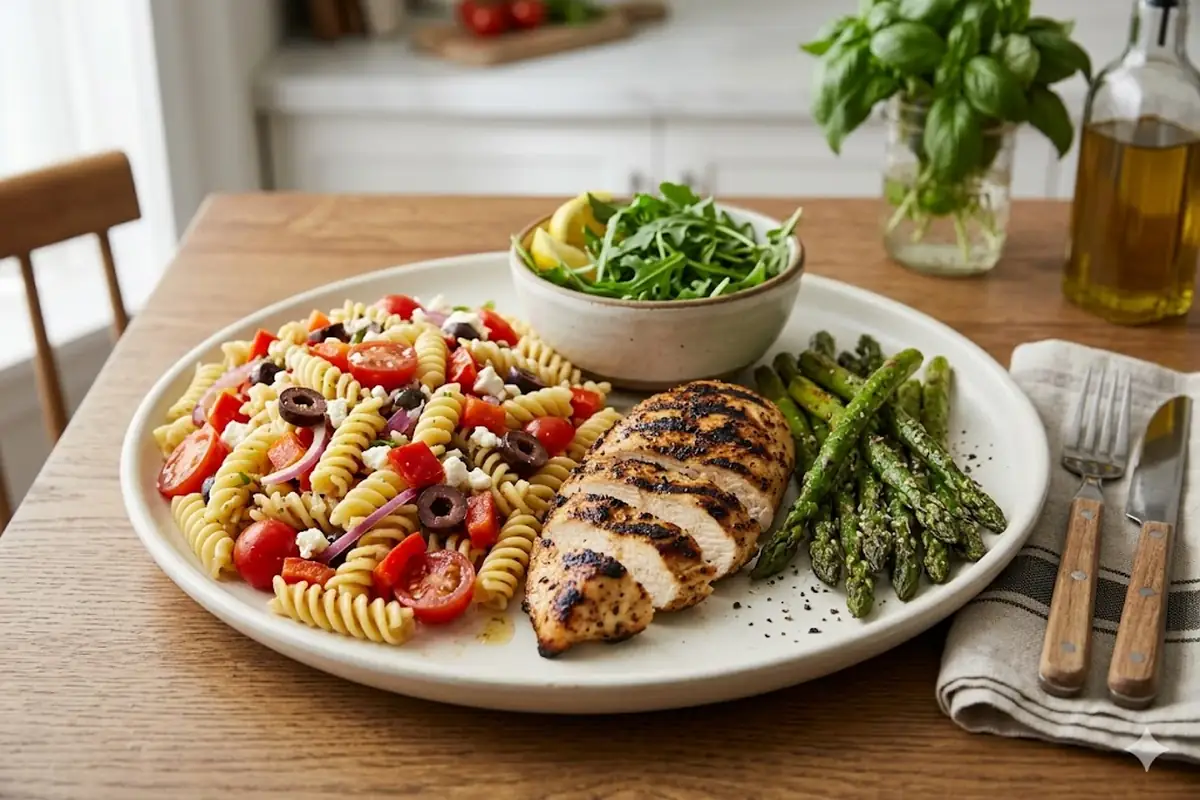
Every plate needs a contrast or it goes flat. The rule I cook by: pair heavy with light, and rich with acidic. If your pasta salad is the rich, creamy element, the rest of the plate should bring something fresh and sharp, like a crisp green salad, grilled vegetables, or a watermelon-and-feta plate. If your pasta salad is the light, vinaigrette element, you have room for a richer main and a heartier side.
That beige cookout I mentioned failed because every single item was soft, starchy, and pale. The fix was almost embarrassingly simple: I added a platter of grilled asparagus and a bowl of sliced tomatoes with flaky salt, and suddenly the table had color, crunch, and acid. Nothing else changed. One bright, sharp element rescues a heavy spread. Keep that in your back pocket and your plates stop feeling one-note.
How Much Pasta Salad Per Person
Portion is where hosts guess and get it wrong. The math is simple once you separate the two roles pasta salad plays. As a side dish alongside a main, plan on about half a cup per person, or roughly 4 ounces. As the centerpiece of a lighter meal, plan on about 1.5 cups per person plus a protein to round it out.
For a crowd, a single 16 ounce box of pasta makes roughly 8 to 10 side portions. Scale from there. People tend to under-make pasta salad for parties because it looks like a lot in the bowl, but it disappears fast at a cookout, so I always make about 25 percent more than the math suggests. Leftover pasta salad keeps well for a couple of days, so erring high costs you nothing.
Best Main Dishes to Serve With Pasta Salad
Grilled proteins are the natural partner because pasta salad is a cold, make-ahead dish and the grill handles the hot half of the meal. Burgers and hot dogs are the classic cookout pairing and lean toward creamy salads. Barbecue chicken or pulled pork bring smoke and sauce that love a tangy or creamy salad alike. For something lighter, grilled salmon, shrimp skewers, or a simple grilled chicken breast pair beautifully with a vinaigrette or pesto pasta salad.
Sandwiches are the other big category, especially for picnics and lunches. A caprese, a chicken club, or an Italian sub next to a small scoop of pasta salad makes a complete, portable meal. If you are leaning into a pasta-forward spread, our notes on different types of pasta can help you pick a salad shape that holds up next to handheld food. For a vegetarian table, a hearty bean or grain bowl fills the protein gap that pasta salad alone leaves.
Sides That Round Out the Spread
Once the main and the pasta salad are set, the sides should add what the plate is missing. If the pasta salad is creamy, add fresh and acidic: cucumber salad, a green salad with a sharp vinaigrette, grilled corn, or a fruit platter. If the pasta salad is light and tangy, you have room for something more substantial like baked beans, cornbread, or a potato side.
Grilled vegetables are the most reliable bridge in either direction. Zucchini, bell peppers, asparagus, and mushrooms hit the grill alongside the main, add color, and bring a smoky note that ties the cold salad to the hot food. A good slaw works similarly, adding crunch and acid. The goal is a plate with at least one creamy thing, one fresh thing, and one warm thing, so no single texture dominates.
Four Menus for the Situations You Actually Cook In
Frameworks are useful, but sometimes you just want the answer. Here are four complete plates, each balanced on purpose.
- Backyard BBQ: smoky barbecue chicken, creamy bacon-ranch pasta salad, grilled corn, and a bowl of sliced tomatoes with salt for acid.
- Potluck contribution: a sturdy Italian vinaigrette pasta salad that travels well and does not wilt, since you will not control the serving timing or the fridge.
- Light weeknight dinner: a lemon-herb pasta salad bulked up with grilled shrimp as the main, plus a simple arugula salad.
- Make-ahead picnic: chicken club sandwiches, a vinaigrette pasta salad, and fruit skewers, all of which hold up in a cooler for hours.
The potluck note matters more than it looks. A creamy, mayo-heavy pasta salad sitting in a warm car or on a sunny table for hours is a food-safety gamble, so for transport I default to a vinaigrette base that is far more forgiving out of refrigeration. If you do bring a creamy one, keep it on ice. For the salad itself, our guide on building a high protein version pairs naturally with these menus, and you can read more in our piece on low protein pasta if dietary needs steer the base. America’s Test Kitchen has good testing on cookout menus and make-ahead salads at americastestkitchen.com, and Bon Appetit at bonappetit.com has strong summer pairing ideas.
Pairings to Avoid
Knowing what not to serve is half the skill. The most common misstep is stacking starch on starch on starch. Pasta salad, potato salad, bread, and a pasta-based main on one table gives you a heavy, monotonous plate with no relief. Pick one or two starches, not four. If pasta salad is on the menu, skip the potato salad and lean into vegetables and protein instead.
The second trap is doubling up on creamy. A mayo-based pasta salad next to coleslaw, ranch dip, and a creamy potato salad turns the whole spread into one rich, beige blur. Your mouth gets tired by the third bite. If one dish is creamy, make the others fresh and sharp. The third is clashing strong flavors: a garlicky pesto pasta salad fights a sweet barbecue sauce rather than complementing it, so keep bold dressings with simpler mains. None of this is a hard rule, but the plates that disappoint almost always break one of these three.
Turning Pasta Salad Into the Main Event
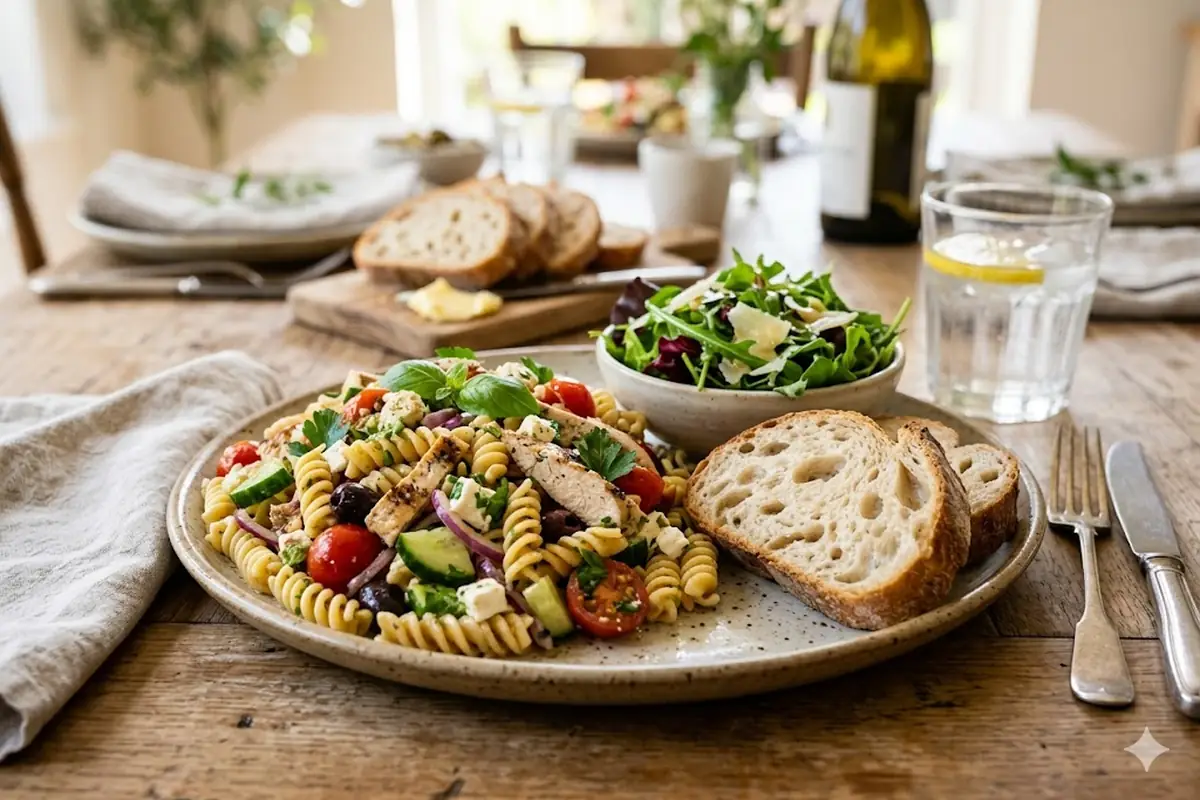
Sometimes you do not want a separate main at all, and pasta salad can carry the meal if you build it up. The move is to fold a real protein and some substance into the salad itself rather than serving it plain. Grilled chicken, canned tuna, chickpeas, salami and mozzarella, or hard-boiled eggs all turn a side into a meal. Add a handful of greens and some crunchy vegetables and the bowl stops being a side and becomes lunch.
When pasta salad is the main, portion up to about 1.5 cups per person and serve just one light side, like a simple green salad or some fresh fruit, so the meal still feels complete without a second cooked dish. This is my default for hot summer nights when I do not want to turn on the stove. A loaded pasta salad, a glass of something cold, and sliced tomatoes on the side is a full dinner with almost no cooking. For ideas on building that protein into the bowl, the same logic from our high protein salad approach applies, and our guide to how to make pasta from scratch can give the base more character if you want to go all in.
Seasonal and Occasion Thinking
Pasta salad shows up most in warm weather, and the pairings should follow the season. In summer, lean on the grill and on raw, juicy produce: corn, tomatoes, cucumbers, watermelon, stone fruit. These are at their peak and they bring the acid and freshness that balance a cold pasta dish. The whole meal can come together without much time at a hot stove, which is the point in July.
For a cooler-weather gathering or an indoor potluck, you can pair pasta salad with heartier, warmer items: a roasted chicken, a baked ham, soups, or warm rolls. The contrast logic still holds, you are just sourcing the fresh, bright element from a sharp slaw or a citrusy green salad instead of peak summer produce. Thinking about the occasion also tells you how forgiving your salad needs to be. A plated dinner where everything is served at once gives you freedom, while a buffet or a long picnic demands a salad that holds its texture and stays safe out of the fridge, which again points you toward a vinaigrette base over a creamy one.
Building a Complete Plate, Step by Step
If you want a repeatable method instead of a vibe, here is how I assemble a balanced pasta salad meal every time. Start by naming the pasta salad’s personality: creamy, tangy, or herby. That one word decides everything downstream. Next, pick a main that contrasts it, using the dressing table above. Then choose a fresh element, usually a raw vegetable or fruit, to bring acid and crunch. Finally, add a warm element if the meal needs heft, like grilled vegetables or bread.
Run that sequence and you end up with a plate that has range: something creamy, something sharp, something warm, something cold. The mistake hosts make is choosing dishes they like individually without checking how they sit together. A great pasta salad and a great potato salad can still make a dull plate if they are both soft, pale, and rich. Pairing is about the relationships between dishes, not the quality of any one of them. Once you internalize that, you stop needing lists of thirty recipes, because you can look at what is in your fridge and build a balanced meal from whatever is there.
Drinks and Dessert to Finish
A pasta salad spread rarely needs a fussy beverage, but the same balance logic applies. A creamy, heavy plate wants something crisp and cold: lemonade, iced tea, a dry sparkling water, or a light beer. A lighter, tangy spread can handle a fruitier drink. For dessert, go in the opposite direction of your meal. A heavy, creamy meal ends well with something light like a fruit salad or sorbet, while a lighter meal earns a richer finish like brownies or an ice cream sundae. The pattern is the same one running through this whole guide: contrast keeps the meal from feeling like one long note. If you want a sweet-sauce angle for dessert, the dessert sauces guide has options.
FAQ
What main dish goes with pasta salad?
Grilled proteins are the best match because pasta salad is a cold, make-ahead dish. Pair creamy pasta salads with smoky barbecue chicken, burgers, or pulled pork, and pair tangy vinaigrette salads with richer mains like fried chicken, sausages, or salmon. Match contrast to the dressing.
Is pasta salad a side or a main?
It can be either. As a side, plan about half a cup per person. As a main, serve about 1.5 cups per person and add a protein like grilled chicken, shrimp, or beans so the meal is filling and balanced.
What sides go with pasta salad?
Pick sides that add what the salad lacks. With a creamy pasta salad, serve fresh and acidic sides like cucumber salad, grilled corn, or a green salad. With a tangy salad, you have room for heartier sides like baked beans or cornbread.
How much pasta salad do I need per person?
For a side, about half a cup or 4 ounces per person. A 16 ounce box of pasta makes roughly 8 to 10 side servings. For a party, make about 25 percent extra, since pasta salad disappears quickly at cookouts.
What pasta salad is best for a potluck?
A vinaigrette or oil-based pasta salad travels best because it holds up out of refrigeration far better than a mayo-based one. Creamy salads can become a food-safety risk if they sit warm for hours, so keep those on ice if you bring them.
What goes with creamy pasta salad?
Creamy pasta salad pairs best with smoky and acidic foods that cut its richness, like grilled barbecue chicken, burgers, sliced tomatoes with salt, or a sharp green salad. Avoid pairing it with other heavy, creamy dishes that make the plate one-note.
Can pasta salad be a full meal?
Yes, especially a high protein version with chicken, beans, or cheese folded in. Serve a larger portion of about 1.5 cups, add a fresh side, and you have a complete lunch or light dinner without needing a separate main dish.
Bottom Line
What to serve with pasta salad is really a balance question. Read the dressing first: creamy salads want smoky, acidic partners, and tangy salads want richer ones. Build every plate with a creamy element, a fresh element, and a warm element so no texture takes over. Portion at half a cup as a side or 1.5 cups as a main. Do that and your pasta salad stops being an afterthought and starts pulling the whole meal together. The best hosts are not the ones with the longest recipe lists, they are the ones who understand how a few well-chosen dishes balance each other on the plate, and that is a skill you can practice with a single bowl of pasta salad and whatever the season is giving you.