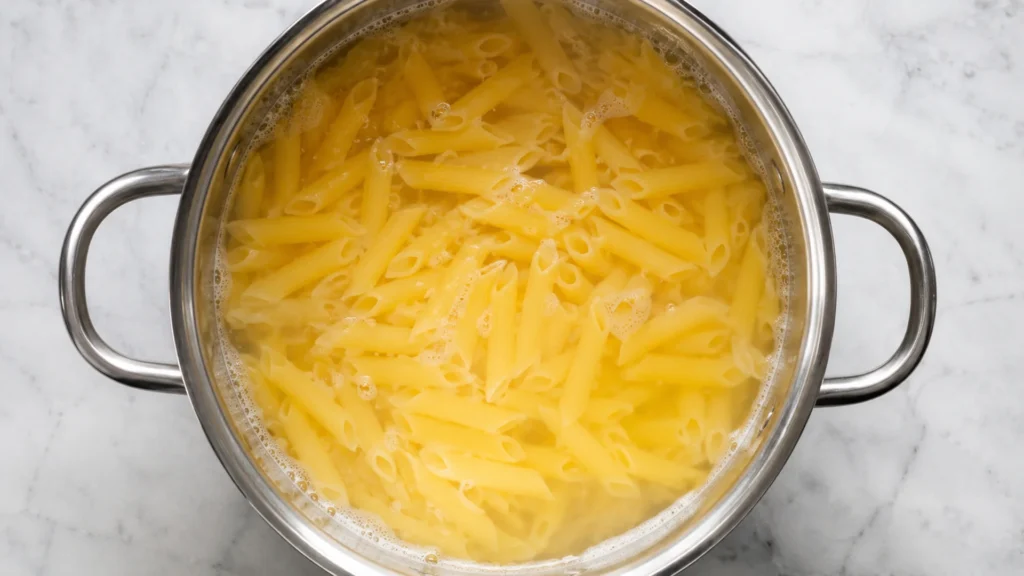
Learning how to boil pasta well is the single most useful skill in an everyday kitchen, and it is easier than the internet makes it look. The whole job comes down to a big pot of well-salted water at a rolling boil, the right amount of pasta, a stir or two early on, and pulling the noodles a minute before the box says so. Do that, reserve a cup of the starchy cooking water, and skip the rinse, and you will get tender, al dente pasta that grabs onto sauce instead of sliding off it. Everything else is detail that helps you nail it every single time.
This guide walks through the process from the cold empty pot to the drained, sauce-ready plate, and it explains the reasoning behind each step so you can adjust on the fly. We will settle the salt question, kill the oil-in-the-water myth, give you US-unit ratios and a timing table by shape, and troubleshoot the four things that go wrong most often: sticking, boiling over, mushy noodles, and undercooked centers. By the end, boiling pasta will be muscle memory.
What you need before you start
Good pasta starts before the water even gets warm. You need a genuinely large pot, plenty of water, real salt, and a way to time and test. The most common mistake is using too little water in too small a pot, which drops the temperature when the pasta goes in and makes the noodles stick together.
| What | Amount | Why it matters |
|---|---|---|
| Water | 4 quarts per 1 pound of pasta | Room to move keeps noodles from sticking |
| Salt | 1 to 2 tablespoons per gallon | Seasons the pasta from the inside |
| Pot | 6-quart or larger | Holds a full boil without crowding |
| Pasta | 2 ounces dry per person | About 1 cup cooked per serving |
A bigger pot also recovers its boil faster after you add the pasta, which keeps the cooking even. If you are cooking for a crowd, do not jam two pounds into one medium pot. Use the biggest vessel you own or split the job across two pots. The water is free, and the difference in the finished noodles is real.
Step by step: how to boil pasta
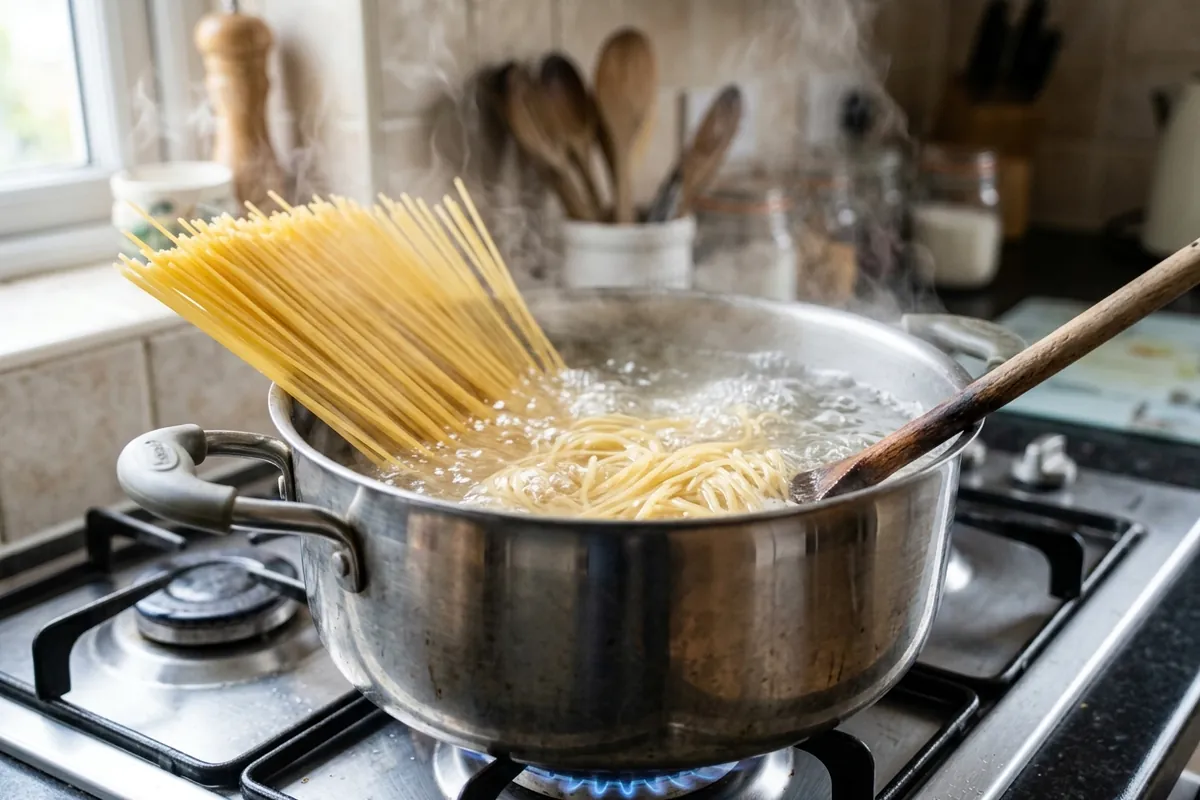
Here is the full sequence. Each step has a job to do, so do not skip them even when you are in a hurry.
1. Bring the water to a rolling boil
Fill your pot about two-thirds full and bring it to a full, rolling boil over high heat before anything else goes in. A rolling boil is one that keeps churning even when you stir it, not a lazy simmer with a few lonely bubbles. Adding pasta to water that is not fully boiling is the fastest route to gummy, stuck-together noodles, because the surface starch gelates slowly and the strands cling. Cover the pot to bring it up faster, then uncover once it boils.
2. Salt the water generously
Once the water boils, add the salt. This is your only chance to season the pasta itself, and it makes a bigger difference than people expect. Aim for one to two tablespoons of salt per gallon of water. The water should taste noticeably salty, like a well-seasoned soup. Unsalted pasta tastes flat no matter how good the sauce is, and you cannot fix it later. The salt does not meaningfully toughen the noodles or slow the boil, so be generous.
3. Add the pasta and stir
Add all the pasta at once and stir immediately. For long shapes like spaghetti, fan it out across the surface and use tongs or a spoon to push it down gently as the ends soften, until the whole strand is submerged within 20 or 30 seconds. The early stir is the most important one, because that is when the surface starch is stickiest and the noodles are most likely to weld together. Stir again a couple of times in the first two minutes, then occasionally after that.
4. Cook to just shy of al dente
Set a timer for one to two minutes less than the lowest number on the package directions, then start tasting. Al dente, which means to the tooth in Italian, is pasta that is tender but still offers a slight, pleasant resistance in the center, never hard or chalky and never soft and mushy. Bite a piece in half: you want a hairline of firmer pasta at the very center, not a white raw core. Remember that the pasta keeps cooking from residual heat after you drain it, and even more if it finishes in a hot sauce, so stopping a touch early is correct.
5. Reserve water, then drain without rinsing
About a minute before the pasta is done, dip a measuring cup into the pot and reserve one to two cups of the cloudy, starchy cooking water. Then drain the pasta in a colander, and do not rinse it. The starch clinging to the noodles is what helps sauce grip and turn glossy, and rinsing washes it all away. The reserved water is liquid gold for finishing a sauce, which we will get to next.
Salt, oil, and the myths worth ignoring
Two pieces of old advice cause more confusion than any others, and both deserve a clear answer so you can stop worrying about them.
The first is salt. Yes, you really do need a lot, and no, it will not make your pasta taste like the ocean if you keep it in the one-to-two-tablespoons-per-gallon range. There is an old claim that salt makes water boil faster or hotter; the effect at cooking amounts is negligible, so salt for flavor, not for speed. The second myth is adding oil to the boiling water to stop sticking. Skip it. Oil floats on top and does almost nothing while the pasta is submerged, and worse, it can coat the drained noodles so sauce slides off. The real anti-stick tools are enough water and an early stir, not oil.
Do you need to rinse pasta?
For almost every hot dish, no. Rinsing strips the starch that sauce needs to cling, and it cools the noodles so they will not absorb a hot sauce as well. The one exception is when you are making a cold pasta salad: there, a quick rinse under cool water stops the cooking and keeps the noodles from clumping as they chill. For everything else, drain and dress.
How long to boil pasta by shape
Different shapes and thicknesses take different times, and fresh pasta is in a category of its own. The package is your best starting point, but this table gives you a reliable ballpark for dried pasta, always tasting a minute or two early.
| Pasta shape | Approximate boil time | Notes |
|---|---|---|
| Angel hair (capellini) | 3 to 5 minutes | Very thin; watch it closely |
| Spaghetti, linguine | 8 to 11 minutes | Stir early to keep strands apart |
| Penne, rigatoni, ziti | 10 to 13 minutes | Tube shapes hold sauce well |
| Farfalle, fusilli, rotini | 9 to 12 minutes | Test the thick centers of bowties |
| Fresh pasta (egg) | 2 to 4 minutes | Done when it floats to the top |
| Lasagna sheets | 8 to 10 minutes | Or use no-boil sheets in saucy bakes |
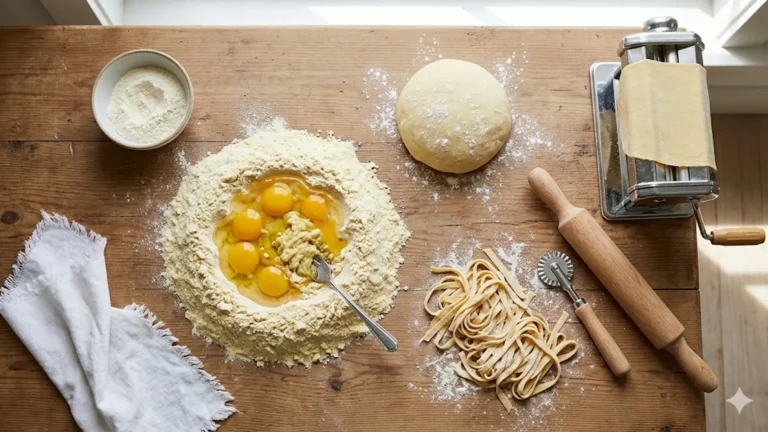
Fresh pasta cooks dramatically faster than dried because it is already hydrated, and it is ready almost the moment it bobs to the surface. If you have never made your own, our guide on how to make pasta from scratch walks through the dough and rolling, and the boil times above will get you to the plate. To match a shape to a sauce, our overview of types of pasta explains which noodles suit which dishes.
The reserved pasta water trick
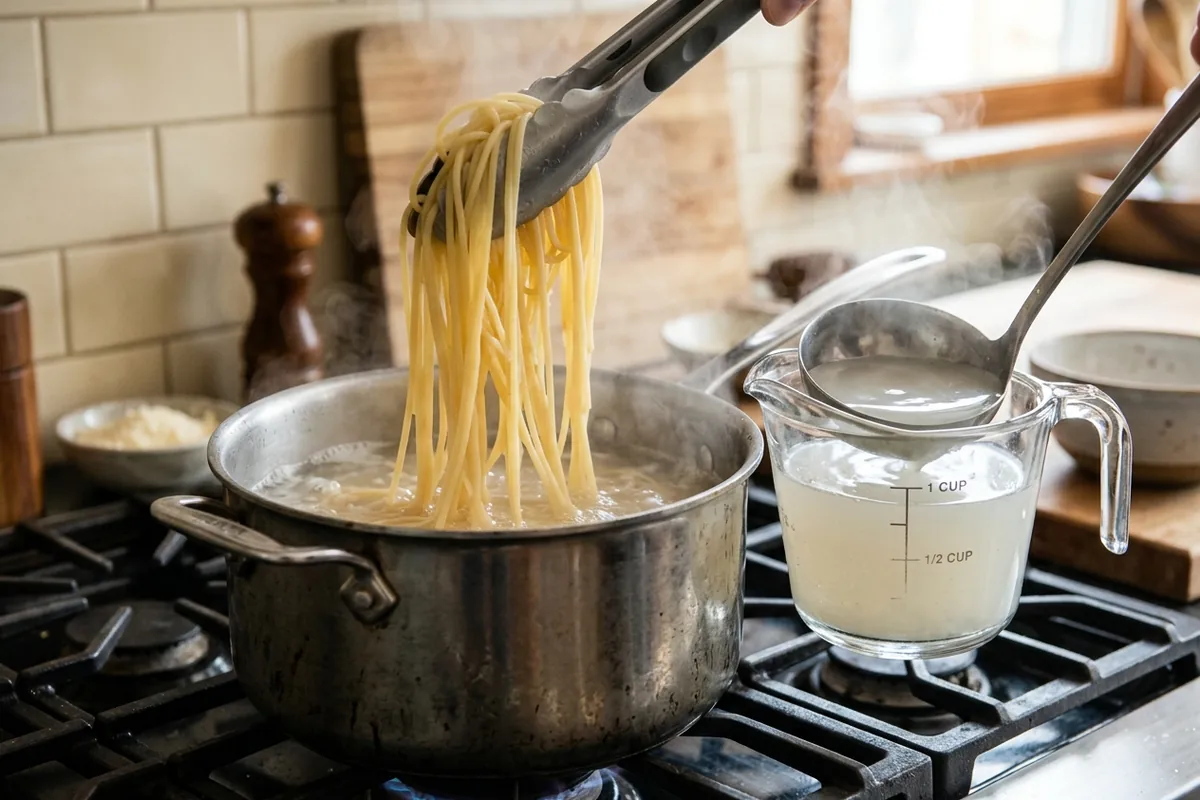
If there is one habit that separates a good plate of pasta from a great one, it is finishing the noodles in the sauce with a splash of reserved cooking water. That cloudy water is full of dissolved starch, and that starch is an emulsifier: it helps fat and liquid combine into a smooth, glossy coating that clings to every noodle instead of pooling at the bottom of the bowl.
Save more than you think you need, because it is far easier to pour extra down the drain than to wish you had it after the pot is empty. A heatproof measuring cup dipped into the pot just before draining is the simplest way to grab it, and setting it next to the stove means you will actually remember to use it.
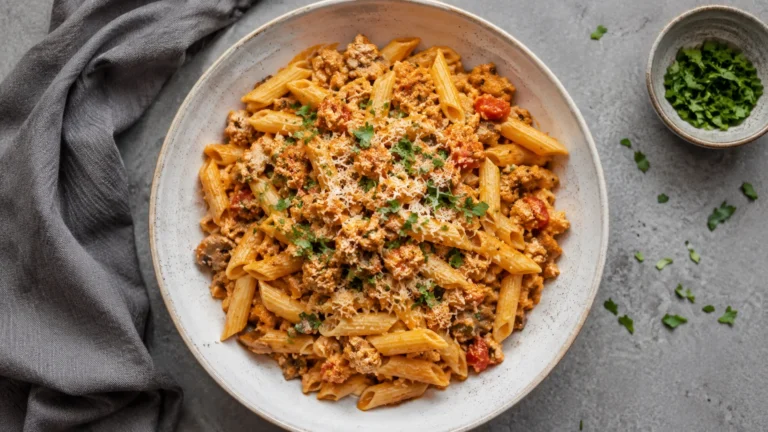
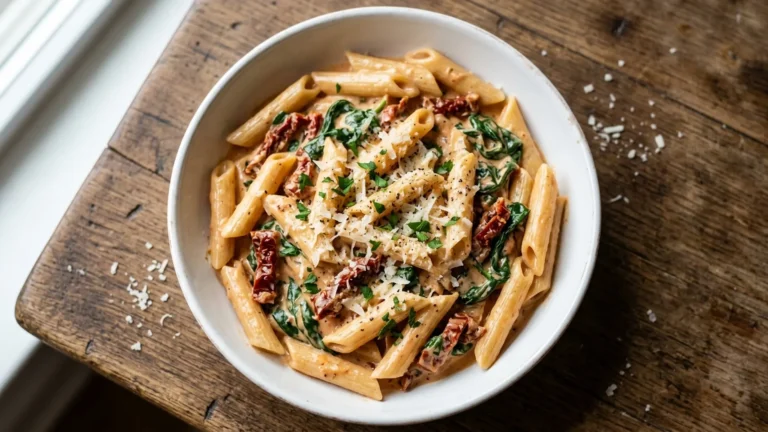
To use it, add your drained pasta to the pan of sauce over medium heat, then splash in a few tablespoons of the reserved water and toss for a minute or two. The sauce will tighten and turn silky as it coats the pasta. Add more water a little at a time if it looks dry. This finishing step is exactly how restaurant pasta gets that luxurious cling, and it costs nothing but the cup of water you remembered to save. If your sauce is thin to begin with, our guide on how to thicken pasta sauce covers the rest of your options. The technique is endorsed across cooking authorities, including Food Network, which calls the starchy water the secret to a clingy sauce.
Cooking pasta ahead of time
Boiling pasta to order is ideal, but real life sometimes calls for cooking it in advance, whether you are feeding a crowd or prepping lunches for the week. The technique changes a little when you are not serving immediately. Cook the pasta to just under al dente, a minute firmer than usual, because it will soften slightly when you reheat it. Drain it, toss it with a thin coat of olive oil to prevent clumping, and spread it on a sheet pan to cool quickly rather than leaving it in a hot pile that keeps cooking.
When it is time to serve, you have two easy paths. For a hot dish, drop the cooked, cooled pasta into a strainer and dunk it in boiling water for 30 to 60 seconds to revive it, then drain and sauce. For a baked dish or a sauced reheat, add the pasta straight to the warm sauce and let it come up to temperature together. Either way, the slightly-firmer initial cook is what keeps make-ahead pasta from turning soft. This is also the right method when you are building a big pasta salad and want the noodles cooked but not mushy by the time the dressing soaks in.
Holding pasta hot for a crowd
If you need to keep boiled pasta warm for a buffet or a big family dinner, toss the drained noodles with a little oil or some of the sauce, then hold them in a covered dish in a low oven set around 200 degrees Fahrenheit, or in a slow cooker on the warm setting. Stir occasionally and add a splash of reserved pasta water or sauce if they look dry. Held this way, pasta stays pleasant for an hour or so without overcooking, which buys you breathing room when the rest of the meal is running behind.
Troubleshooting common pasta problems
Even simple boiling goes sideways sometimes. Here is how to diagnose and fix the four most common issues.
| Problem | Cause | Fix |
|---|---|---|
| Noodles stick together | Too little water, no early stir, or oil | More water, stir in the first 2 minutes |
| Pot boils over | Too full, foam from starch | Lower heat slightly, leave lid ajar |
| Pasta is mushy | Overcooked or simmered, not boiled | Taste 2 min early; keep a rolling boil |
| Pasta is chalky inside | Undercooked, pulled too soon | Cook 1 to 2 minutes more, retest |
Boiling over is mostly a foam problem: the starch released by the pasta creates bubbles that climb the pot. Lowering the heat just enough to keep a vigorous boil without a violent one, and leaving the lid slightly ajar, usually solves it. If you cook a lot of pasta, you will learn to recognize the look of a perfect rolling boil and the early signs of a foam climb, and you will adjust without thinking. For the record, pasta is a perfectly reasonable part of a balanced diet, and the nutrition rundown at Healthline puts the carb worries in context.
FAQ
How long should I boil pasta?
Most dried pasta takes 8 to 13 minutes depending on the shape, while fresh egg pasta needs just 2 to 4 minutes. Always start tasting one to two minutes before the package time, and pull the noodles at al dente, when they are tender with a slight resistance at the center, since they keep cooking after draining.
Should I add oil to the pasta water?
No. Oil floats on top of the water and does little to prevent sticking while the pasta cooks, and it can coat the drained noodles so sauce slides off instead of clinging. The real ways to stop sticking are using plenty of water and stirring the pasta during the first couple of minutes.
How much salt do I put in pasta water?
Use about one to two tablespoons of salt per gallon of water. The water should taste clearly salty, like a seasoned soup, because this is the only chance to season the pasta itself. Add the salt once the water reaches a boil. Unsalted pasta tastes flat no matter how good the sauce is.
Do you boil pasta covered or uncovered?
Cover the pot to bring the water to a boil faster, then uncover it once you add the pasta. Cooking uncovered keeps the pot from boiling over from starchy foam and lets you stir and watch the noodles. If you need to manage a near boil-over, leave the lid slightly ajar rather than fully on.
Why should I save pasta water?
Reserved pasta water is full of starch that acts as an emulsifier, helping your sauce turn smooth and glossy and cling to the noodles. Add a splash to the pan when you toss the drained pasta with sauce, and the sauce tightens into a silky coating. Save one to two cups before draining, just in case.
Should I rinse pasta after boiling?
Not for hot dishes. Rinsing washes away the surface starch that sauce needs to grip, and it cools the noodles so they absorb sauce poorly. The only time to rinse is for a cold pasta salad, where a quick cool-water rinse stops the cooking and keeps the noodles from clumping as they chill.
Bottom line
Boiling pasta well is not complicated, but a handful of small choices make all the difference: a big pot of water at a true rolling boil, enough salt that the water tastes seasoned, an early stir, and tasting a minute or two before the timer to catch al dente. Save a cup of the starchy water, skip the rinse, and finish the noodles right in the sauce so everything comes together glossy and clinging. Ignore the oil myth, salt for flavor rather than speed, and lean on the timing table when you switch shapes. Get these basics into your hands and you will turn out restaurant-quality pasta on a weeknight without a second thought.