How to reheat pasta sounds like a non-question until you have eaten enough rubbery, dried-out, clumped-together leftovers to know better. Reheating is its own skill, because the difference between leftovers that taste like a fresh plate and leftovers that taste like punishment comes down to a few small techniques that almost no one is taught. This guide covers all of them: the best method for each kind of leftover, plain versus sauced versus baked, the exact moves that restore moisture, how to handle frozen pasta, the food-safety temperature that actually matters, and the specific mistakes that turn good pasta into a sad lunch. Pick the right method for what you have and leftover pasta becomes something you look forward to.
The reason pasta reheats badly so often is that two things happen to it in the fridge. The noodles keep absorbing moisture and the starch firms up, a process that makes pasta dense and dry, and any sauce thickens and separates as fat and liquid pull apart. Every good reheating technique is really just a way of reversing those two changes: adding moisture back and re-emulsifying the sauce gently. Once you understand that you are fixing dryness and broken sauce, the right method for any situation becomes obvious.
The One Rule That Fixes Almost Everything: Add Moisture
If you remember a single thing from this guide, make it this: pasta loses moisture in the fridge, so you must add it back when you reheat. A splash of water, broth, or a little extra sauce, added before or during reheating, is the difference between rubbery and revived. The best version of this trick happens before the leftovers ever go in the fridge: when you store cooked pasta, toss it with a little olive oil or a spoonful of reserved pasta water, and the noodles stay loose and separated instead of fusing into a brick.
Cream and cheese sauces are the most prone to splitting and drying as they sit, so they benefit most from a gentle hand and added liquid. Tomato and oil-based sauces are more forgiving but still firm up and want a little water to loosen. Whatever the sauce, the move is the same: introduce a small amount of liquid, heat gently, and stir or toss as it warms so the sauce re-emulsifies into a glossy coat. Aggressive high heat with no added moisture is what produces the dreaded rubbery texture, every time.
Stovetop: The Best All-Around Method
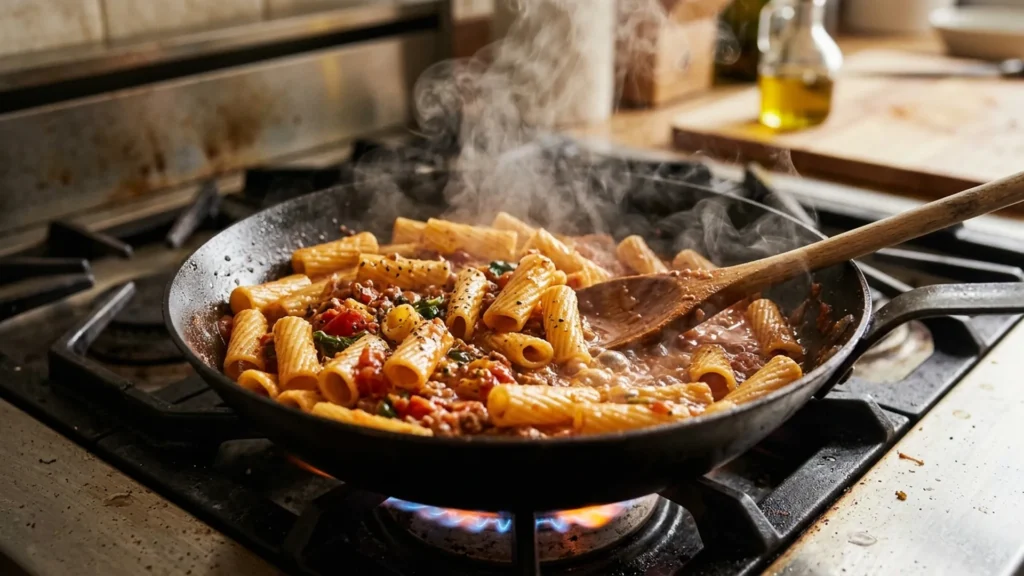
For most leftover pasta, especially anything with a creamy, cheesy, or oily sauce, the stovetop is the best method because it heats gently and lets you re-emulsify the sauce as you go. Use a nonstick or regular skillet over medium-low heat, add the pasta with a splash of water, broth, or a little extra sauce, and stir or toss as it warms. The added liquid plus the gentle heat coaxes a broken sauce back together into something close to its original glossy state.
This method shines for sauced pasta because you are not just heating the noodles, you are rebuilding the sauce. For a cream sauce, a splash of milk or cream works better than water. For an oil-based dish, a little olive oil and pasta water restores the slick. Keep the heat moderate, do not rush it, and stop the moment it is hot through, because overcooking on a second pass is what makes leftovers chewy. The stovetop takes a few minutes longer than the microwave but the texture payoff is large, and it is the method professionals use for exactly this reason.
Microwave: Fast, and Fine If You Do It Right
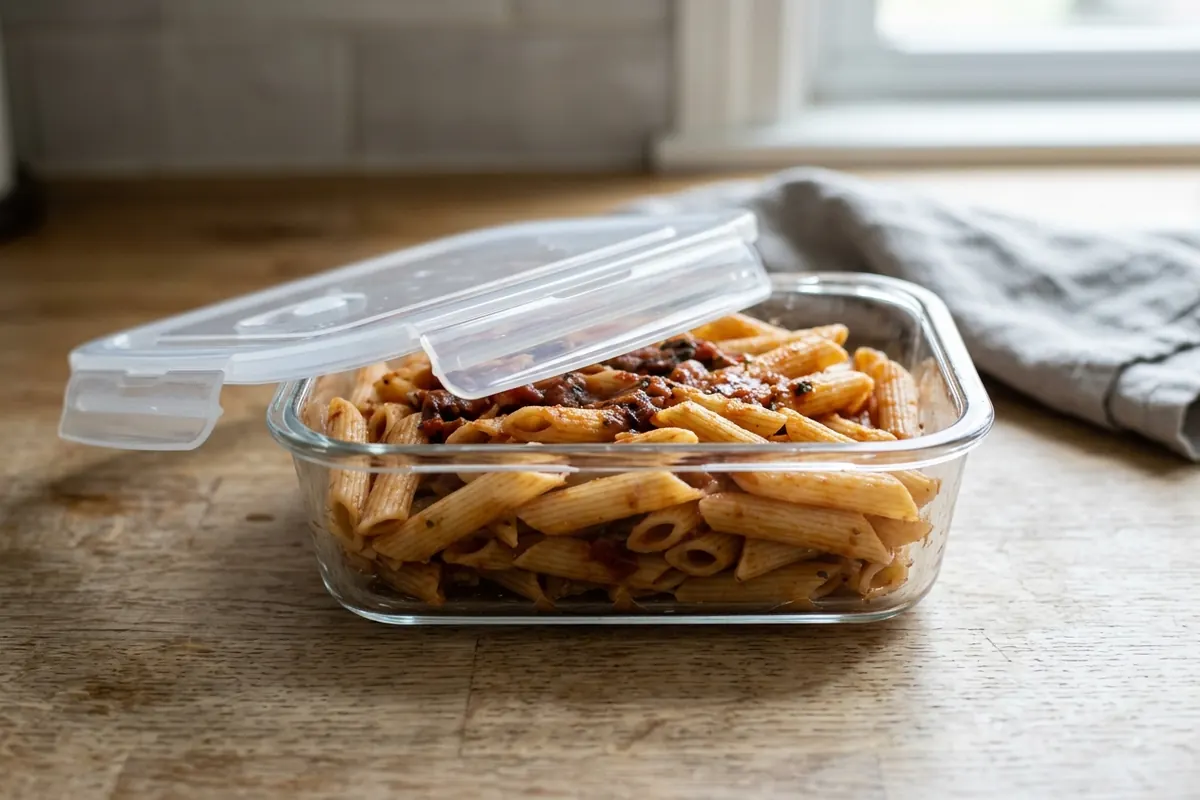
The microwave gets a bad reputation for pasta, but most of that is bad technique rather than the appliance itself. Done correctly it is perfectly good for plain pasta and lighter sauces, and it is unbeatable for speed. The keys are moisture, a cover, and gentle bursts. Put a single serving in a microwave-safe dish, add a splash of water or extra sauce on top, cover the dish with a lid or a damp paper towel to trap steam, and heat at medium power in short increments, around a minute to ninety seconds, stirring between bursts.
The cover is what most people skip, and it matters: trapping steam keeps the pasta moist and heats it evenly instead of drying the surface while the center stays cold. Stirring between intervals prevents the hot-edges-cold-middle problem that makes microwaved pasta uneven. Heating at full power in one long blast is the classic mistake that produces rubbery noodles, so resist it. For plain pasta with just oil, an even quicker trick is to drop it in a strainer and dip it into boiling water for about thirty seconds, which warms it through without drying it out at all.
Oven and Air Fryer: Best for Baked Pasta
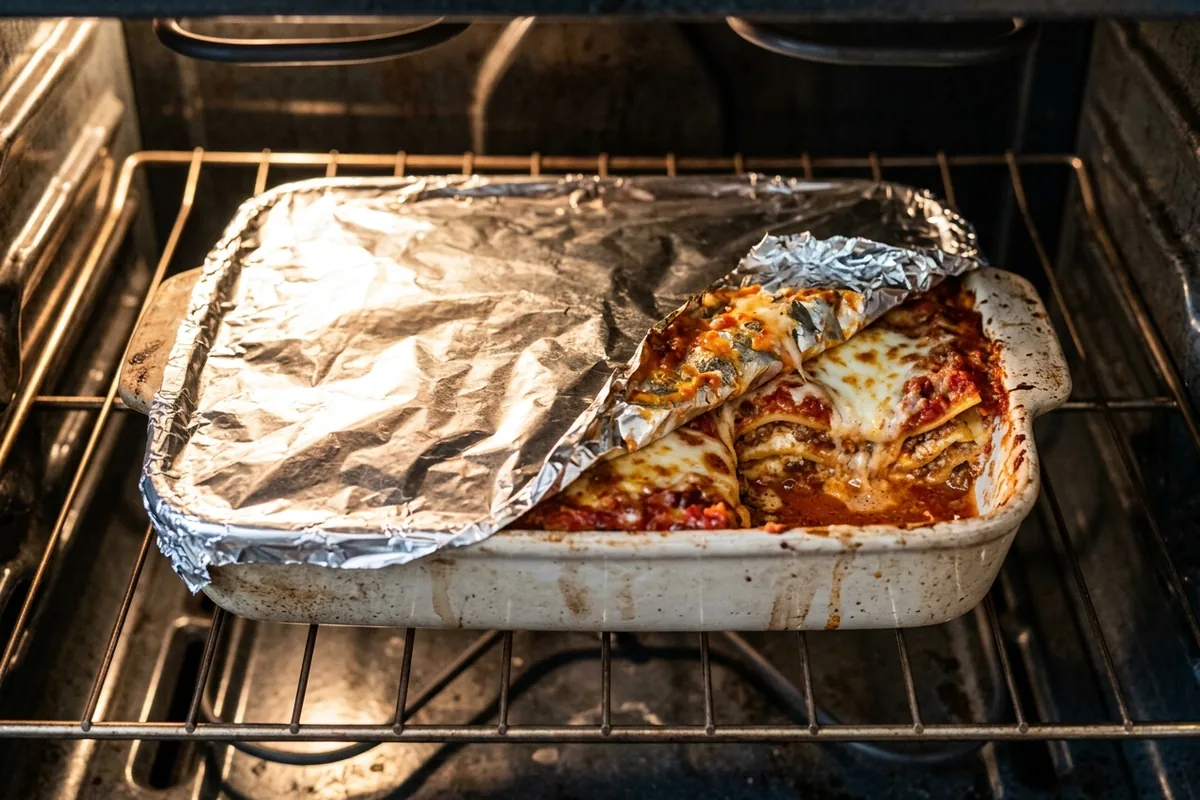
Baked pasta dishes, lasagna, baked ziti, mac and cheese, are a different situation, and the oven is the right tool. Cover the dish with foil to trap moisture, add a little extra sauce or a splash of water if it looks dry, and warm it at a moderate temperature, around 325 to 350 degrees Fahrenheit, until heated through. The foil prevents the top from drying and burning before the center is hot, and you can remove it for the last few minutes if you want to re-crisp the top. This is slower than the microwave but it is the only way to reheat a baked dish without rubbery edges and a cold middle.
The air fryer has become a popular tool for crisping up baked pasta portions and any dish with a craveable crust, since it restores a crunchy top better than the microwave can. It works best for smaller portions and crusted dishes rather than saucy noodles, which can dry out in its fast-moving hot air. If you lean on your air fryer for reheating, the same gentle, moisture-aware principles apply, and you can see how that appliance handles convenience foods across this hub of air fryer frozen foods. Whichever appliance you use, the goal is the same: heat through gently while protecting moisture.
Reheating Frozen Pasta
Frozen pasta needs a slightly different approach, and how you froze it determines how well it reheats. Plain cooked pasta and sauced dishes both freeze reasonably well, and baked dishes like lasagna freeze especially well. For the best texture, thaw frozen pasta in the refrigerator overnight before reheating with any of the methods above. Reheating from frozen is possible but uneven, so it works best for baked dishes warmed slowly in a covered oven dish, giving the center time to catch up to the edges.
If you are the kind of cook who batch-cooks and reheats all week, pasta sits naturally alongside other make-ahead, freezer-friendly meals like these vegetable and bean soups, which reheat by the same gentle, add-a-little-liquid logic. For frozen plain pasta, dropping it straight into boiling water for a minute or two revives it quickly and evenly. For frozen sauced pasta, a covered stovetop reheat with extra liquid, started over low heat so it thaws as it warms, gives the most even result. The rules about adding moisture apply double here, because freezing draws out even more water than refrigerating. If you want the full breakdown of what freezes well and how to do it, our guide to freezing pasta covers cooked, fresh, and baked in detail, and the storage timelines are in our guide to how long pasta lasts in the fridge.
Food Safety: The Temperature That Matters
Reheating is not only about texture, it is about safety, and a couple of simple rules keep leftover pasta safe to eat. Cooked pasta lasts three to four days in the refrigerator, and you should reheat leftovers until they are steaming hot all the way through, generally to an internal temperature of 165 degrees Fahrenheit, which is the standard mark for reheated leftovers. Heating it through, not just warming the surface, is what kills any bacteria that grew during storage, which is another reason gentle even heating beats a quick blast that leaves cold spots.
The other rule is about time, not just temperature. Bacteria multiply fastest in the so-called temperature danger zone between about 40 and 140 degrees Fahrenheit, so do not leave cooked pasta sitting at room temperature for more than two hours, and cool leftovers promptly before refrigerating. A good general primer on handling leftovers safely is worth reading; the broad principles of refrigeration, reheating, and the danger zone are summarized clearly in the basics of foodborne illness prevention. Reheat only the portion you plan to eat, since repeated cooling and reheating both degrades quality and is harder on safety than a single pass. If a dish has been left out overnight, or you are unsure how long it sat at room temperature, the safe choice is to throw it away rather than gamble, because reheating kills many bacteria but does not destroy all the toxins some of them leave behind. When in doubt, the few dollars of pasta are not worth a sick day.
Mistakes to Avoid and a Quick Method Cheat Sheet
A short list of mistakes accounts for nearly every bad bowl of reheated pasta. Reheating at high heat with no added moisture is the biggest one, and it is what produces rubbery noodles. Skipping the cover in the microwave dries the surface. Storing pasta without a little oil or pasta water lets it clump into a solid mass. Reheating saucy pasta in the air fryer dries it out. And reheating a portion more than once costs both quality and safety. Avoid those and you have solved the problem.
To make the choice easy in the moment, the table below maps each kind of leftover to its best method and the one move that matters most for it. Keep it in mind and you will never serve a dry, rubbery bowl again.
| Leftover type | Best method | The one move that matters |
|---|---|---|
| Sauced (cream or cheese) | Stovetop, medium-low | Add milk or cream, stir to re-emulsify |
| Plain pasta | Boiling-water dip, 30 sec | Or microwave covered with a splash of water |
| Oil-based | Stovetop | Add olive oil + pasta water |
| Baked (lasagna, ziti) | Oven, 325-350F, covered | Foil on to trap moisture |
| Crusted portion | Air fryer | Small portions only, watch for drying |
| Frozen | Thaw overnight, then reheat | Add extra liquid, heat gently |
Reheating Specific Dishes: Sauced, Plain, and Baked
Different leftovers reward slightly different handling, and matching the dish to the approach is what separates good reheating from generic reheating. Plain pasta with nothing but a little oil is the simplest case: the boiling-water dip is unbeatable, since a strainer of noodles lowered into simmering water for thirty seconds comes out hot, loose, and exactly as it was, with no risk of drying. If you would rather not boil water, the microwave with a splash of water and a cover does the job.
Sauced pasta is where technique matters most, and the type of sauce sets the rule. Cream and cheese sauces split and seize as they cool, so they need the gentle stovetop and a splash of milk or cream, stirred patiently until the sauce comes back together. Oil-based dishes like aglio e olio want a skillet with a little olive oil and pasta water to re-slick the noodles. Tomato sauces are the most forgiving and reheat well almost anywhere, needing only a little water to loosen. Baked dishes, the lasagnas and baked zitis, are best treated as casseroles: cover with foil, add moisture, and warm slowly in the oven so the dense center heats through without the edges hardening. A single portion of baked pasta can go in the microwave in a pinch, covered and in short bursts, but the oven keeps the texture far better.
Reheating to Keep Texture, Not Just Heat
It is worth saying plainly that the goal of reheating is not merely hot pasta, it is pasta that comes close to the fresh version, and those are different targets. Hot is easy; good texture takes the small moves this guide keeps returning to. The two enemies are dryness and overcooking, and both come from heat that is too high or applied for too long. Pasta that was already fully cooked will keep cooking every time you heat it, drifting from al dente toward soft and then toward mush across repeated passes. That is the real argument for reheating only what you will eat and for using gentle heat: you are protecting the texture you worked for, not just raising the temperature.
This is also why how you store pasta shapes how it reheats. Pasta tossed with a little oil or sauce before it goes in the fridge, stored in a shallow container so it cools fast and evenly, and kept no longer than three to four days, reheats far better than a dense brick of bare noodles left to fuse overnight. Reheating is really the last step of a chain that started when you drained the pasta, and the cooks who get great leftovers are the ones who set themselves up at storage time. Treat the whole cycle as one process and leftover pasta stops being a downgrade. Cook a little extra on purpose, store it well, and reheat it gently, and you have turned one round of effort into two good meals, which is the entire promise of leftovers done right.
FAQ
What is the best way to reheat pasta without it drying out?
Add moisture and heat gently. For most sauced pasta, the stovetop is best: warm it in a skillet over medium-low heat with a splash of water, broth, or extra sauce, stirring as it heats so the sauce re-emulsifies. For the microwave, add liquid, cover the dish to trap steam, and heat in short bursts, stirring between them. High heat with no added liquid is what causes rubbery, dry pasta.
Can you reheat pasta in the microwave?
Yes, and it works well for plain pasta and lighter sauces if you do it right. Put a single serving in a microwave-safe dish, add a splash of water or extra sauce, cover with a lid or damp paper towel, and heat at medium power in one-minute bursts, stirring between each. The cover traps steam and keeps it moist; heating at full power in one long blast is the mistake that makes it rubbery.
What temperature should you reheat pasta to?
Reheat leftover pasta until it is steaming hot all the way through, generally to an internal temperature of 165 degrees Fahrenheit, the standard for reheated leftovers. Heating it through rather than just warming the surface is what keeps it safe. Cooked pasta keeps three to four days in the fridge, and you should not leave it at room temperature for more than two hours.
How do you reheat frozen pasta?
For the best texture, thaw frozen pasta in the refrigerator overnight, then reheat with the stovetop, microwave, or oven, adding extra liquid since freezing draws out moisture. Frozen plain pasta can go straight into boiling water for a minute or two. Frozen baked dishes like lasagna reheat best slowly in a covered oven dish, which gives the center time to catch up to the edges.