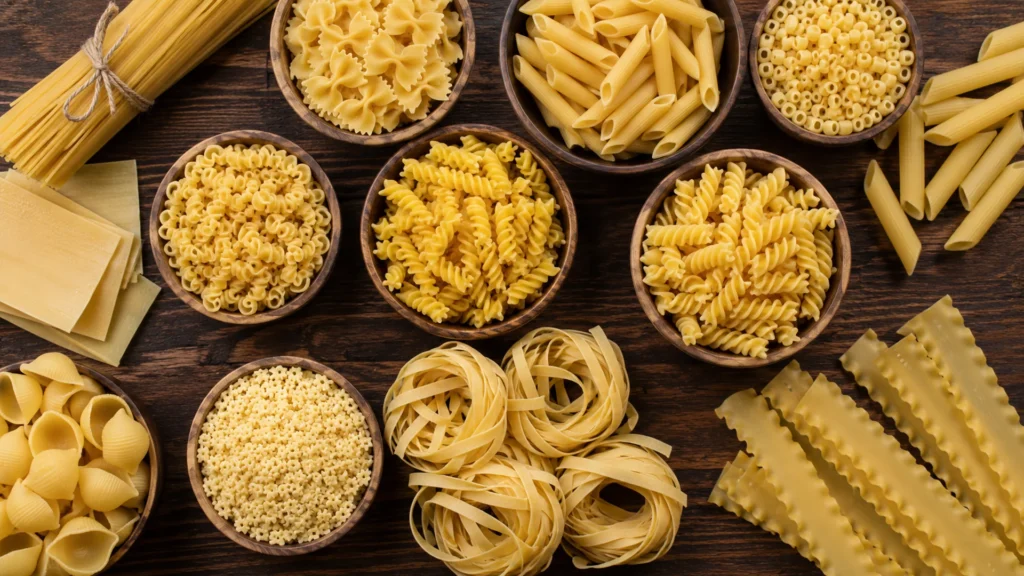
Types of pasta number in the hundreds (more than 300 documented forms under over 1,300 names), which sounds overwhelming until you realize they all sort into a handful of logical groups. Pasta is organized by three things: its form (long, short, tube, sheet, stuffed, dumpling, or tiny soup pasta), whether it is fresh or dried, and how it gets served (sauced, in broth, or baked). Learn those three axes and any new noodle you meet slots neatly into place. This guide walks each type with examples, explains the fresh-versus-dried split that changes how a noodle behaves, covers the dumpling and sheet pastas people forget, and ends with how to choose the right type for what you are cooking. Think of it as a map rather than a list, because a map is what makes the variety usable.
The Three Ways Pasta Is Classified
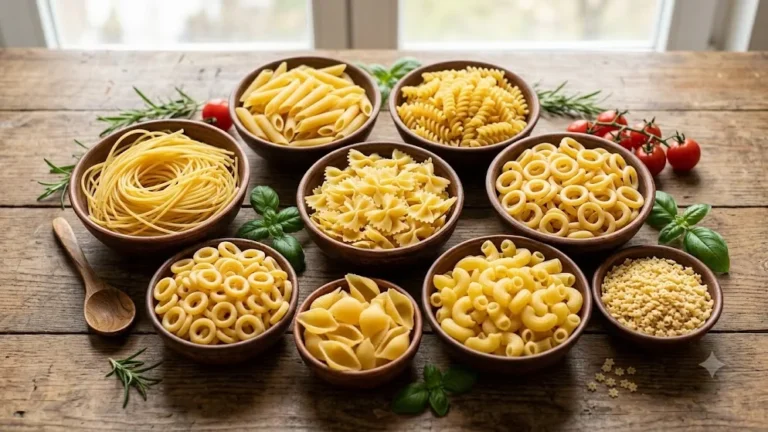
Before the individual types, hold the framework. First, pasta is grouped by form and size: long pasta (pasta lunga), short pasta (pasta corta), tubes, flat sheets, stuffed (ripiena), dumpling-style (gnocchi), and the miniature soup pasta (pastina). Second, it is divided by moisture into dried (pasta secca, made from semolina and water, extruded and dried) and fresh (pasta fresca, usually flour and egg, soft and quick to cook). Third, cooks classify pasta by the dish it goes into: pasta asciutta is plated and sauced, pasta in brodo is part of a soup, and pasta al forno is baked. Almost every type you will meet can be located on these three axes at once, for example, a fresh stuffed pasta served in broth, or a dried short tube baked al forno. Keep the framework and the rest is detail.
Long Pasta: Strands and Ribbons
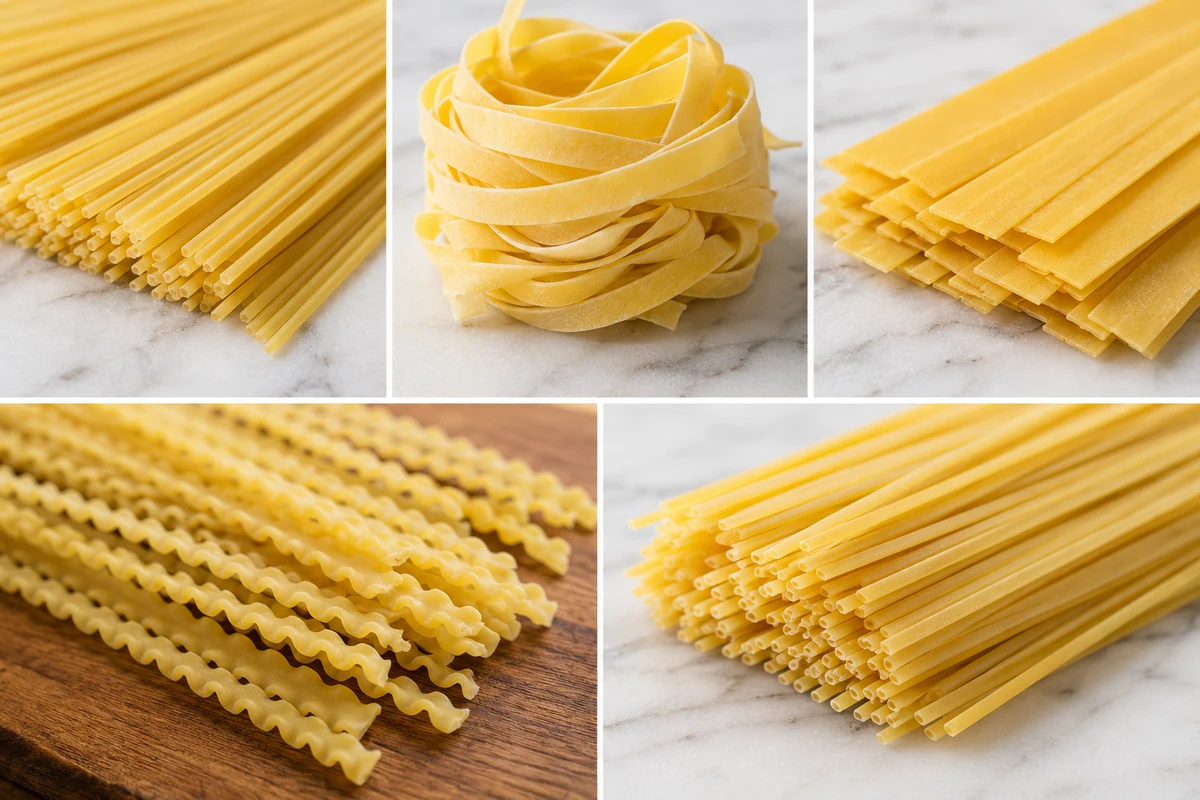
Long pasta is the largest and most familiar group, and it splits into round strands and flat ribbons. Round strands range from the hair-fine capellini (angel hair) up through medium spaghetti to the hollow-cored bucatini. These suit lighter, slicker sauces that coat without weighing the strand down. Flat ribbons (linguine, fettuccine, tagliatelle, pappardelle) run from narrow to broad and lean toward richer sauces, since their wide faces carry cream, butter, and meat ragu well. A useful tell within the long family is that the flatter and wider a noodle is, the heavier a sauce it can support, while the rounder and thinner it is, the lighter the sauce it wants. Most long pasta is sold dried, but the egg ribbons (tagliatelle, pappardelle) are classics in fresh form too. For a long-pasta dish with a takeout-style kick, the spicy Szechuan noodles show how a slick strand carries a bold, thin sauce.
Short Pasta: Tubes, Curls, and Shapes
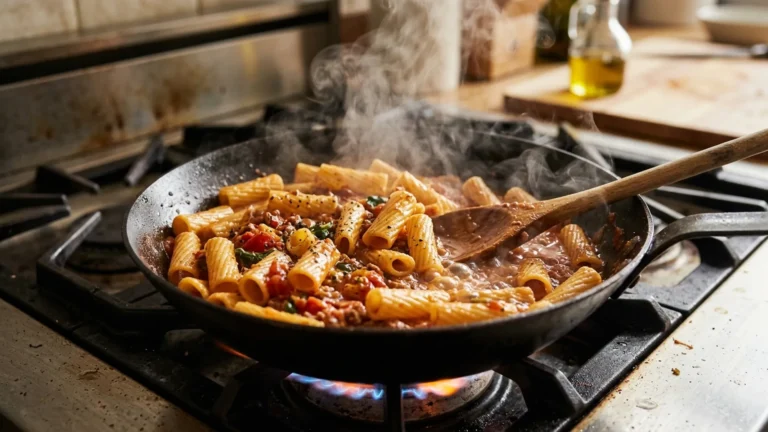
Short pasta is the practical backbone of weeknight cooking and the most varied group. It includes the tubes (penne, ziti, rigatoni, macaroni), the curls and twists (fusilli, rotini, cavatappi), the shaped shorts (farfalle bow ties, orecchiette ears, conchiglie shells), and the small extras. Dried short pasta is itself split into ridged (rigate) and smooth (lisce), with ridges grabbing more sauce. The whole point of short pasta is texture and capture: grooves, hollows, and cups that trap thick, chunky sauces and bake into casseroles. This is also the group that defines pasta salad and mac and cheese. Because the shapes are sturdy and forgiving, short pasta is the easiest type to cook well and the most flexible across sauces. A baked or saucy tube dish like a cheesy broccoli cheese tortellini shows how a short, sauce-holding shape carries a rich coating in every bite.
Tube Pasta: A Group Worth Its Own Name
Tubes deserve separate mention because they behave by diameter. Narrow tubes (penne, ziti) toss and bake equally well. Wide tubes (rigatoni, tortiglioni) specialize in chunky meat and vegetable sauces and baked dishes, their large openings swallowing pieces that smaller tubes would shed. The jumbo tubes (cannelloni, manicotti) are not tossed at all; they are stuffed with filling, sauced, and baked like edible cylinders. Reading a tube’s size tells you its job: small for versatility, medium for hearty sauce, jumbo for stuffing. Tubes are almost always dried, since the extrusion process that creates the hollow is a dried-pasta technique.
Sheet Pasta: The Flat Type
Sheet pasta is the type people forget to count, yet it anchors some of the most famous dishes. Lasagna sheets are wide, flat rectangles layered with sauce, cheese, and filling, then baked. Fresh pasta sheets are also the raw material for cutting ribbons and making stuffed shapes, so the sheet is in a sense the parent form of much fresh pasta. Sheet pasta exists in both dried (the boxed lasagna noodles, some needing pre-boiling and some no-boil) and fresh forms (the silky house-made sheets behind the best lasagna and cannelloni). The defining trait is that sheet pasta is built for layering and baking rather than tossing with sauce, which puts it squarely in the pasta al forno tradition.
Stuffed Pasta: Pockets and Parcels
Stuffed pasta (ripiena) wraps a filling inside the dough, and the type signals both filling and serving style. Ravioli are flat squares or rounds sealing a filling between two sheets. Tortellini are small navel-shaped rings, often meat-filled and served in broth. Tortelloni are their larger, usually cheese-filled cousins. Cappelletti (little hats), agnolotti (pinched pillows), and mezzelune (stuffed half-moons) round out the family. Stuffed pasta is most often fresh, because the soft dough seals and cooks quickly, and it wants gentle sauces (browned butter, light tomato, a delicate cream, or simply broth) so the filling stays the centerpiece. This is the type where less sauce is more, since the flavor is built into the parcel rather than spooned on top.
Dumpling Pasta and Soup Pasta
Two smaller types round out the map. Dumpling pasta (gnocchi and gnocchetti) is technically pasta-adjacent: soft little dumplings made from potato, semolina, or ricotta, boiled until they float, and served with light sauces or browned butter. Gnocchi are pillowy rather than chewy, a different texture experience from rolled pasta. Soup pasta (pastina) is the miniature type designed to float in broth: ditalini, stelline (stars), acini di pepe (peppercorns), orzo (rice-shaped), and anelli (little rings). These cook in minutes and are meant to share a spoonful with the other ingredients in the bowl. Both types are easy to overlook, but they cover an enormous amount of home cooking, from a comforting bowl of pastina in broth to a plate of pan-crisped gnocchi.
Fresh Versus Dried: The Split That Changes Everything
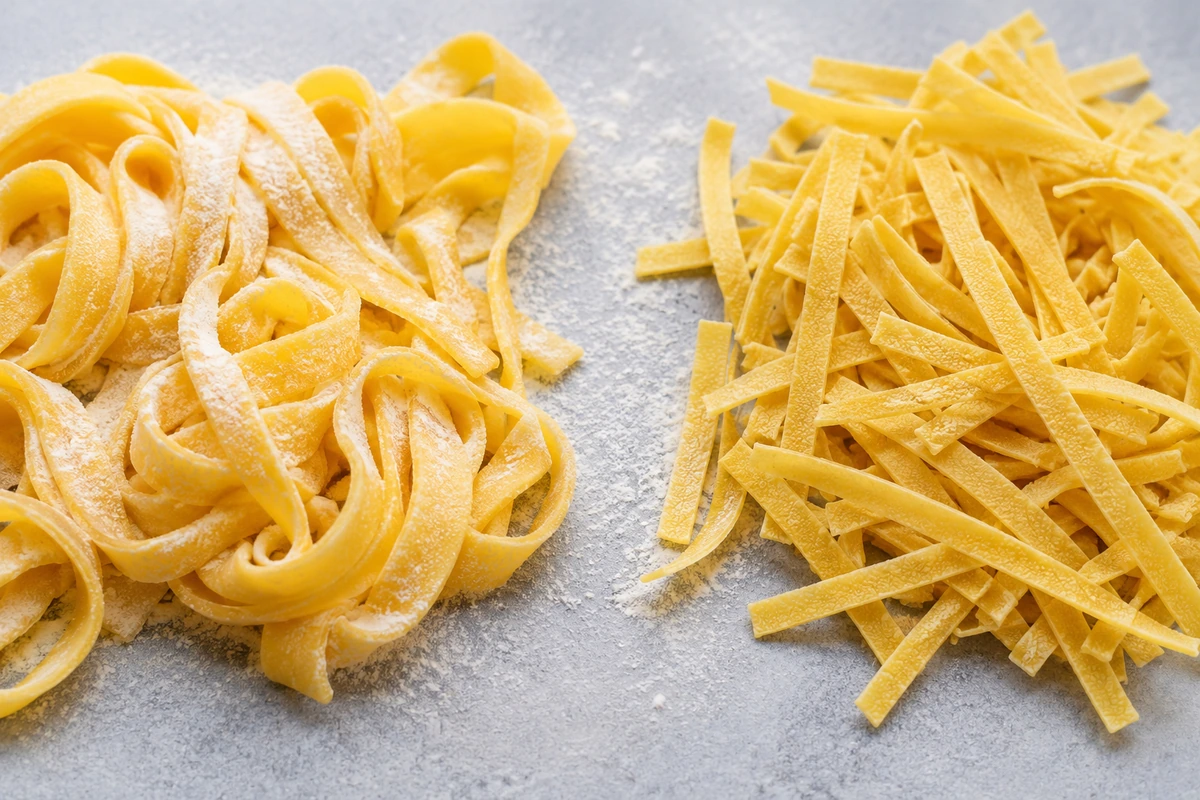
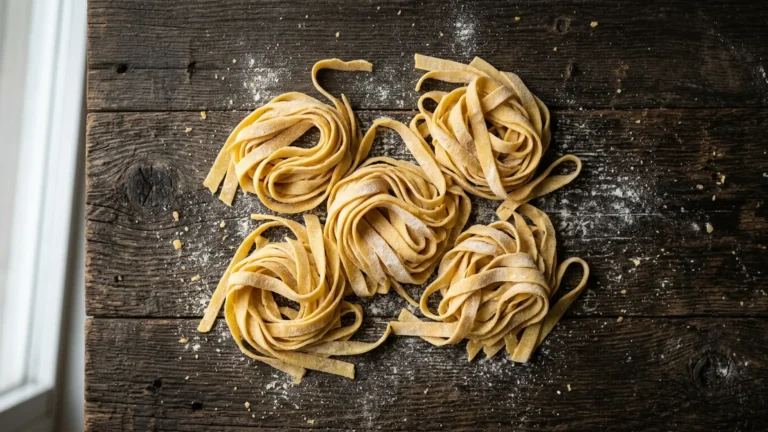
The single most useful distinction across all types is fresh versus dried, because the same shape behaves differently in each. Dried pasta (pasta secca) is made from durum semolina and water, extruded through dies and dried hard; it has a firm, chewy bite, a long shelf life, and the structure to hold bold, long-cooked sauces. It is the default for most tubes, strands, and short shapes. Fresh pasta (pasta fresca) is usually flour and egg, soft and porous, cooked in two to three minutes; it soaks up cream and butter, suits tender ragu, and is the natural form for ribbons, sheets, and stuffed shapes. Bronze-die dried pasta, with its rougher surface, grips sauce better than slicker Teflon-die pasta. Neither fresh nor dried is better; they are suited to different dishes. If you want to make the fresh kind yourself, the by-hand method in this guide to making pasta from scratch needs only flour, eggs, and a rolling pin.
| Type | Examples | Typical use |
|---|---|---|
| Long | Spaghetti, fettuccine, pappardelle | Sauced, light to rich |
| Short | Penne, fusilli, farfalle, shells | Chunky sauce, salad, bakes |
| Tube | Rigatoni, ziti, cannelloni | Hearty sauce, stuffed, baked |
| Sheet | Lasagna, fresh sheets | Layered and baked |
| Stuffed | Ravioli, tortellini, agnolotti | Light sauce or broth |
| Dumpling | Gnocchi, gnocchetti | Butter, light sauce, pan-crisp |
| Soup | Ditalini, stelline, orzo | Broths and soups |
Regional Families: Why So Many Types Exist
The sheer number of pasta types comes from regional history, and knowing the geography helps the types stick. Southern Italy, the dry, durum-wheat-growing south, is the home of dried semolina pasta and water-only doughs: orecchiette and cavatelli from Puglia, the eggless extruded shapes that travel and store well. Northern Italy, richer in eggs and butter, is the home of fresh egg pasta: tagliatelle and tortellini from Emilia-Romagna, the silky ribbons and stuffed parcels. Liguria gave us trofie and trenette for pesto; Rome built its tradition around bucatini, rigatoni, and tonnarelli. Each region shaped its pasta around the crops, dairy, and dishes at hand, which is why the same broad type (say, a stuffed pasta) appears in a dozen regional forms with different names and fillings. You do not need to memorize the map, but understanding that types multiplied because Italy was, for centuries, many separate food cultures explains why one country produces over a thousand pasta names. It also means a regional recipe usually pairs its native shape with its native sauce for a reason worth trusting.
This regional lens also clears up confusing duplicate names. The same shape can be called by different names depending on where you are: what one region calls one thing, another calls something else entirely, which is how 300-odd actual forms balloon into 1,300-plus names. When you see an unfamiliar name, decode it by form first (is it long, short, tube, stuffed?) and the regional label becomes secondary; the form tells you how to cook and sauce it regardless of what the box calls it.
Cooking and Storing by Type
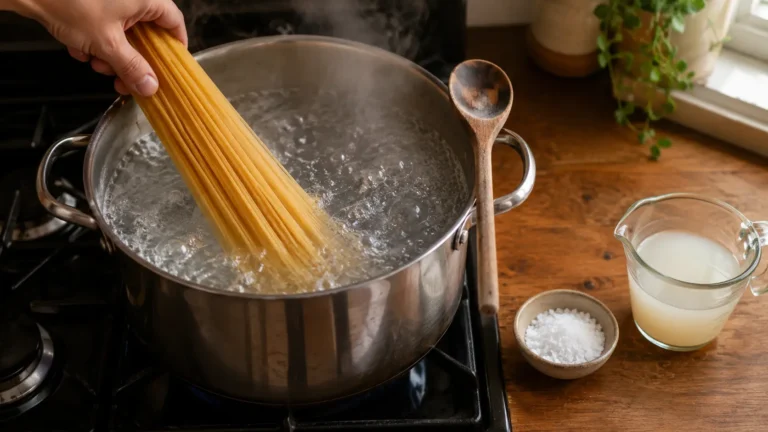
Different types want slightly different handling. Dried pasta of any form keeps for a year or two in a sealed container in a cool, dry pantry, since its low moisture resists spoilage. Fresh pasta is perishable: refrigerate it for a couple of days dusted with semolina, or freeze it in loose nests for up to a month and cook it straight from frozen. Cooking time scales with type and moisture: fresh ribbons and stuffed shapes finish in two to three minutes, dried strands and short shapes in the box-time range of eight to twelve, and soup pasta in just a few. Sheet pasta is layered raw (with no-boil versions) or briefly pre-boiled, then baked. Gnocchi are done the moment they float. Across every type, salt the water hard, taste before draining, and reserve a little starchy cooking water to finish the sauce. If you cook more than you need, the storage advice in this guide to storing cooked pasta keeps leftovers of any type from turning into a sticky block.
How to Choose the Right Type
Choosing comes down to working backward from the dish. Start with the sauce or preparation: a thin, slick sauce points to long strands; a chunky meat or vegetable sauce points to ridged short shapes or wide tubes; a layered bake points to sheets; a delicate filling points to stuffed types; a brothy bowl points to soup pasta. Then decide fresh or dried: fresh for tender, quick, cream-friendly dishes, dried for sturdy, bold, long-cooked ones. Finally, fine-tune the exact shape within the type for size and sauce-capture. This three-step path (type by sauce, fresh or dried, then specific shape) turns hundreds of options into a short, confident decision. When in doubt, a ridged short shape like penne rigate or fusilli is the most forgiving all-rounder, handling everything from tomato to cream to a quick salad. A second practical tip: stock two or three types rather than one. A dried long strand, a dried ridged short shape, and a bag of soup pasta cover nearly every situation, from a quick weeknight bowl to a pot of soup, and they keep for months. Add a fresh egg ribbon or a package of stuffed pasta when you want something tender and special. That small spread of types means you can match the noodle to almost any dish without a trip to the store.
FAQ
What are the main types of pasta?
By form, the main types are long pasta, short pasta, tube pasta, sheet pasta, stuffed pasta, dumpling pasta (gnocchi), and tiny soup pasta. Cutting across those, pasta is also either fresh or dried, and it is served sauced, in broth, or baked. Most noodles fit several of these labels at once.
How many types of pasta are there?
There are more than 300 documented forms known by over 1,300 regional names, since the same shape often carries different names across Italy. For everyday cooking you only need the handful of families: long, short, tube, sheet, stuffed, dumpling, and soup.
What is the difference between fresh and dried pasta?
Dried pasta is semolina and water, extruded and dried hard, with a firm chewy bite and a long shelf life that suits bold sauces. Fresh pasta is usually flour and egg, soft and porous, cooked in two to three minutes, and best with cream, butter, and tender ragu. Neither is better; they suit different dishes.
Is gnocchi a type of pasta?
Gnocchi sit in the dumpling-pasta category. They are soft little dumplings made from potato, semolina, or ricotta rather than rolled dough, boiled until they float, and served with light sauces or browned butter. They are pillowy rather than chewy, so they read as a cousin to rolled pasta.
Which type of pasta is best for baking?
Sheet pasta (lasagna) and sturdy tubes and shells (rigatoni, ziti, penne, large shells) bake best, since they hold sauce and keep their shape in the oven. Jumbo tubes like cannelloni and manicotti are stuffed and baked rather than tossed. These all fall in the pasta al forno tradition.
What type of pasta is healthiest?
Legume-based pastas (chickpea, lentil, pea) and whole-grain pastas carry more protein and fiber than refined semolina, which keeps you fuller and steadies blood sugar. Within traditional types, the form matters less than the flour; pick a whole-grain or legume base if nutrition is the goal.
What pasta type goes with which sauce?
Long thin strands take light, slick sauces; flat ribbons take cream and rich ragu; ridged short shapes and wide tubes take chunky sauces; sheets are layered and baked; stuffed pasta wants gentle sauce or broth; soup pasta goes in broth. The shape controls how much sauce each bite carries, so match texture to sauce thickness.
What is the most versatile type of pasta?
A ridged short shape like penne rigate or fusilli is the most versatile, handling tomato, cream, meat sauce, baked dishes, and cold salad with equal ease. Its grooves grab most sauces and its sturdy build forgives timing, making it the safest box to keep on hand.
Bottom Line
Types of pasta only look endless. Sort any noodle by its form (long, short, tube, sheet, stuffed, dumpling, or soup), note whether it is fresh or dried, and picture the dish it belongs in (sauced, in broth, or baked), and the whole catalog becomes a clear, usable map. Choose by working backward from the sauce to the type, then to fresh or dried, then to the exact shape. Keep a sturdy short shape on hand for everyday cooking, reach for fresh ribbons and stuffed shapes when you want something tender and special, and let soup pasta and gnocchi cover the comforting edges. Understand the map and you will never again stand frozen in the pasta aisle. For tested pasta technique, Bon Appetit is a solid reference, and this catalog of pasta types shows the full sweep of the variety.